24 Formal Hairstyles for Men: Find Your Sharpest Look
From five-minute crew cuts to wedding-ready pompadours, these are the 24 cuts that read as deliberate the moment you walk into the room — sorted by upkeep, face shape and how much your hair already wants to cooperate.
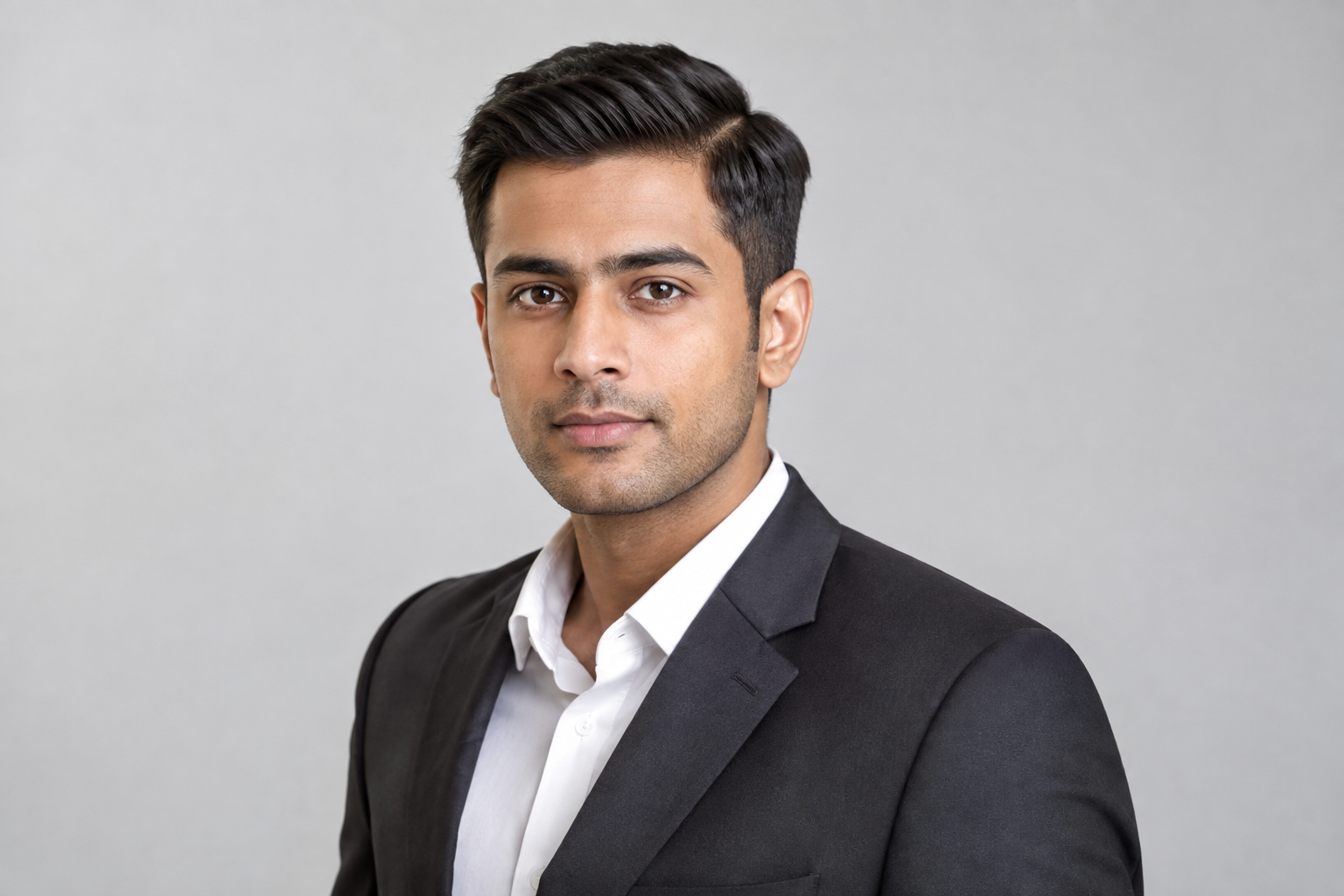
A sharp formal hairstyle should look deliberate from every angle — front, sides and the back of your neck — without needing constant fixing between meetings, lectures or wedding functions. The right cut works with your natural hair instead of fighting it, and it should survive a scooter ride, a full-day helmet commute or May heat without falling apart before lunch.
This guide rounds up 24 formal hairstyles for men, grouped by how much daily effort each one takes rather than just how it looks in one photo. Scan the shortlist below, then use the face-shape and lifestyle filters further down to narrow it to two real finalists — and preview them on your own photo before you sit in a barber's chair.
24 Best Formal Hairstyles for Men at a Glance
Before you scroll through all 24, picture which description matches your own hair right now: strands that already comb flat to one side, hair short enough that it barely needs a comb, or natural wave, curl or coil you'd rather shape than flatten. The table below sorts every style by length, upkeep and the face shapes it suits best, so you can shortlist by sight in under a minute.
| Hairstyle | Best length | Best face shapes | Maintenance |
|---|---|---|---|
| Classic Side Part | Short | Oval, Diamond, Rectangle | Medium |
| Ivy League | Short | Oval, Round, Heart, Triangle | Low |
| Executive Contour | Medium | Oval, Round, Diamond, Triangle | High |
| Businessman Taper | Short | Square, Rectangle, Oblong | Low |
| Classic Taper | Short | Oval, Heart, Rectangle, Oblong | Low |
| Tapered Crew Cut | Short | Square, Rectangle, Oblong | Low |
| Comb-Over Taper | Short | Round, Oblong | Medium |
| Classic Slick Back | Medium | Oval, Square | High |
| Brushed-Back Taper | Medium | Round, Triangle | Medium |
| Low Pompadour | Medium | Round, Triangle | High |
| Neat Quiff | Medium | Oval, Round, Triangle | Medium |
| Regulation Cut | Short | Square | Low |
| Scissor-Cut Gentleman | Medium | Oval, Square, Heart, Triangle | Medium |
| French Crop | Short | Square, Rectangle, Oblong | Low |
| Caesar Cut | Short | Square, Rectangle, Oblong | Low |
| Side-Swept Fringe | Medium | Heart, Diamond, Rectangle, Oblong | Medium |
| Bro Flow | Medium | Oval, Heart, Diamond | Medium |
| Layered Medium Sweep | Medium | Heart, Diamond, Oblong | High |
| 80/20 Side Part | Medium | Square, Diamond, Triangle | High |
| Tapered Curtains | Medium | Heart, Diamond, Rectangle, Oblong | Medium |
| Curly Side Part | Medium | Oval, Heart, Diamond, Rectangle | Medium |
| Defined Curly Taper | Short | Round, Heart | Medium |
| Coily High-Top Taper | Medium | Round, Triangle | Medium |
| Hard Part with Low Fade | Short | Round, Square, Diamond | High |
Low-Maintenance Formal Haircuts for Work and Interviews
If your mornings are rushed, your commute involves a helmet, or your workplace expects understated hair, start here. These eight cuts hold their shape through a full day with little more than a comb-through, and several double as safe, conservative choices for interviews.
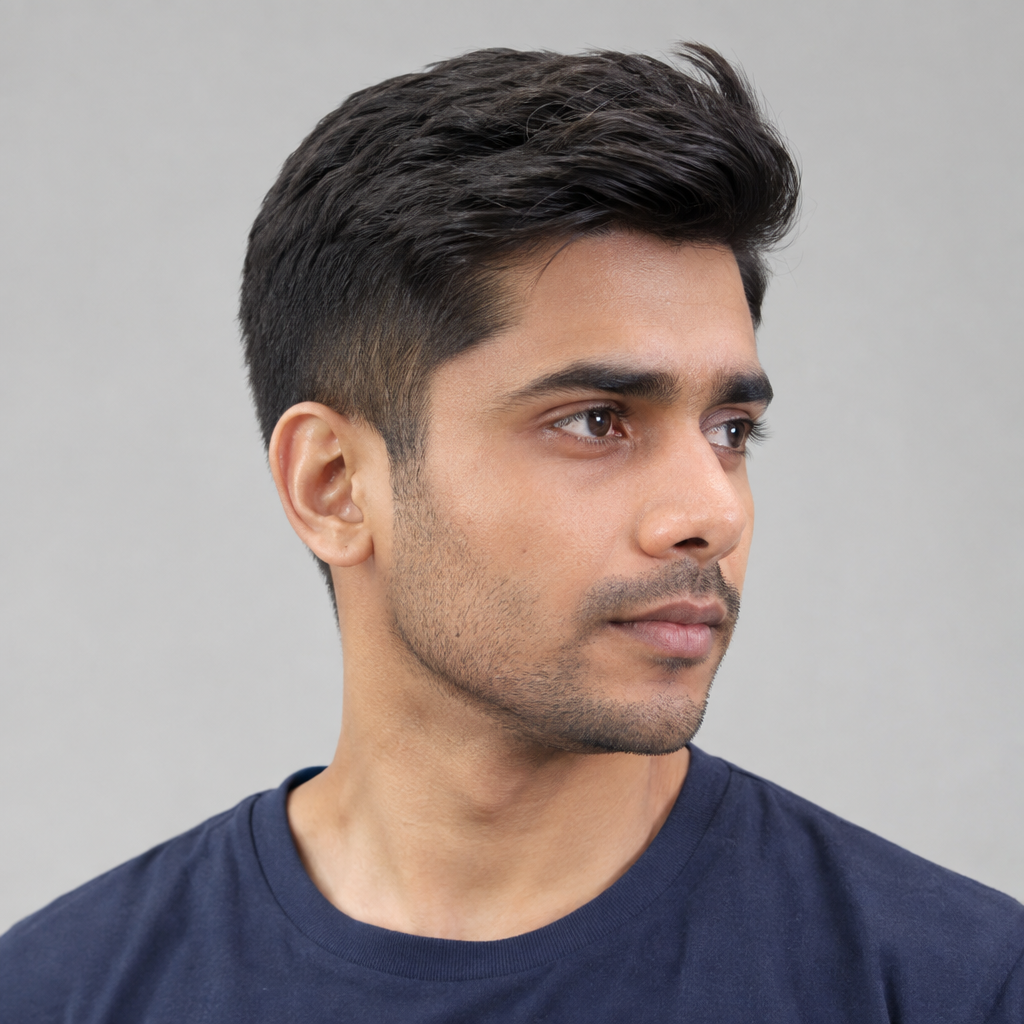
Ivy League
- Best if your hair looks like: short, with just enough length at the front to lift or sweep slightly to one side.
- Face and lifestyle fit: ideal if you want one cut that covers workdays, interviews and functions equally well.
- Upkeep: low.
- Tell your barber: "Cut an Ivy League with about 4–5 cm at the front, gradually shorter through the crown, and neatly tapered sides with no harsh disconnect."
It gives you the tidiness of a crew cut while keeping enough front length to balance your face, and it resets in seconds after a commute or a helmet — exactly why it's such a reliable everyday option for Indian offices and campuses.
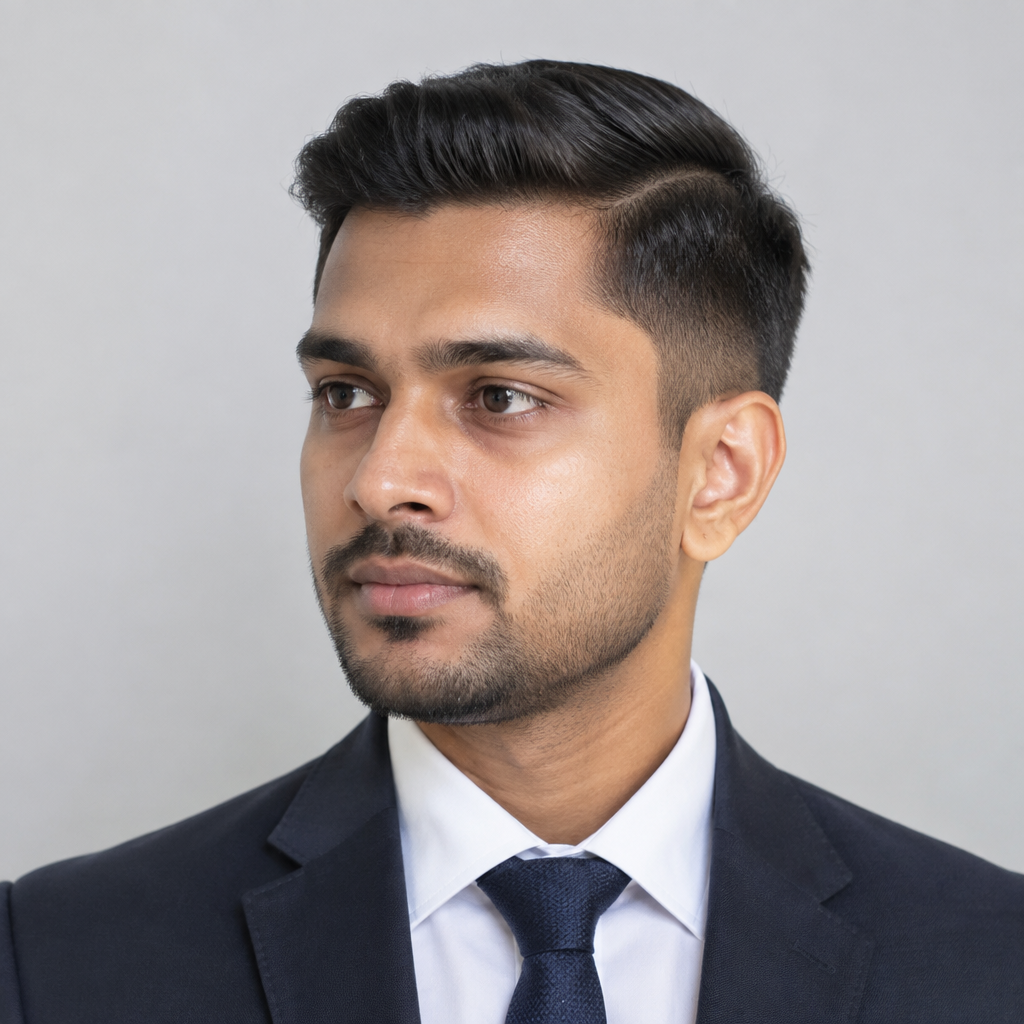
Businessman Taper
- Best if your hair looks like: short and mostly straight, happy to sit in a compact, side-combed shape.
- Face and lifestyle fit: a conservative pick for strict dress codes and low-fuss mornings.
- Upkeep: low.
- Tell your barber: "Give me a conservative businessman cut with 5–6 cm on top, a natural side direction, scissor-over-comb sides and a clean low taper at the edges."
The compact shape stays neat without dramatic height or contrast, and a small amount of cream restores the part after a long day without turning oily — worth picturing if your office still expects a traditional look.
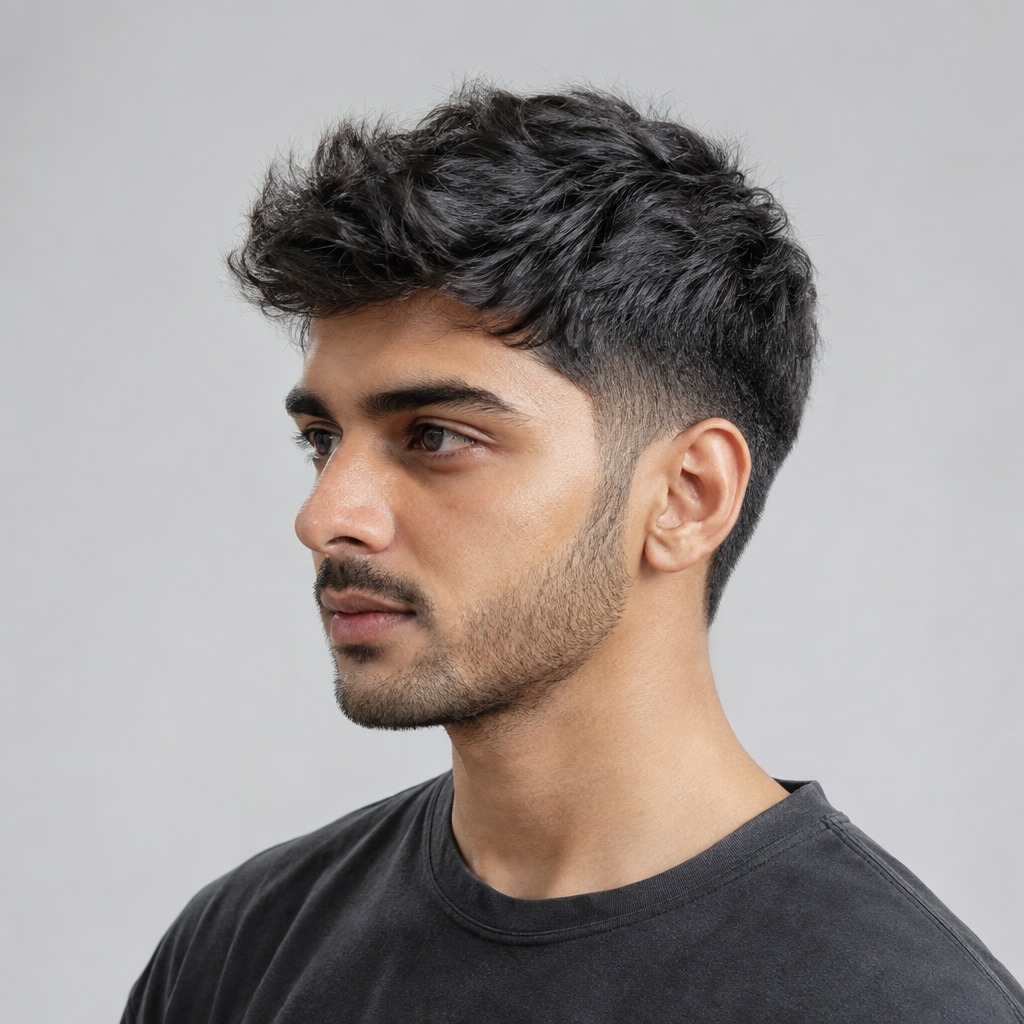
Classic Taper
- Best if your hair looks like: straight, wavy or loosely curled, already falling into a reasonably balanced shape on its own.
- Face and lifestyle fit: the most adaptable option if you switch between casual and formal settings often.
- Upkeep: low.
- Tell your barber: "Keep my natural shape on top, remove bulk evenly, and add a soft classic taper only around the sideburns, ears and neckline."
A classic taper makes almost any natural top look more finished without the starkness of a high fade, and it stays appropriate whether you're pairing it with office wear, a suit or a bandhgala.
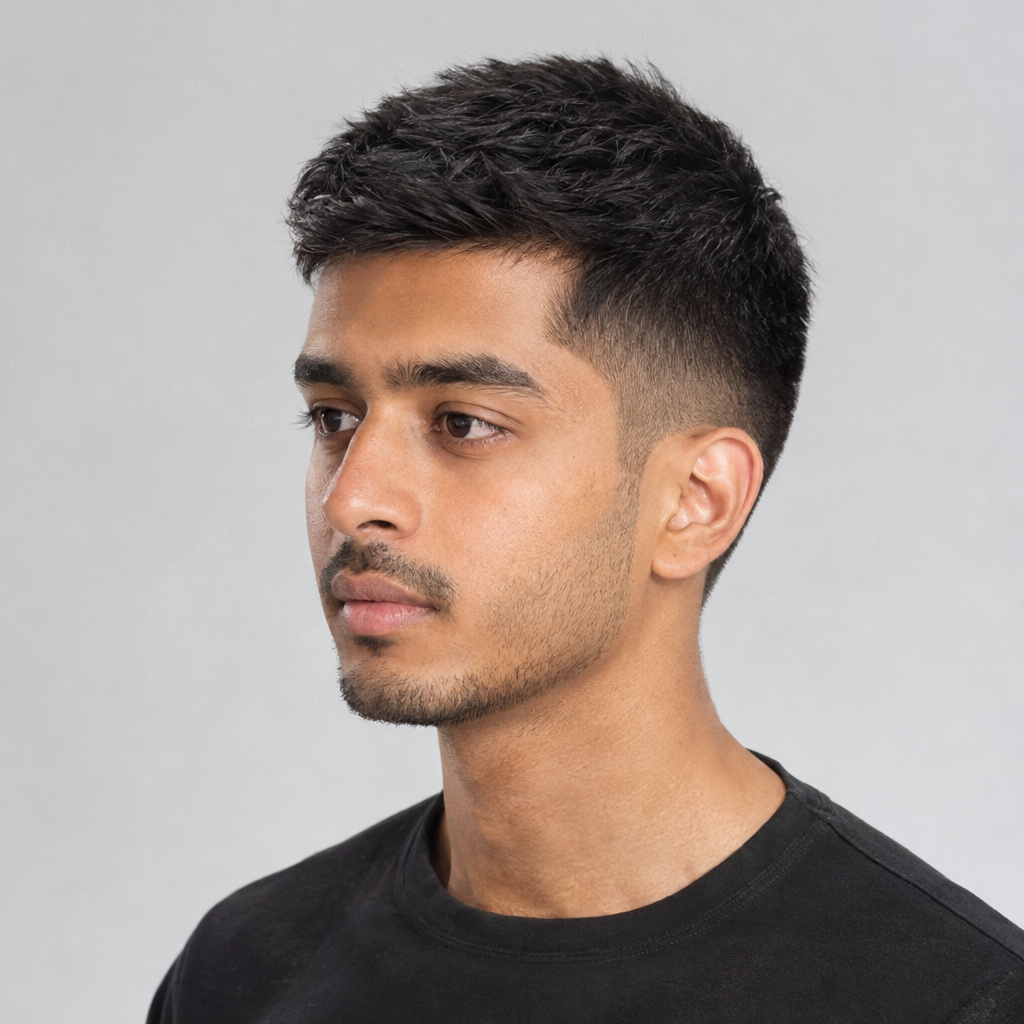
Tapered Crew Cut
- Best if your hair looks like: short and slightly upright, without needing a visible part.
- Face and lifestyle fit: built for frequent commuters, gym mornings and early office starts.
- Upkeep: low.
- Tell your barber: "Cut a crew cut with about 2–3 cm at the front, shorter through the crown, and use a low taper rather than a high skin fade."
This cut holds its silhouette through sweat, humidity and helmet use with almost no restyling, and the low taper keeps it formal enough for interviews rather than looking overly sporty.
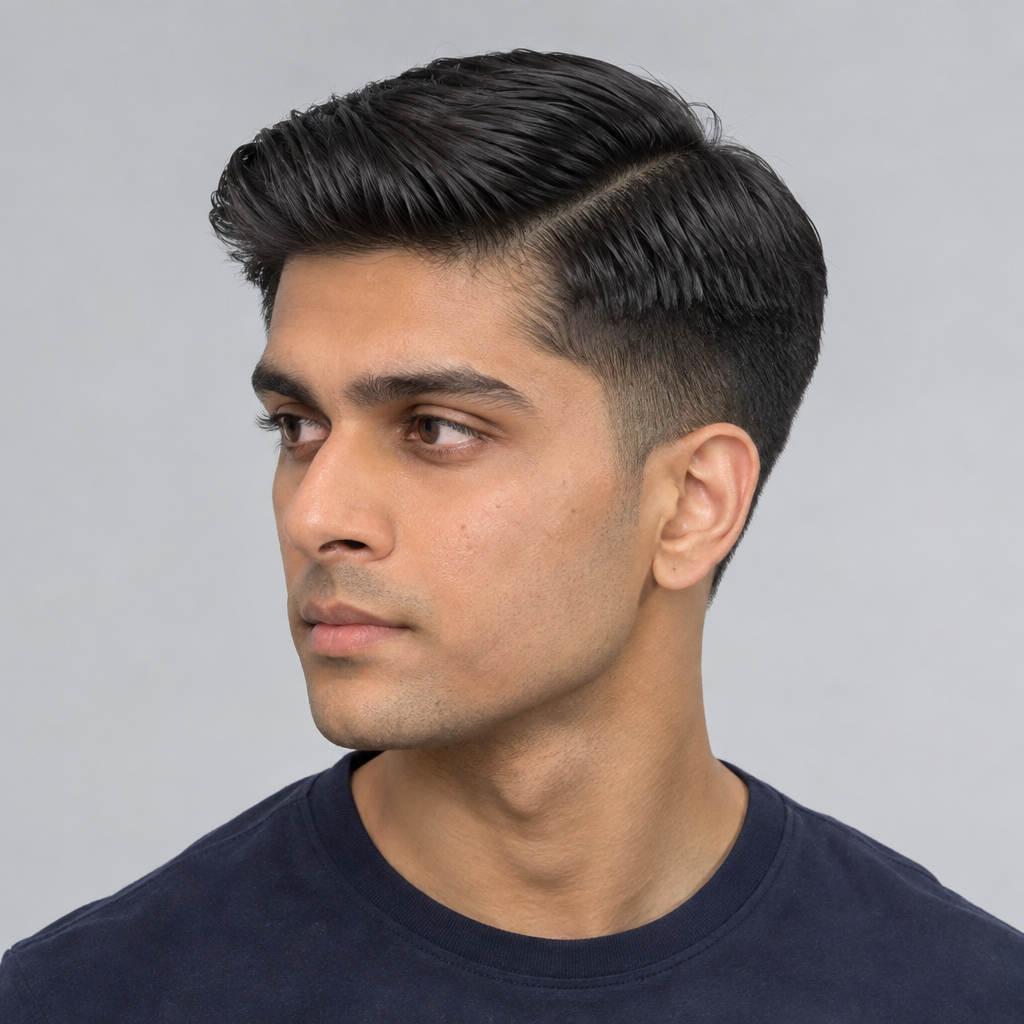
Regulation Cut
- Best if your hair looks like: short, straight or slightly wavy, forming a clean, compact side part easily.
- Face and lifestyle fit: suited to highly conservative workplaces and uniformed roles.
- Upkeep: low.
- Tell your barber: "Give me a regulation cut with a short side-parted top, smoothly tapered sides and back, and a neat natural neckline with no exposed skin fade."
Its controlled proportions read as disciplined and stay tidy across a long day, and keeping the part natural rather than shaved stops it from looking harsher than the dress code actually requires.
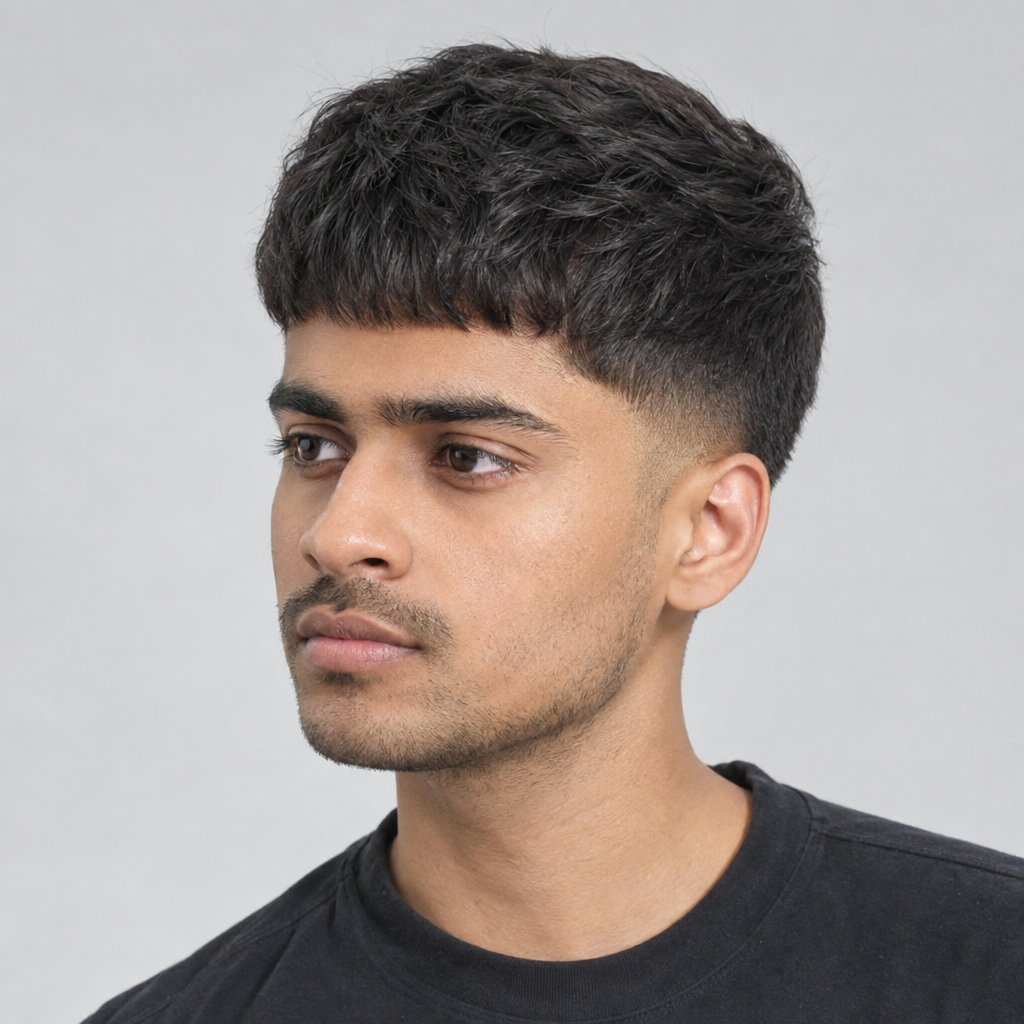
French Crop
- Best if your hair looks like: short, straight or wavy, with a forward growth pattern or a slightly uneven hairline.
- Face and lifestyle fit: practical if you don't want to style a part every morning.
- Upkeep: low.
- Tell your barber: "Cut a clean French crop with 3–5 cm of light texture on top, a short soft fringe and a low taper that keeps the overall outline conservative."
The forward texture gives coverage without the daily precision a side part demands, and a small amount of matte clay keeps it from turning fluffy once the humidity climbs.
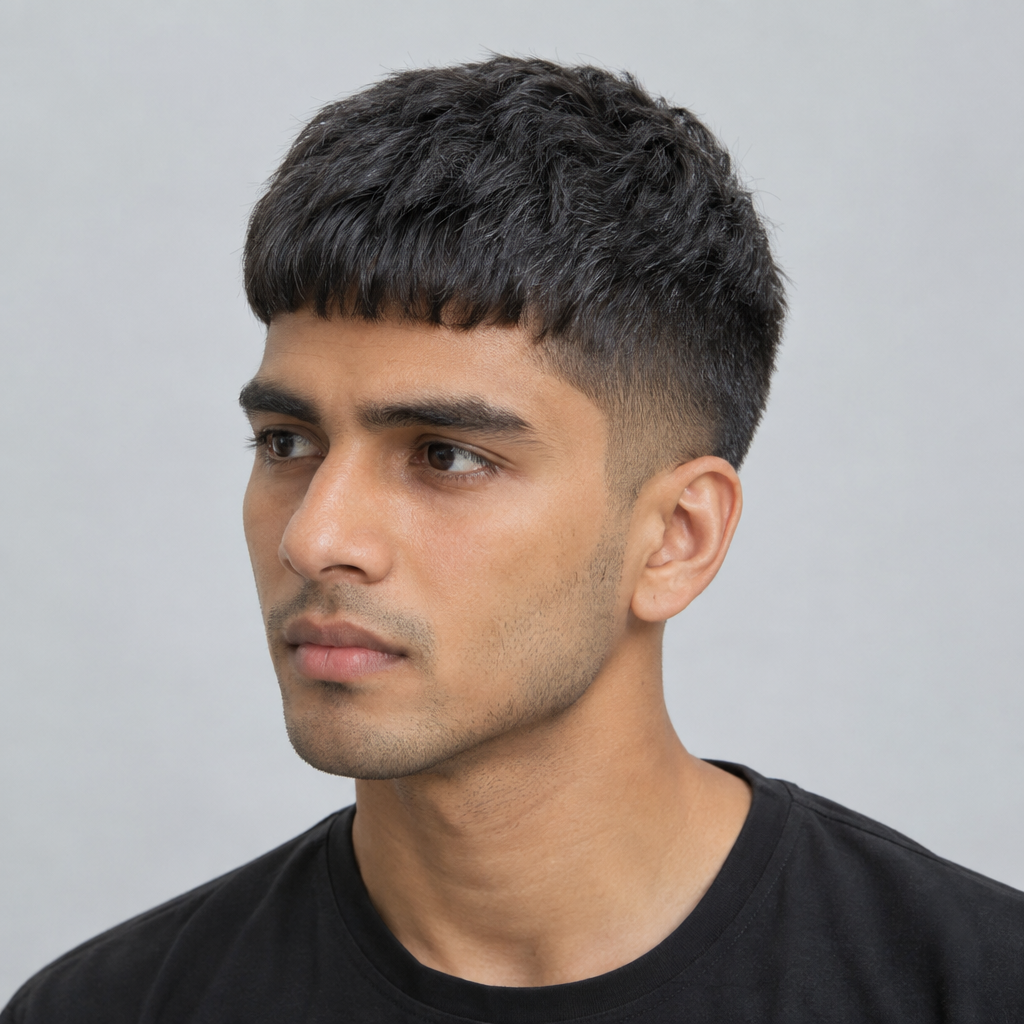
Caesar Cut
- Best if your hair looks like: short and forward-sitting, looking fuller when kept at one even length.
- Face and lifestyle fit: good for thinning areas, minimal routines and conservative settings.
- Upkeep: low.
- Tell your barber: "Give me a short Caesar with an even 2–4 cm top, a tidy forward fringe and softly tapered sides without a dramatic fade."
The compact forward shape reduces visible gaps between strands and holds its look all day — a genuinely formal option if you don't want to blow-dry or comb a precise part each morning.
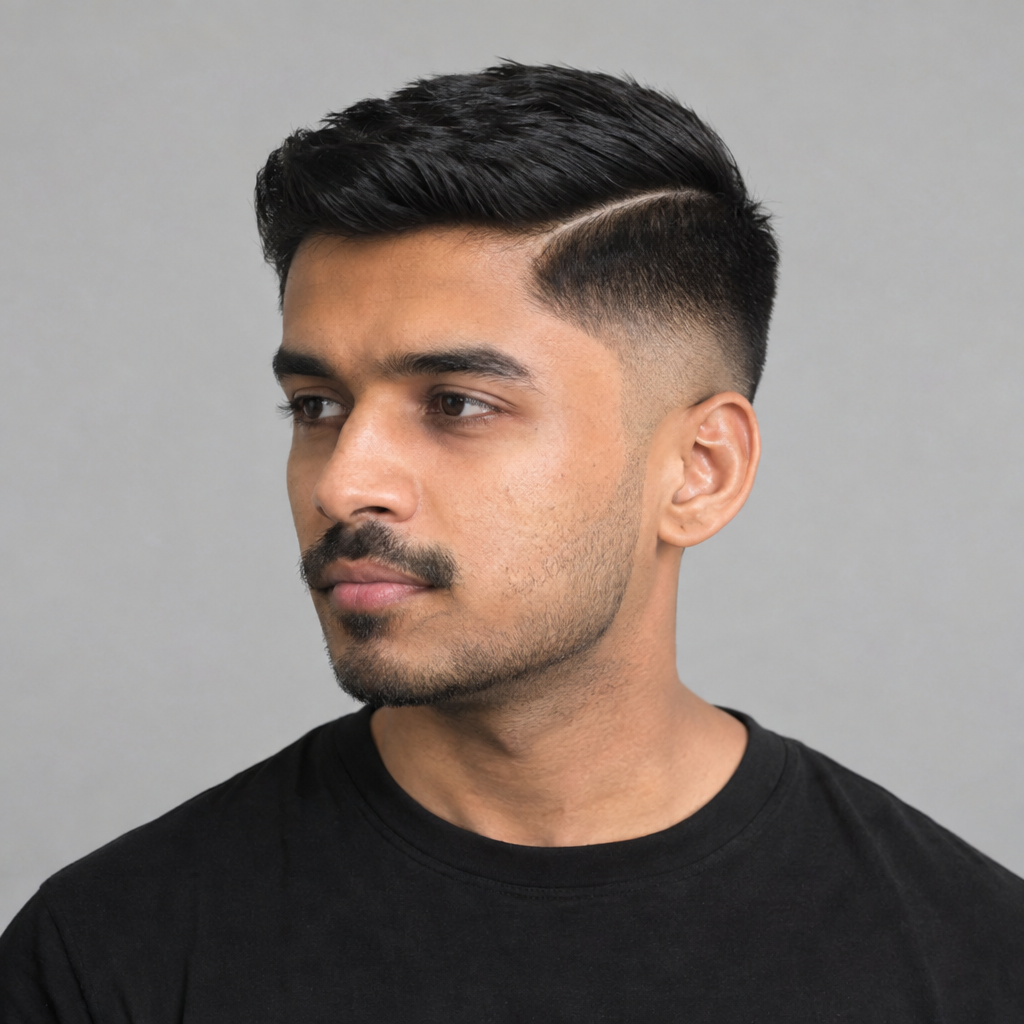
Hard Part with Low Fade
- Best if your hair looks like: short and dense, holding a crisp side direction and a clearly defined line.
- Face and lifestyle fit: best for modern workplaces, presentations and contemporary wedding styling.
- Upkeep: high.
- Tell your barber: "Give me a clean hard part with 5–7 cm on top, a low fade that stays below the temples, and enough connection for a polished side-combed finish."
The precise line gives instant structure while the low fade keeps it more formal than a high skin fade would — sharp for photographs, though the part and edges usually need refreshing sooner than a soft classic taper.
Polished Side-Part and Brushed-Back Styles
Want more presence for client meetings, festive dinners or a wedding reception? These nine styles trade a little morning speed for a sharper, more deliberate finish — defined parts, swept-back volume and enough shine to photograph well without tipping into flashy.
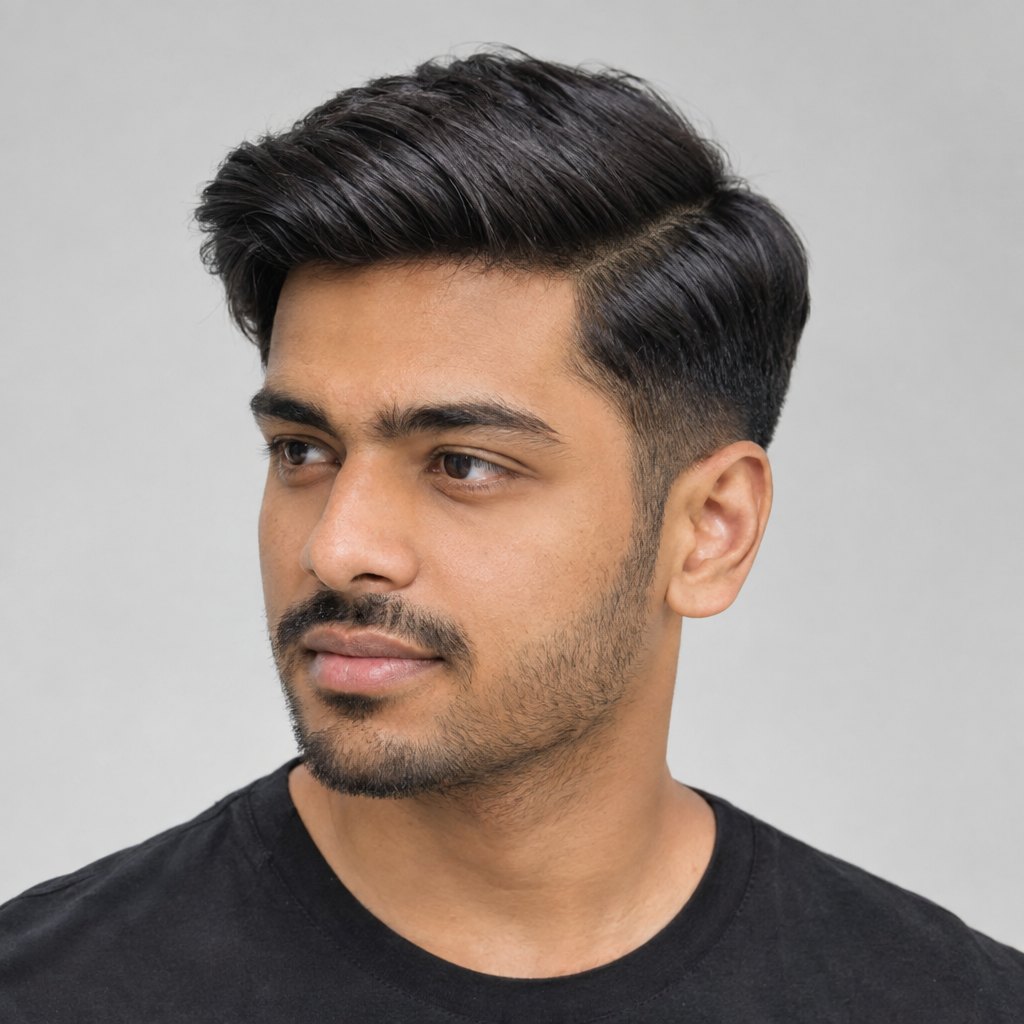
Classic Side Part
- Best if your hair looks like: straight or softly wavy, settling to one side without much lift on its own.
- Face and lifestyle fit: dependable for offices, interviews and conservative formal events.
- Upkeep: medium.
- Tell your barber: "Give me a classic side part with 7–9 cm on top, a soft low taper on the sides and back, and enough weight to comb naturally to one side."
The defined direction reads as intentional without demanding an aggressive fade — a low-shine cream keeps it office-appropriate in Indian heat, while a touch more product dresses the same cut up for a reception.
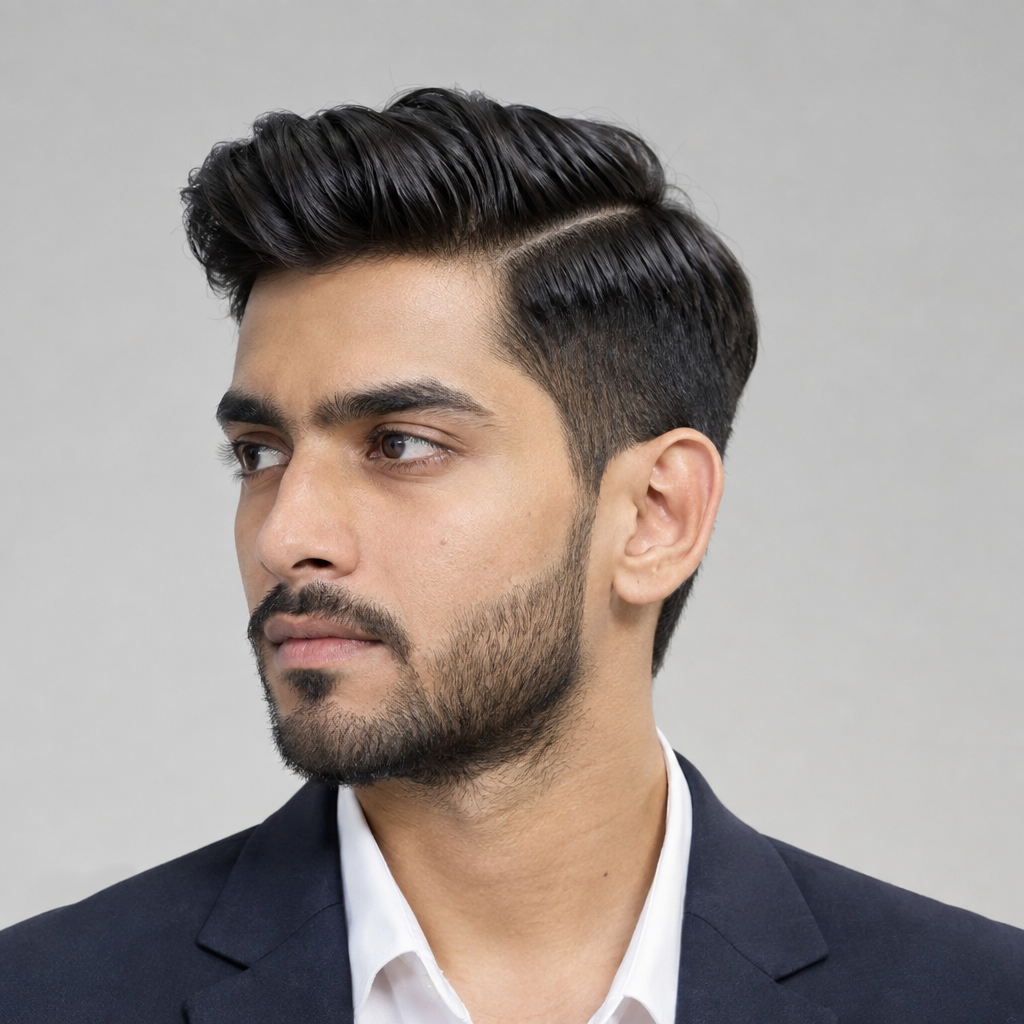
Executive Contour
- Best if your hair looks like: dense, straight or wavy, thick enough to hold a deep part and a smooth curved shape.
- Face and lifestyle fit: best for corporate settings if you're comfortable blow-drying daily.
- Upkeep: high.
- Tell your barber: "Give me an executive contour with a defined side part, 8–10 cm on top, a smooth low taper and enough side weight for a rounded, connected silhouette."
The deep part and rounded contour look senior and polished without relying on a skin fade — picture it under boardroom lighting or paired with a tuxedo, though it needs disciplined drying and light product in humidity.
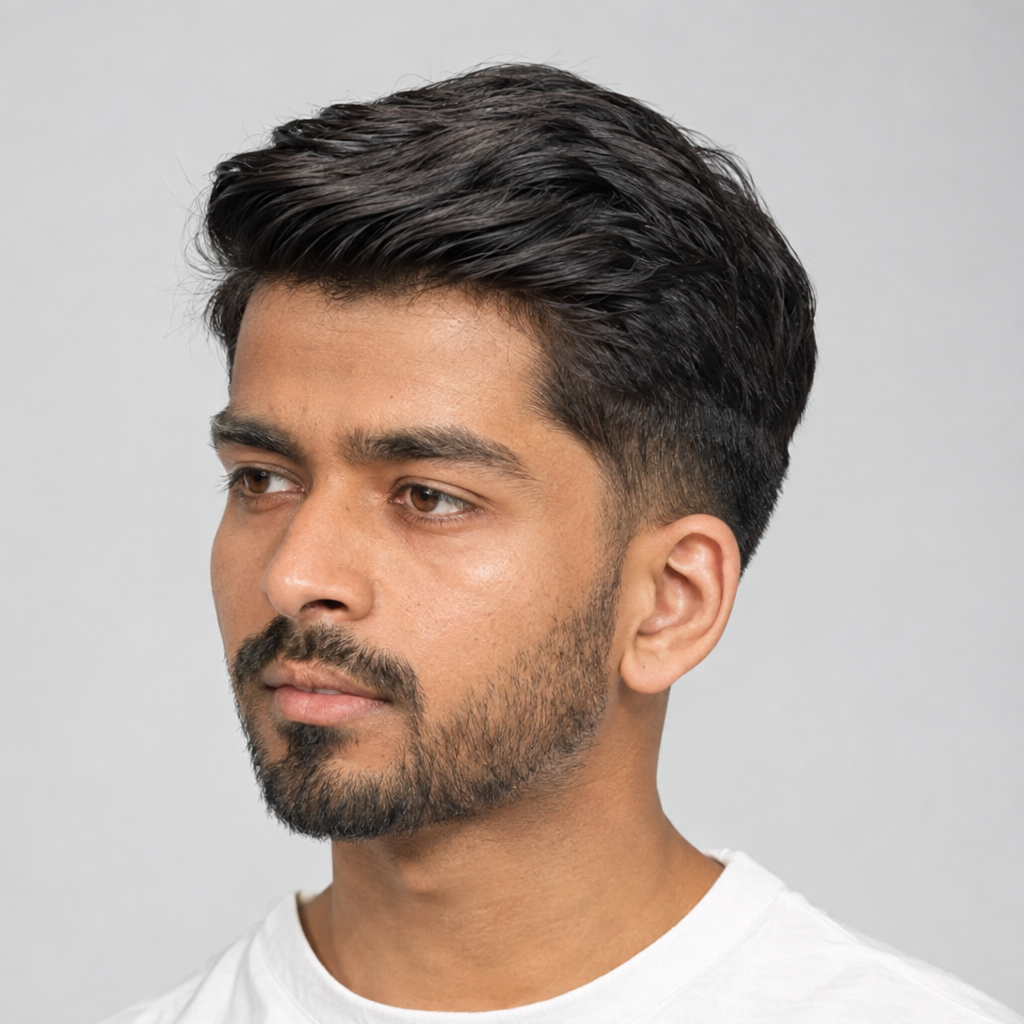
Comb-Over Taper
- Best if your hair looks like: straight or lightly wavy, dense enough to travel cleanly across the top.
- Face and lifestyle fit: useful if a round or long face needs controlled direction rather than extra volume.
- Upkeep: medium.
- Tell your barber: "Leave 7–8 cm on top for a natural comb-over, keep the part soft, and blend it into a low taper without shaving a hard line."
The diagonal sweep adds structure and can hide mild unevenness in density when it follows your natural growth — a soft part looks more current than a rigid, heavily set comb-over.
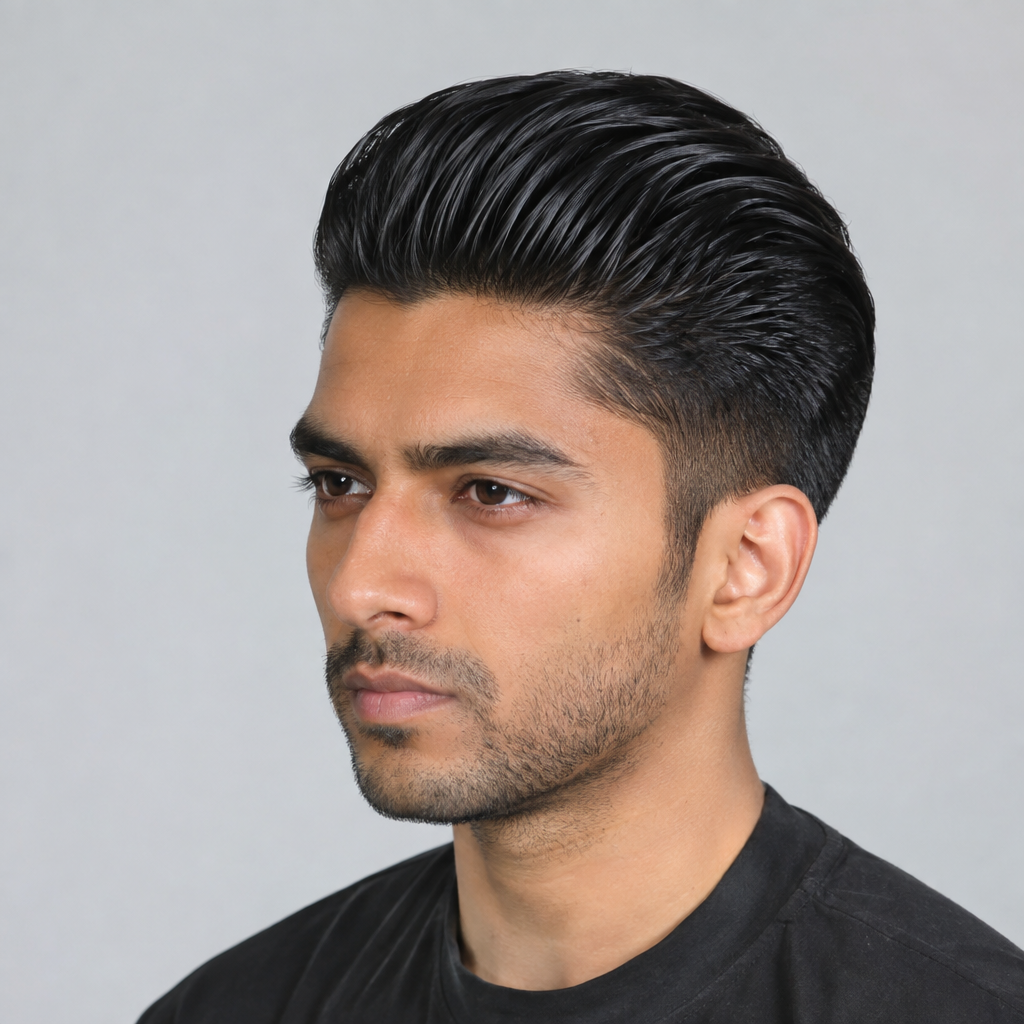
Classic Slick Back
- Best if your hair looks like: dense, straight or wavy, long enough to stay put behind the forehead.
- Face and lifestyle fit: strong for black-tie events, receptions and confident corporate styling.
- Upkeep: high.
- Tell your barber: "Leave 9–11 cm on top for a connected slick back, keep some weight at the upper sides, and finish with a clean low taper at the neckline."
Sweeping hair fully off the face gives a clean, commanding finish that pairs naturally with tailored clothing — in Indian heat, a water-based low-shine pomade holds better than a heavy oily one that separates at the roots.
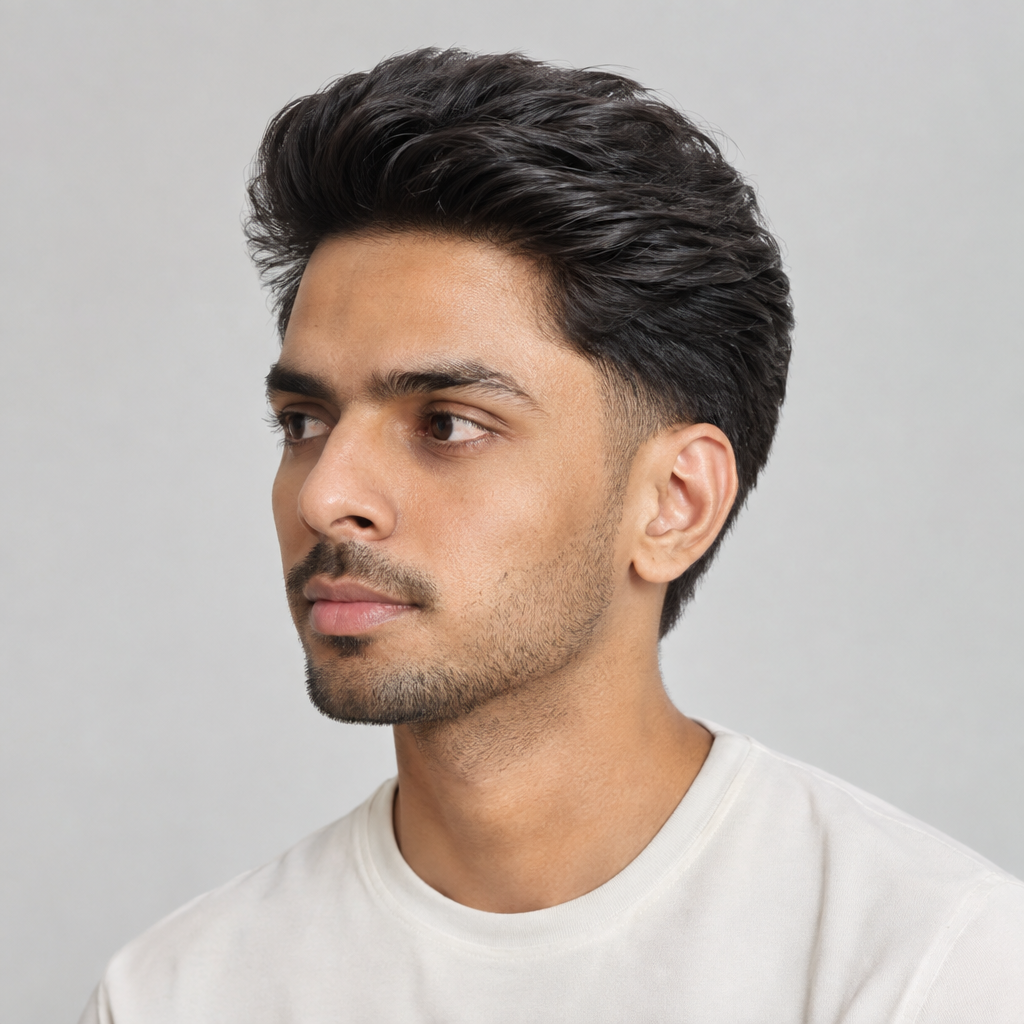
Brushed-Back Taper
- Best if your hair looks like: straight or wavy with natural lift, softer than what a slick back needs.
- Face and lifestyle fit: works for modern offices and dressy occasions where a little movement is welcome.
- Upkeep: medium.
- Tell your barber: "Keep 8–10 cm of textured length on top for a loose brush-back, blend the sides naturally and add a clean low taper around the edges."
The airy backward direction adds height without the glossy severity of a slick back, and it's easy to refresh with just damp fingers once you're off the bike or out of the metro.
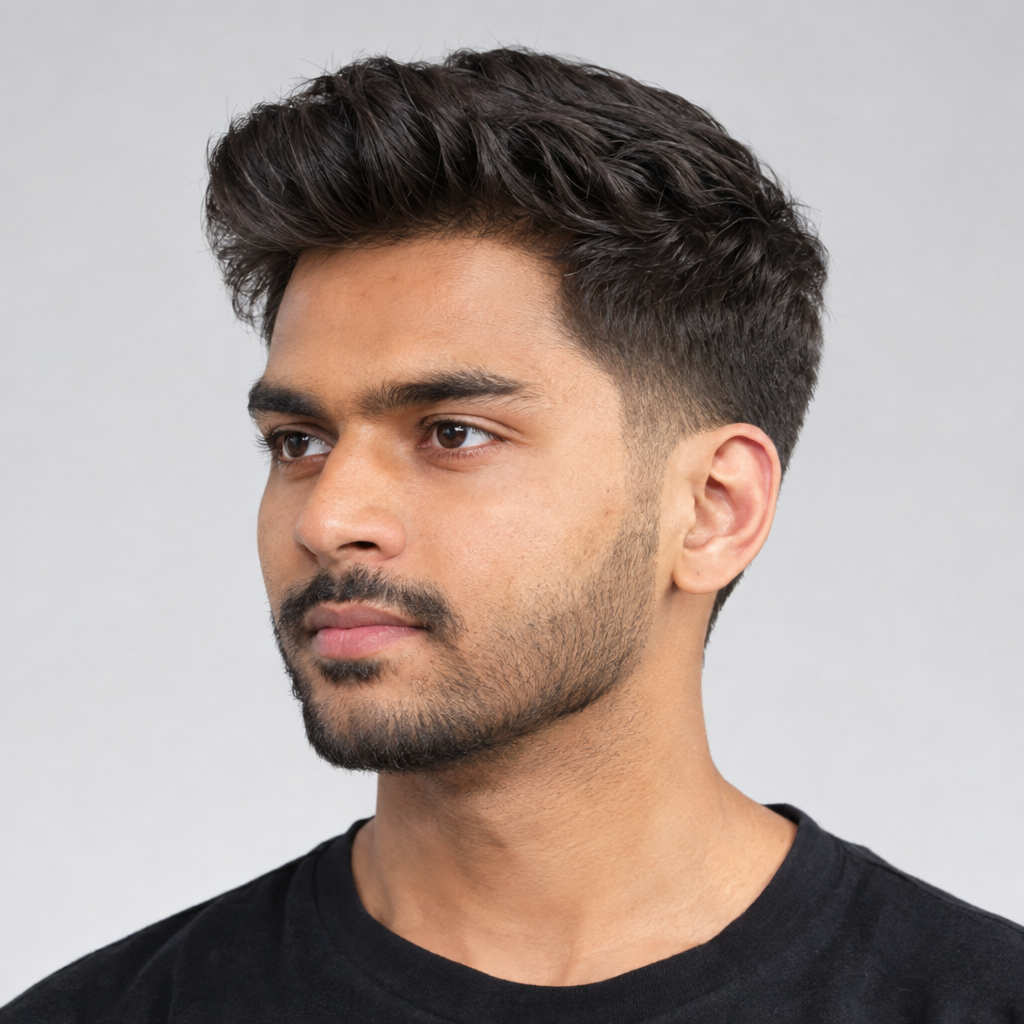
Low Pompadour
- Best if your hair looks like: dense enough to form a smooth front lift without needing extreme height.
- Face and lifestyle fit: a refined wedding or evening choice, especially if your face benefits from added height.
- Upkeep: high.
- Tell your barber: "Leave 9–11 cm at the front for a low pompadour, reduce the length gradually toward the crown, and keep the sides softly tapered and connected."
A restrained pompadour gives occasion-ready presence without looking theatrical, and its lower profile survives a humid Indian evening far better than a tall vintage pomp — blow-drying is still non-negotiable.
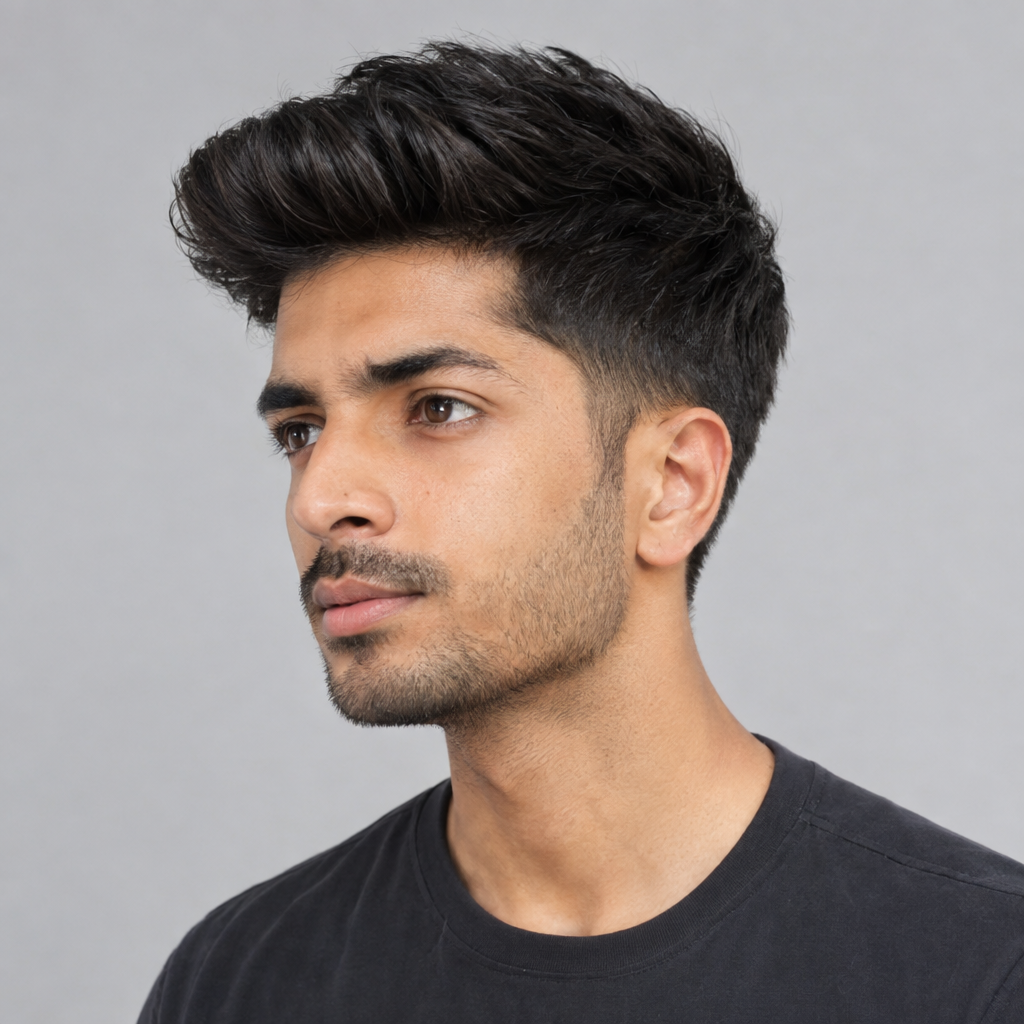
Neat Quiff
- Best if your hair looks like: enough natural lift at the front, kept compact through the sides.
- Face and lifestyle fit: a youthful formal option for presentations, first jobs and wedding functions.
- Upkeep: medium.
- Tell your barber: "Keep 7–9 cm at the front for a neat, moderate quiff, texture the top lightly, and use a low taper with controlled side bulk."
The front lift adds energy and can visually lengthen a rounder face, while the tidy sides keep it formal — matte paste gives more heat-friendly control than wet gel and stops the quiff looking stiff.
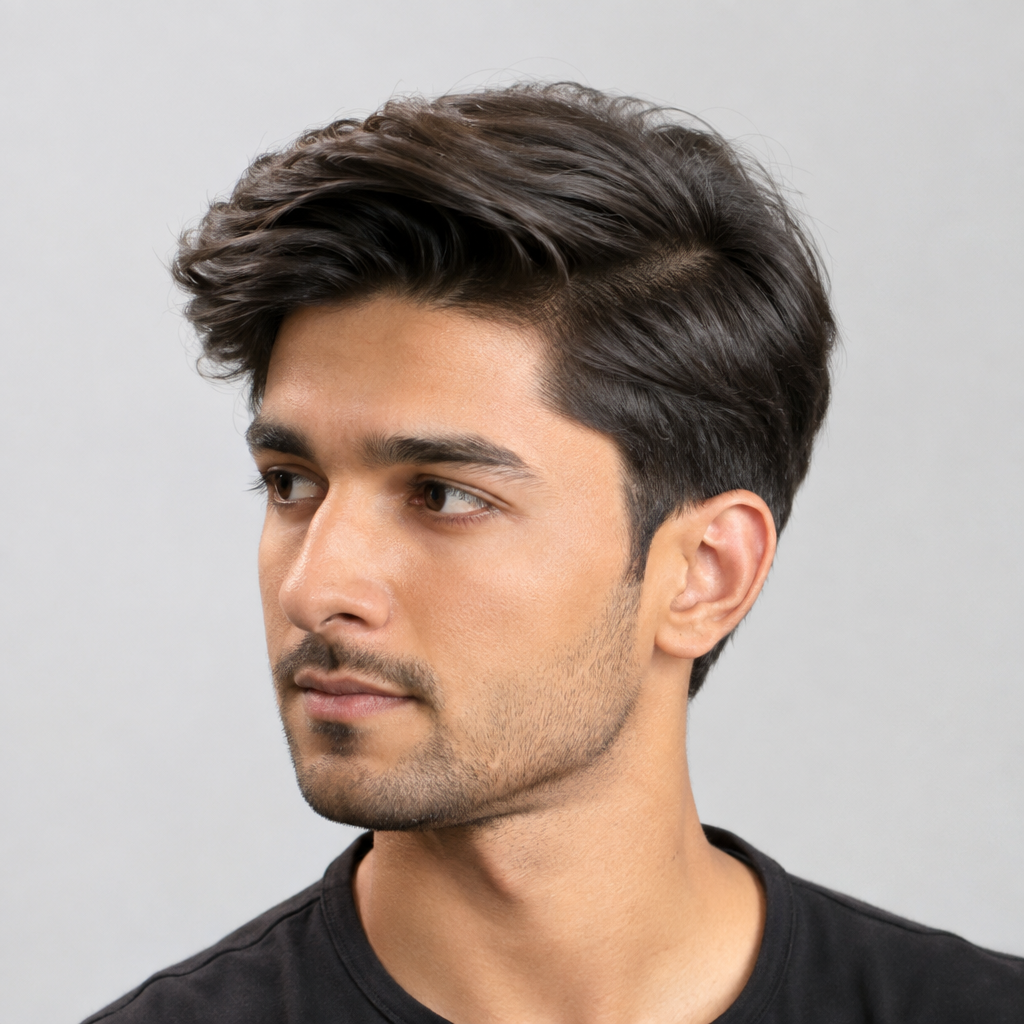
Scissor-Cut Gentleman
- Best if your hair looks like: medium density, better suited to soft edges than clipper-tight sides.
- Face and lifestyle fit: excellent for traditional offices, client meetings and understated wedding styling.
- Upkeep: medium.
- Tell your barber: "Use scissors throughout, leave 7–9 cm on top, keep the sides softly connected and shape a natural side sweep with a tidy neckline."
The softer outline balances angular features without advertising a fresh fade, and it grows out more gracefully than a clipper cut — handy if visiting the barber every few weeks isn't realistic.
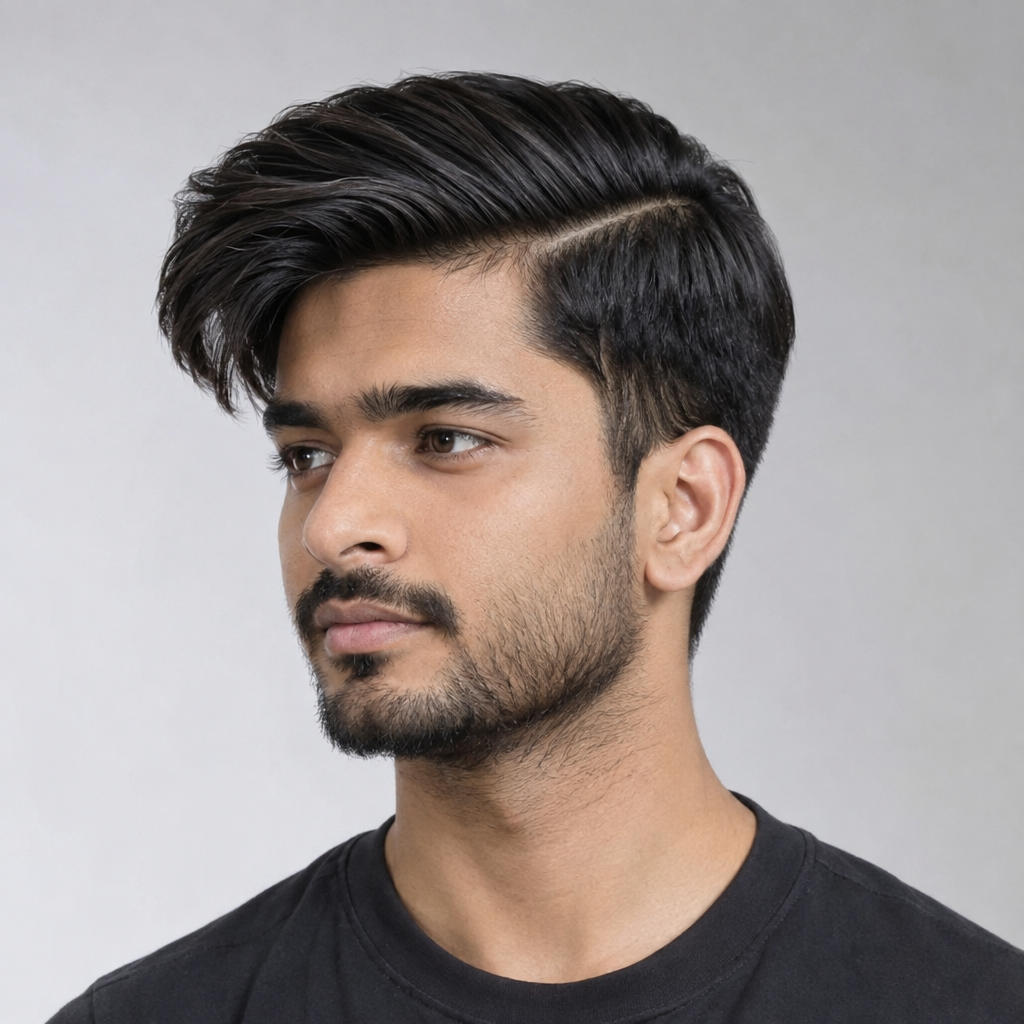
80/20 Side Part
- Best if your hair looks like: dense, straight or wavy, able to support a deep, asymmetrical sweep.
- Face and lifestyle fit: a statement option for senior corporate looks, receptions and formal photography.
- Upkeep: high.
- Tell your barber: "Create a deep 80/20 part, leave 9–11 cm on the heavy side, keep the opposite side neatly tapered, and preserve a smooth connected transition."
The strong asymmetry builds width and structure for a distinctive formal profile — if you normally part centrally, preview the deep part first, since it needs deliberate blow-drying.
Formal Medium-Length and Textured Hairstyles
None of this means natural wave, curl or coil has to be flattened to look formal. These seven medium-length styles keep your texture visible and simply control the outline, the bulk and the neckline — often all a formal setting actually needs.
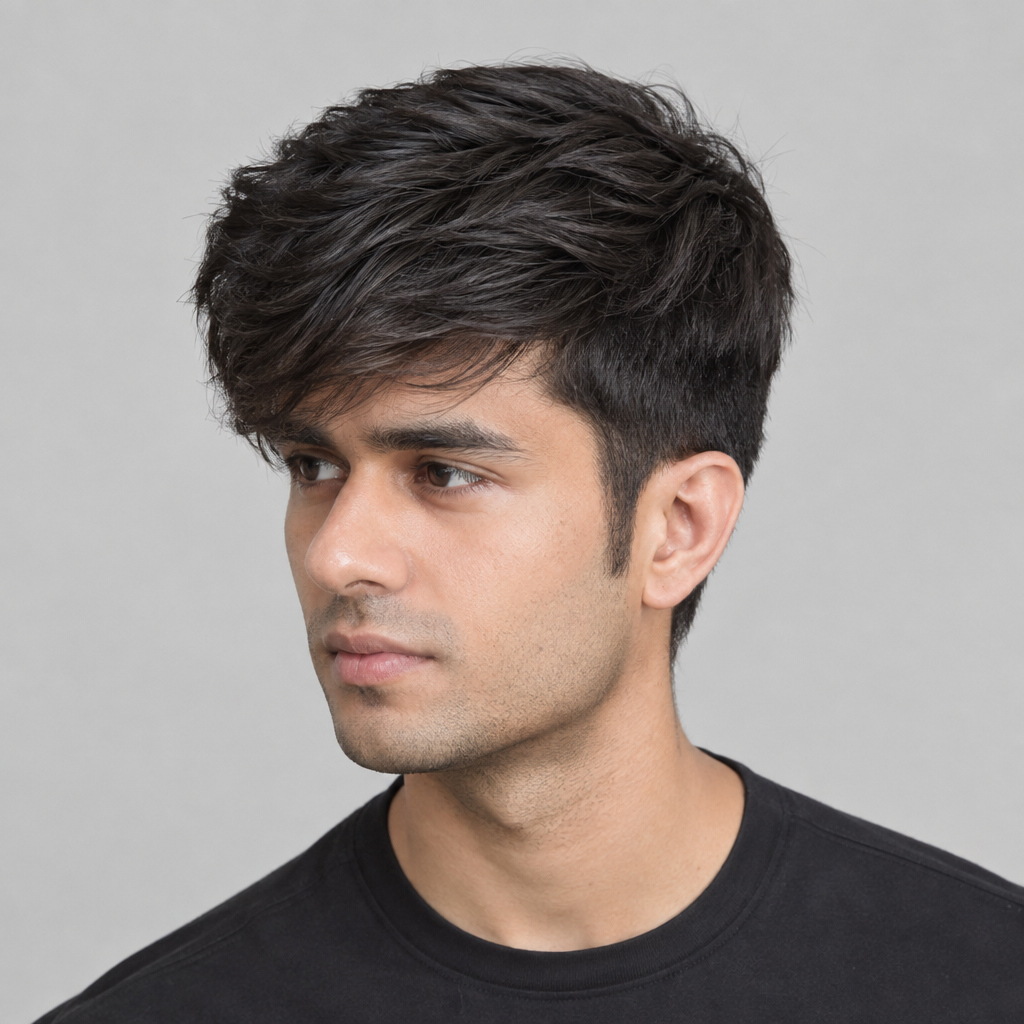
Side-Swept Fringe
- Best if your hair looks like: straight or wavy, falling softly across part of the forehead.
- Face and lifestyle fit: softens a prominent forehead and suits slightly less conservative formal settings.
- Upkeep: medium.
- Tell your barber: "Leave 8–10 cm through the front for a soft side-swept fringe, add light layers, and keep the sides tidy with a low natural taper."
The diagonal fringe adds width and softens angular areas without exposing the whole forehead — use a light cream rather than heavy wax, which can separate the fringe into greasy sections in humid weather.
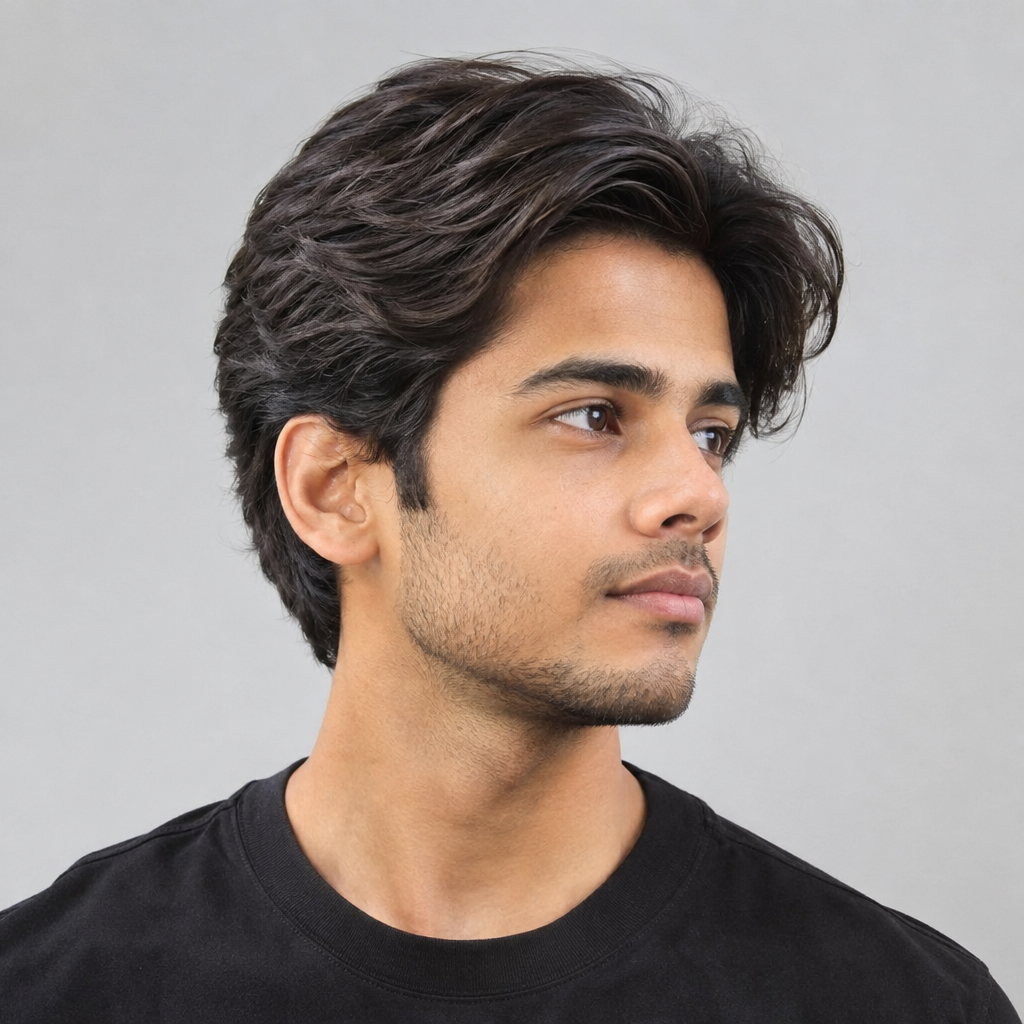
Bro Flow
- Best if your hair looks like: medium-length, straight or wavy, naturally moving back from the face.
- Face and lifestyle fit: suited to creative offices and relaxed wedding styling rather than strict corporate dress codes.
- Upkeep: medium.
- Tell your barber: "Keep medium length through the top and sides, add subtle layers for backward flow, clean the ends and neckline, and avoid a disconnected fade."
Natural backward movement looks refined once the ends, ears and neckline are controlled — it pairs well with a suit or bandhgala when finished with a light cream instead of a beachy, salt-heavy spray.
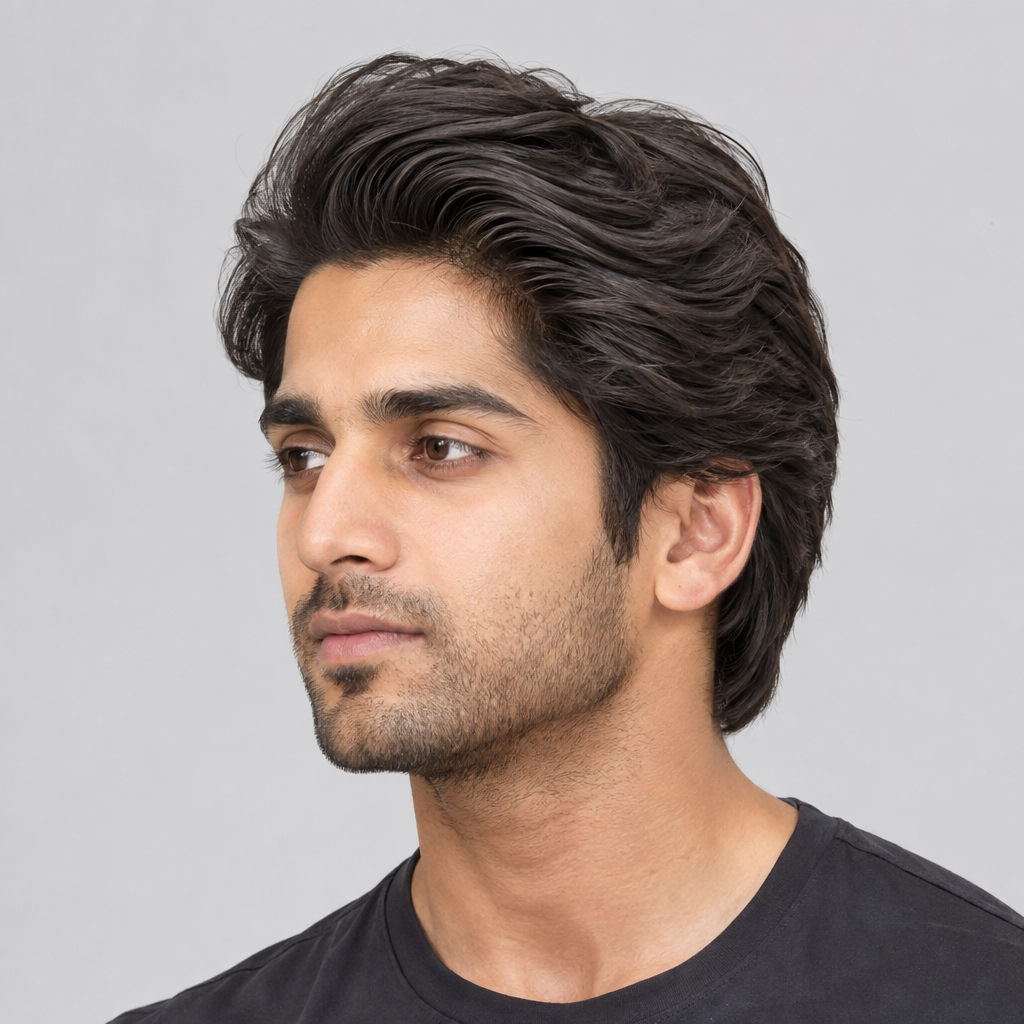
Layered Medium Sweep
- Best if your hair looks like: medium and dense, heavy or triangular in shape without internal layers.
- Face and lifestyle fit: a polished longer option for functions, creative work and men skipping clipper-short sides.
- Upkeep: high.
- Tell your barber: "Keep medium length, add long blended layers to remove internal bulk, and shape the front to sweep back or sideways while keeping the perimeter neat."
Long layers keep movement while stopping dense hair from spreading at the sides — anti-frizz cream and full drying matter here, since unfinished medium hair loses its formal shape fastest in monsoon weather.
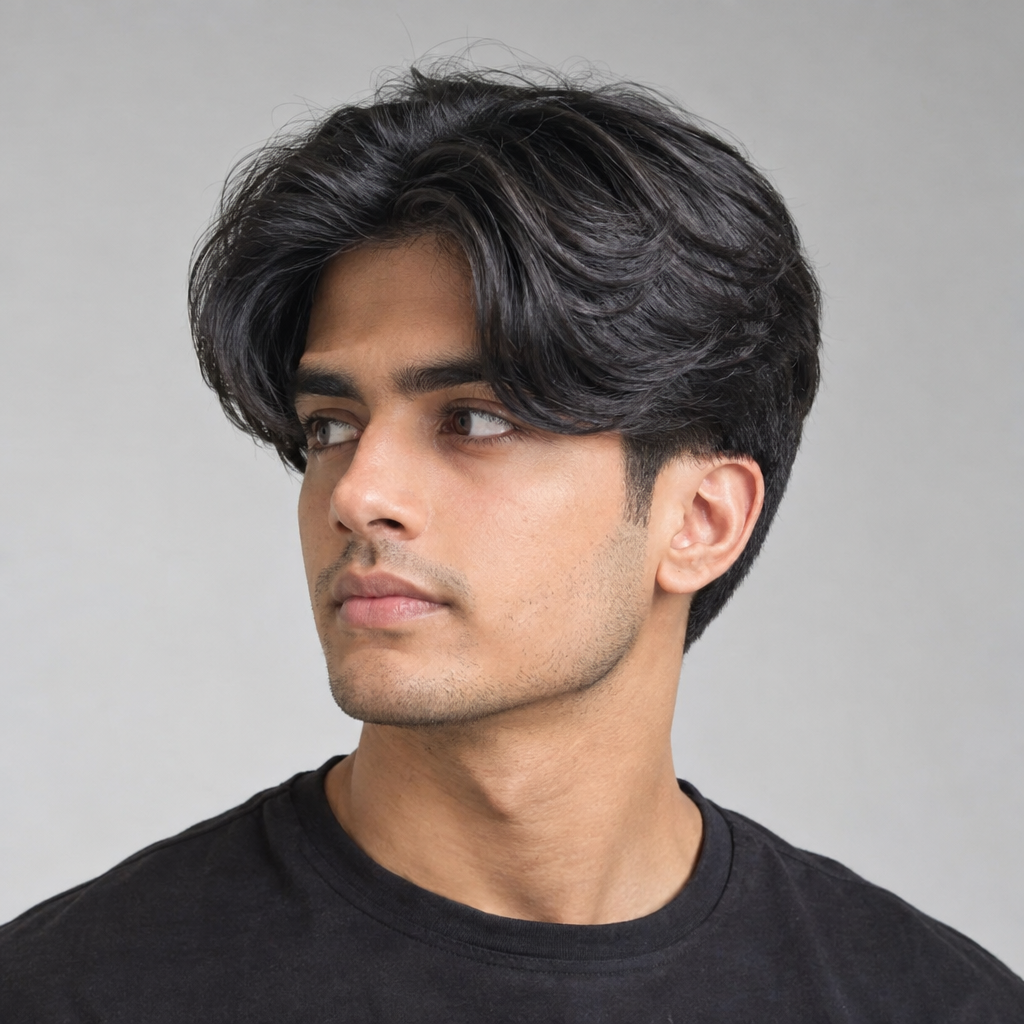
Tapered Curtains
- Best if your hair looks like: medium, straight or wavy, naturally parting near the centre.
- Face and lifestyle fit: a youthful choice for modern workplaces, college events and weddings.
- Upkeep: medium.
- Tell your barber: "Keep 10–13 cm at the front for soft curtains, add face-framing layers, reduce side bulk and finish the sideburns and neckline with a subtle taper."
The divided front adds side width and softens a longer or more angular face — clean edges keep it from reading casual, while a light cream controls flyaways without flattening the movement.
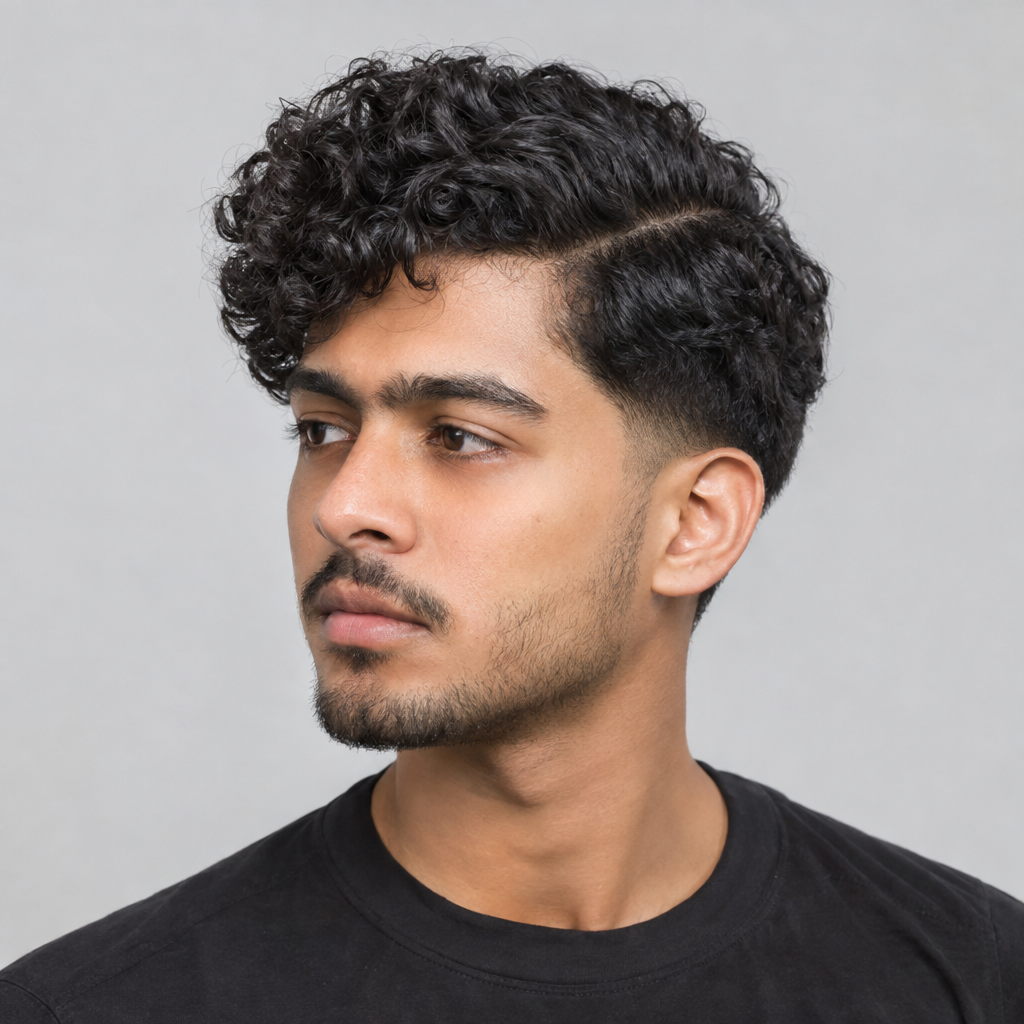
Curly Side Part
- Best if your hair looks like: loose or springy curls that can be directed to one side while keeping their definition.
- Face and lifestyle fit: a polished, natural-texture option for offices, interviews and Indian weddings.
- Upkeep: medium.
- Tell your barber: "Shape my curls with a natural side part, keep 7–10 cm on top, remove excess side bulk with scissors and add a low taper without thinning the curl ends."
The part supplies formal structure while your curls keep their natural character — style on damp hair with curl cream rather than brushing curls flat, especially once humidity picks up.
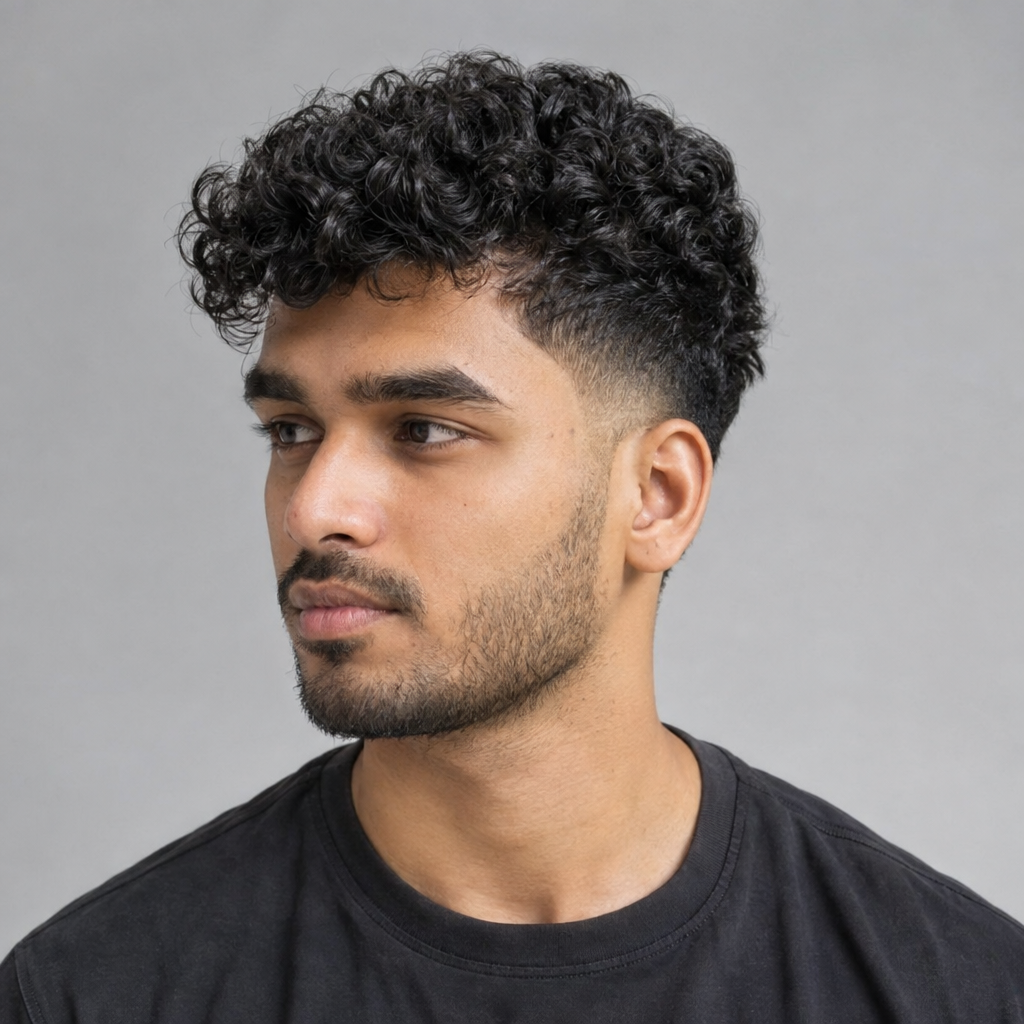
Defined Curly Taper
- Best if your hair looks like: compact, springy curls with visible definition and some natural bulk at the sides.
- Face and lifestyle fit: balances curl volume with the clean perimeter formal settings expect.
- Upkeep: medium.
- Tell your barber: "Keep my defined curls full on top, shape the silhouette without over-thinning, and add a clean low taper around the temples, ears and neckline."
A controlled outline does the formal work, so your curl pattern never needs flattening — the added top height can also balance a rounder face, while leave-in conditioner and a light gel keep monsoon frizz in check.
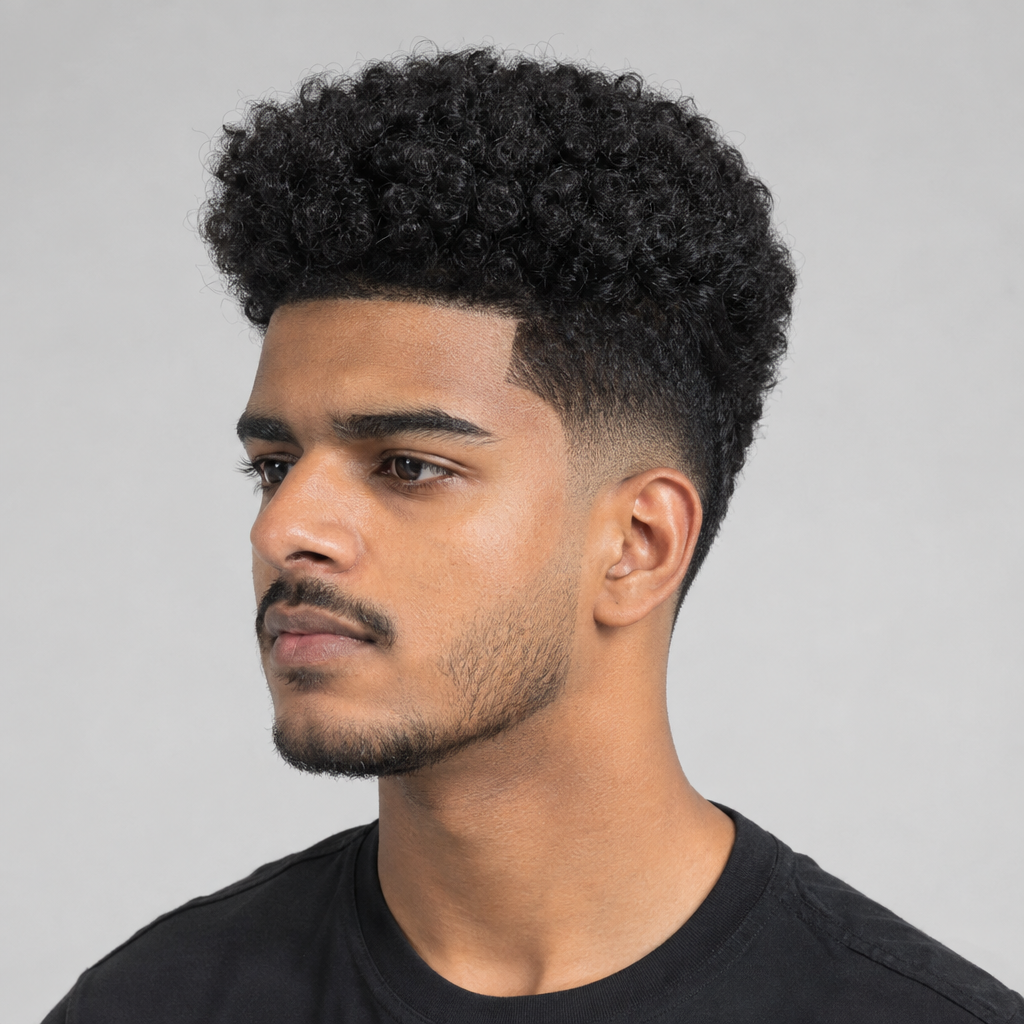
Coily High-Top Taper
- Best if your hair looks like: dense, tight coils that hold an upright shape and need clean edge control.
- Face and lifestyle fit: a distinctive formal look if you want height while keeping your natural coils intact.
- Upkeep: medium.
- Tell your barber: "Shape my coils into a controlled high top, keep the height moderate, use a low temple and neckline taper, and preserve density without picking the sides too wide."
The sculpted top adds vertical balance and looks intentional once the temple and neckline are sharp — keeping the height moderate is what makes it read as office- and wedding-appropriate rather than an exaggerated statement.
Once you've compared all 24, two or three will probably already stand out. Try your shortlist on your own photo before choosing between, say, a low-maintenance crop and a more polished side part — it's a faster gut-check than imagining it on someone else's face.
How to Choose a Formal Hairstyle That Actually Suits You
With 24 options on the table, narrowing down is easier with four plain filters rather than picking on looks alone.
- What your hair is already doing: a style that fights your natural texture every morning will always look less formal by 3 p.m., not more.
- What your face needs: more height and width, or less of it — covered in detail in the next section.
- How formal the setting is: a first interview or conservative office calls for a quieter cut than a wedding reception or evening function.
- How much time you actually have most mornings, not on an ideal day.
If you want one dependable answer, start with an Ivy League or classic taper — both flatter most face shapes, need only a comb and a little cream, and look equally at home in an interview or an office. If mornings are genuinely rushed, a crew cut or French crop needs even less attention. If you want maximum polish for wedding season or a senior role, a classic side part or executive contour is worth the extra five minutes with a blow-dryer.
Hair density, a receding hairline, a stubborn cowlick or an unusual growth pattern can change how a style actually sits, even if it looked perfect on a model. A cowlick near the hairline usually rules out a razor-sharp centre part but works fine with a slightly heavier side part that hides it. A receding hairline often looks neater with shorter, textured tops like a French crop or Caesar cut than with anything that needs a deep parting line.
Before committing to a longer growing-out period, it helps to see two contrasting finalists rather than judging from a single photo. Compare two options side by side on your own face — a safe everyday cut against something a little sharper — and let that decide it, not guesswork.
Which Formal Hairstyle Suits Your Face Shape?
A formal hairstyle should balance your face, not disguise it. Here's the short version for all eight face shapes, pulling the styles from the gallery above that come up most often for each one.
- Oval: preserve natural balance without adding excessive height or width. Reach for the Classic Side Part, Ivy League, Classic Taper, Neat Quiff or Bro Flow.
- Round: add controlled height and keep the sides compact. Reach for the Ivy League, Executive Contour, Brushed-Back Taper, Low Pompadour or Hard Part with Low Fade.
- Square: show off the jaw while softening excess boxiness. Reach for the Businessman Taper, Classic Slick Back, French Crop, Caesar Cut or 80/20 Side Part.
- Heart: soften forehead width and add balanced movement near the temples or jaw. Reach for the Side-Swept Fringe, Tapered Curtains, Curly Side Part, Bro Flow or Scissor-Cut Gentleman.
- Diamond: reduce temple narrowness with side movement rather than very tight sides. Reach for the Side-Swept Fringe, 80/20 Side Part, Tapered Curtains, Bro Flow or Curly Side Part.
- Rectangle: limit vertical height and keep moderate width at the sides. Reach for the Businessman Taper, Classic Taper, French Crop, Caesar Cut or Tapered Curtains.
- Oblong: reduce top height and use fringe or side volume to shorten the face. Reach for the French Crop, Caesar Cut, Side-Swept Fringe, Layered Medium Sweep or Comb-Over Taper.
- Triangle: build visual width and volume through the upper head. Reach for the Neat Quiff, Low Pompadour, 80/20 Side Part, Coily High-Top Taper or Executive Contour.
If your hair has natural wave, curl or coil, the same face-shape logic still applies — just add movement or height through cutting technique rather than by blow-drying the texture flat. Looser waves and curls take naturally to side parts and fringes, while tighter curls and coils hold cropped, rounded silhouettes like the defined curly taper or coily high-top taper especially well.
Not fully sure which description matches you — most faces are a blend of two. Preview a couple of these matches on your own photo instead of guessing from the mirror.
Best Formal Hairstyles for Short, Medium and Long Hair
Short cuts like the Ivy League, crew cut, French crop and Caesar cut hold their outline through a full workday because there's very little length for humidity, sweat or a helmet to disturb. They're the safest option if you can't touch your hair again until you're home.
Medium-length styles — the classic side part, quiff, curtains, slick back and the curly or coily options — trade some of that low-effort resilience for more shape, versatility between day and evening styling, and room to show real texture. Most need at least 7–9 cm on top before they hold their intended shape, so if you're growing out a shorter cut, expect a slightly awkward stage before you get there.
If your hair is genuinely long, well past the length most of these styles use, it can still look formal — but only with deliberate layers, tidy ends and a controlled part rather than simply combing it straight back. Left unstructured, long hair reads as undone in a formal setting far faster than short or medium hair does.
Growing your current cut into one of the medium styles usually takes six to ten weeks of slightly untidy in-between length. If you need something that works immediately, for an interview next week say, pick from the short list instead of starting a grow-out now.
Best Men's Hairstyles for the Office, Interviews and Weddings
The same haircut rarely needs to change between an ordinary Tuesday and a wedding reception — the styling usually does.
For conservative offices and interviews, stick to clean tapers, soft parts and controlled volume with a low-shine, natural finish: the classic taper, Ivy League, businessman taper or a softly styled classic side part all work. Skip an unfamiliar high fade or a heavy wet-look product on the actual interview day; save the testing for a normal week.
For Indian weddings and receptions, the same base cuts can take more volume, more shine or a sharper part to complement a sherwani, bandhgala or tuxedo — a classic side part styled with a touch more pomade, an executive contour, a low pompadour or an 80/20 part all read as event-ready without changing the haircut itself.
For college presentations and first jobs, youthful, tidy options like the Ivy League, neat quiff, scissor-cut gentleman or curly side part strike the balance — polished enough to be taken seriously, without looking older than you are.
See how the same cut looks styled naturally for the office versus dressed up for a function — it's often the quickest way to decide if one haircut can really cover both, or if you'd rather keep two slightly different looks in rotation.
What to Tell Your Barber for a Formal Haircut
Vague requests like "short on the sides, longer on top" leave too much to chance. Here's every barber ask from this list in one place — pick the one for your shortlisted style and read it out or show it on your phone.
- Classic Side Part: "Give me a classic side part with 7–9 cm on top, a soft low taper on the sides and back, and enough weight to comb naturally to one side."
- Ivy League: "Cut an Ivy League with about 4–5 cm at the front, gradually shorter through the crown, and neatly tapered sides with no harsh disconnect."
- Executive Contour: "Give me an executive contour with a defined side part, 8–10 cm on top, a smooth low taper and enough side weight for a rounded, connected silhouette."
- Businessman Taper: "Give me a conservative businessman cut with 5–6 cm on top, a natural side direction, scissor-over-comb sides and a clean low taper at the edges."
- Classic Taper: "Keep my natural shape on top, remove bulk evenly, and add a soft classic taper only around the sideburns, ears and neckline."
- Tapered Crew Cut: "Cut a crew cut with about 2–3 cm at the front, shorter through the crown, and use a low taper rather than a high skin fade."
- Comb-Over Taper: "Leave 7–8 cm on top for a natural comb-over, keep the part soft, and blend it into a low taper without shaving a hard line."
- Classic Slick Back: "Leave 9–11 cm on top for a connected slick back, keep some weight at the upper sides, and finish with a clean low taper at the neckline."
- Brushed-Back Taper: "Keep 8–10 cm of textured length on top for a loose brush-back, blend the sides naturally and add a clean low taper around the edges."
- Low Pompadour: "Leave 9–11 cm at the front for a low pompadour, reduce the length gradually toward the crown, and keep the sides softly tapered and connected."
- Neat Quiff: "Keep 7–9 cm at the front for a neat, moderate quiff, texture the top lightly, and use a low taper with controlled side bulk."
- Regulation Cut: "Give me a regulation cut with a short side-parted top, smoothly tapered sides and back, and a neat natural neckline with no exposed skin fade."
- Scissor-Cut Gentleman: "Use scissors throughout, leave 7–9 cm on top, keep the sides softly connected and shape a natural side sweep with a tidy neckline."
- French Crop: "Cut a clean French crop with 3–5 cm of light texture on top, a short soft fringe and a low taper that keeps the overall outline conservative."
- Caesar Cut: "Give me a short Caesar with an even 2–4 cm top, a tidy forward fringe and softly tapered sides without a dramatic fade."
- Side-Swept Fringe: "Leave 8–10 cm through the front for a soft side-swept fringe, add light layers, and keep the sides tidy with a low natural taper."
- Bro Flow: "Keep medium length through the top and sides, add subtle layers for backward flow, clean the ends and neckline, and avoid a disconnected fade."
- Layered Medium Sweep: "Keep medium length, add long blended layers to remove internal bulk, and shape the front to sweep back or sideways while keeping the perimeter neat."
- 80/20 Side Part: "Create a deep 80/20 part, leave 9–11 cm on the heavy side, keep the opposite side neatly tapered, and preserve a smooth connected transition."
- Tapered Curtains: "Keep 10–13 cm at the front for soft curtains, add face-framing layers, reduce side bulk and finish the sideburns and neckline with a subtle taper."
- Curly Side Part: "Shape my curls with a natural side part, keep 7–10 cm on top, remove excess side bulk with scissors and add a low taper without thinning the curl ends."
- Defined Curly Taper: "Keep my defined curls full on top, shape the silhouette without over-thinning, and add a clean low taper around the temples, ears and neckline."
- Coily High-Top Taper: "Shape my coils into a controlled high top, keep the height moderate, use a low temple and neckline taper, and preserve density without picking the sides too wide."
- Hard Part with Low Fade: "Give me a clean hard part with 5–7 cm on top, a low fade that stays below the temples, and enough connection for a polished side-combed finish."
Beyond the exact phrase, mention your desired top length in centimetres rather than just "short" or "long", how high you want the taper or fade to sit, which side you part on, how much weight should be removed for thickness, and the finish you want — matte, natural or shined. Bring a front-facing photo, a side profile and a back-of-head photo if you can, and flag anything that affects the cut: a cowlick, a receding patch, daily helmet use or genuinely limited styling time. A barber working blind on just "short back and sides" is guessing at all of this.
How to Style Formal Hair in Indian Heat and Humidity
Start with slightly damp hair — fully dry hair is harder to direct and fully wet hair takes too long to set. Use your fingers or a comb to establish the part or direction you want first, then blow-dry on medium heat while brushing in that direction; this is what actually creates hold, not the product. Apply a small, coin-sized amount of product only after the hair is dry, working it in from your palms rather than dropping it onto the scalp, and touch up only where the shape is loosest — usually the front and crown.
- Lightweight styling cream: flexible, natural-looking hold for side parts, tapers and comb-overs.
- Matte clay: stronger grip and texture for crops, crew cuts and quiffs.
- Pomade: smoothness and shine for slick backs, executive contours and defined parts.
- Anti-humidity serum: a light layer for longer, wavy, curly or coily styles to control frizz through monsoon months.
In hot weather, apply product to the mid-lengths and ends rather than massaging it into the roots — that's usually what causes the greasy look people blame on "too much product" when it's really placement. If a helmet flattens your style on the way to work, a small amount of dry shampoo or matte powder at the roots and a quick finger-comb through your original direction will bring most short and medium cuts back within a minute.
Monsoon humidity is the main reason a style that looked sharp at 9 a.m. turns fluffy by lunchtime — an anti-humidity serum or light-hold clay helps more than fighting it with extra product. Hard water is a separate problem: it leaves a dull, slightly stiff residue over time, so a clarifying shampoo every couple of weeks stops product from building up and making cuts like the slick back or executive contour look heavier than intended. Whatever you use, make sure your scalp is completely dry before you leave the house — damp roots under a helmet or in office air conditioning are what cause flat, lifeless hair by the afternoon, not the heat itself.
How Often Should You Maintain a Formal Hairstyle?
Sharp fades and hard parts — the hard part with low fade, 80/20 side part, classic slick back — need a trim roughly every two to four weeks, because the clean line at the temple grows out fastest and is the first thing to look untidy. Tapers, crops and crew cuts, such as the classic taper, French crop and tapered crew cut, are more forgiving at three to five weeks. Layered medium styles like the layered medium sweep or tapered curtains can usually stretch to six to eight weeks if the neckline and sideburns stay clean in between.
A quick neckline and sideburn trim between full cuts, something most barbers will do in a few minutes, keeps a professional outline even when the top itself doesn't need touching.
Wash with a mild, sulfate-light shampoo two to three times a week rather than daily; over-washing in hard-water areas can dry out both hair and scalp, while under-washing lets styling product build up and dull the finish. A light conditioner on the ends helps wavy, curly and coily formal styles hold their shape without frizzing.
If you're pairing formal hair with a beard, keep the sideburns, temple line and beard edge trimmed to the same rhythm as your haircut — a fresh taper next to an overgrown beard line looks unfinished no matter how sharp the top is.
Formal Hairstyle Mistakes That Make a Good Cut Look Untidy
- Overloading with wet-look product: a heavy, shiny finish reads as trying too hard in most Indian offices and interviews — use less than you think you need.
- Letting volume collapse by afternoon: invest in the blow-dry step, not just the product; product alone can't hold shape that was never set.
- Ignoring an overgrown neckline: hair creeping over the collar is one of the fastest ways a genuinely good haircut starts looking neglected.
- Forcing a part against natural growth: a hard line fighting a cowlick or natural whorl will lift and separate by midday, however carefully it was set that morning.
- Choosing high volume without checking your face length: a tall pompadour or quiff on an already long, oblong or rectangle face adds height you don't need — a flatter, wider style usually works better.
- Going for an aggressive skin fade in a conservative setting: a soft, low taper reads as more senior and appropriate than a high fade in most traditional Indian workplaces and formal family events.
- Copying straight-hair styling onto curls or coils: brushing curls out to "tame" them usually creates frizz and loses the shape entirely — work with curl cream on damp hair and let the cut's outline do the formal work instead.
Frequently asked questions
Which hairstyle looks most professional on men?
An Ivy League or classic side part is the safest professional choice because both have a clean outline, controlled top and enough versatility for interviews, offices and formal events. Men who want less daily styling can choose a classic taper or tapered crew cut instead.
What is the best formal hairstyle for a job interview?
Choose a tidy Ivy League, businessman taper or classic side part with a natural or low-shine finish. Get the neckline and sideburns cleaned up a few days before the interview, and avoid testing an unfamiliar high fade or wet-look product on the day itself.
Can curly hair look formal on men?
Yes. A curly side part or defined curly taper looks formal when the perimeter is clean, excess side bulk is controlled and the curls stay defined rather than brushed out. Use a small amount of curl cream or light gel and let the hair dry fully to reduce frizz.
Which formal haircut is best for a round face?
An Ivy League, executive contour, neat quiff or brushed-back taper can add useful height while keeping the sides controlled. Avoid heavy horizontal fringes and excessive side volume, which can make a round face look wider.
What formal hairstyle works for thinning hair?
A tapered crew cut, French crop, Caesar cut or compact Ivy League can make thinning hair look more even by reducing contrast between dense and sparse areas. Use a matte, lightweight product and avoid oily slick-backs that separate strands and expose more scalp.
Should a formal hairstyle have a fade or a taper?
A taper is the more universally formal option because it creates a soft, conservative transition around the sideburns and neckline. A low fade can still work in modern offices and at weddings, but a high or skin fade may feel too sharp for conservative workplaces.
Which men's hairstyle goes best with a suit or sherwani?
A classic side part, executive contour, brushed-back taper or low pompadour pairs well with structured clothing because each exposes the face and keeps a deliberate silhouette. With an ornate sherwani, keep the hair controlled so it complements rather than competes with the outfit.
How can I stop a formal hairstyle from collapsing under a helmet?
Use less product before the commute, dry the roots completely and use a small comb or your fingers to reset the direction after removing the helmet. A matte powder applied lightly at the destination can restore lift, while compact cuts such as an Ivy League or crew cut recover most easily.
Is pomade or hair clay better for a formal hairstyle?
Pomade is better for defined side parts, comb-overs and slick styles that need smoothness or shine. Clay is better for quiffs, crops and crew cuts that need matte texture and stronger grip. In hot, humid weather, start with a very small amount to avoid greasy buildup.
How often should men trim a formal haircut?
Sharp low fades and hard parts usually need attention every two to four weeks, while classic tapers, side parts and crops can often go three to five weeks. Medium layered cuts may last six to eight weeks if the neckline, sideburns and ends stay tidy.
Shortlist and Preview Your Formal Hairstyle
By now you've probably got two names in mind — one safe, low-maintenance option for daily wear, and one sharper style for interviews, weddings or big presentations. That's exactly the right way to shortlist: one default, one occasion upgrade, rather than a single cut expected to do everything.
Preview both on a clear, front-facing photo of yourself before you book the appointment — it's a quicker, less risky way to settle a length, a parting or a fade than deciding from someone else's photo alone.