Best Hairstyles for Curly Hair Men: Find Your Most Flattering Cut
Match your actual curl pattern and face shape to a haircut that survives Indian heat, helmets and humidity — then see it on your own face before you sit in the barber's chair.
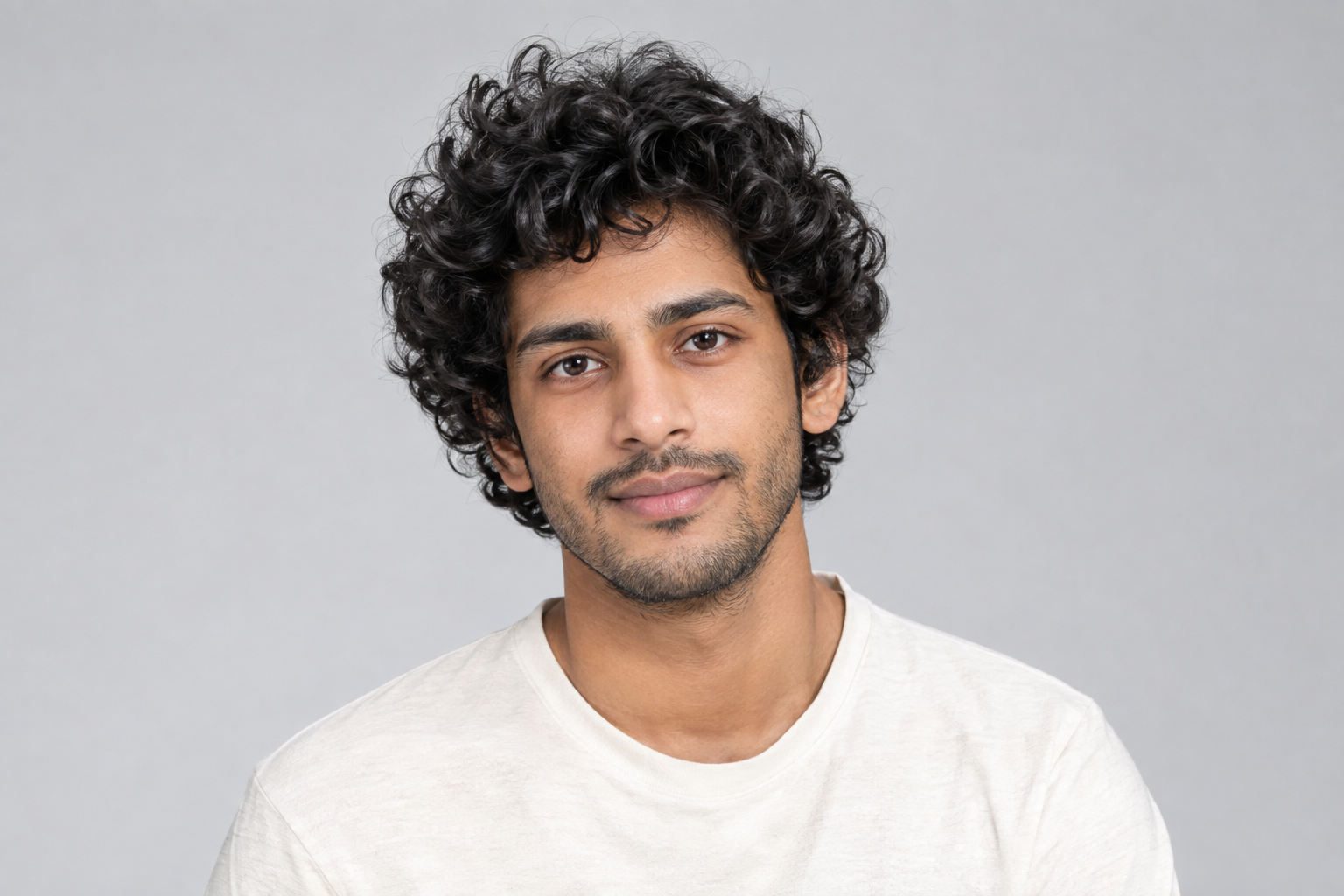
Curly hair in India deals with three things every single day: heat, humidity and a helmet commute. The right haircut works with your curl pattern instead of fighting it, so mornings take less time and your hair still looks deliberate by evening. This guide sorts every genuinely different curly cut into short, medium and long, matched to your curl look, your face shape and how much upkeep you're honestly willing to do.
Which Type of Curly Hair Looks Most Like Yours?
Before you look at a single haircut, look at your own curls in a mirror or a recent photo. Curl size, spring and density change how the exact same haircut sits on your head, so matching your hair honestly now saves you a disappointing barber visit later.
Loose curls
Your curls form wide, relaxed loops, roughly the width of a marker pen or wider. They stretch out and hang with some weight, and they're the easiest curl type to comb through when wet. In technical hair typing this is usually called 3A, but you don't need the code to recognise it in a photo.
Tight, springy curls
Your curls are narrower, about pencil-width, and they bounce back forcefully when you pull one straight and let go. They hold shape well but can also puff outward if a haircut doesn't account for that spring. This range is often labelled 3B.
Dense, S- or Z-shaped curls
Your curls are tight corkscrews or sharp zig-zags that pack closely together and show real shrinkage — hair that looks shoulder-length wet can sit at ear-length once fully dry. This is commonly called 3C, and it usually needs the most deliberate barber planning around length.
The same haircut, a curly quiff for example, looks completely different on loose curls than on dense corkscrews — one gets long, sweeping movement, the other gets tight, sculptural volume. That's exactly why matching a photo of your own hair, not just a style name, matters more here than with almost any other hair type.
Here's every style in this guide at a glance, so you can shortlist two or three before reading the full breakdown below.
| Hairstyle | Best length | Best face shapes | Maintenance | Best curl/hair type |
|---|---|---|---|---|
| Curly Crew Cut | Short | Oval, Square, Rectangle, Oblong | Low | 3A, 3B |
| Curly Textured Crop | Short | Oval, Heart, Diamond, Rectangle, Oblong | Low | 3A, 3B, 3C |
| Low Taper Curls | Short | Most face shapes | Medium | 3A, 3B, 3C |
| Drop Fade Curls | Short | Oval, Round, Square, Triangle | Medium | 3B, 3C |
| Curly Quiff | Short | Round, Square, Triangle | Medium | 3A, 3B |
| Curly Fringe | Short | Heart, Diamond, Rectangle, Oblong | Medium | 3A, 3B |
| Curly Edgar | Short | Oval, Diamond, Oblong | High | 3B, 3C |
| Tapered Curly Afro | Short | Most face shapes | Medium | 3C |
| Medium Layered Curls | Medium | Most face shapes | Medium | 3A, 3B, 3C |
| Curly Curtains | Medium | Diamond, Rectangle, Oblong | Medium | 3A |
| Curly Shag | Medium | Square, Heart, Oblong | Medium | 3A, 3B |
| Modern Curly Mullet | Medium | Oval, Round, Diamond, Triangle | High | 3A, 3B, 3C |
| Curly Slick Back | Medium | Oval, Square, Heart, Diamond | High | 3A |
| Curly Flow | Medium | Oval, Square, Rectangle | Medium | 3A |
| Curly Pompadour | Medium | Round, Square, Triangle | High | 3A, 3B |
| Long Layered Curls | Long | Most face shapes | High | 3A, 3B, 3C |
| Curly Ponytail | Long | Oval, Square, Diamond | Medium | 3A, 3B |
| Curly Wolf Cut | Long | Oval, Round, Heart, Diamond, Triangle | High | 3A, 3B |
| Curly Bob | Long | Heart, Rectangle, Oblong | Medium | 3A, 3B |
| Curly Mohawk | Long | Oval, Round, Square, Triangle | High | 3B, 3C |
Best Short Curly Hairstyles for Men
Short curly cuts are the default for Indian summers, daily commutes and anyone who wants to leave the house in under five minutes without sacrificing texture.
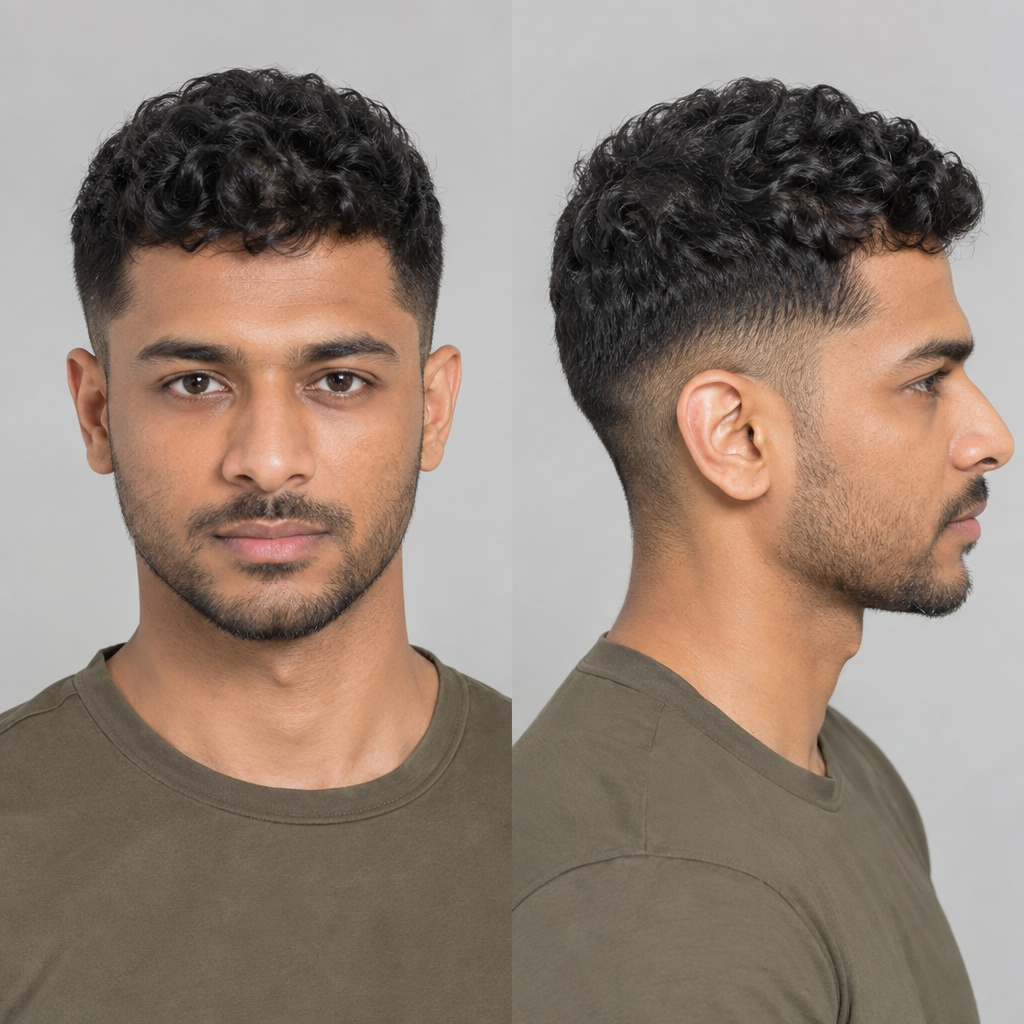
Curly Crew Cut
- Best if your curls look like: short, compact curls that form visible bends or small ringlets without much extra length.
- Face and lifestyle fit: a clean option for oval, square and longer faces, office routines, sport and helmet-heavy commutes.
- Upkeep: low.
- Tell your barber: "Keep about 2.5 to 4 cm of curl on top, taper the temples and neckline, and leave enough length for the curls to form when dry."
This is a dependable choice in Indian heat because it dries fast and is easy to reset after a commute. A soft taper keeps it polished without the severe contrast of a high skin fade.
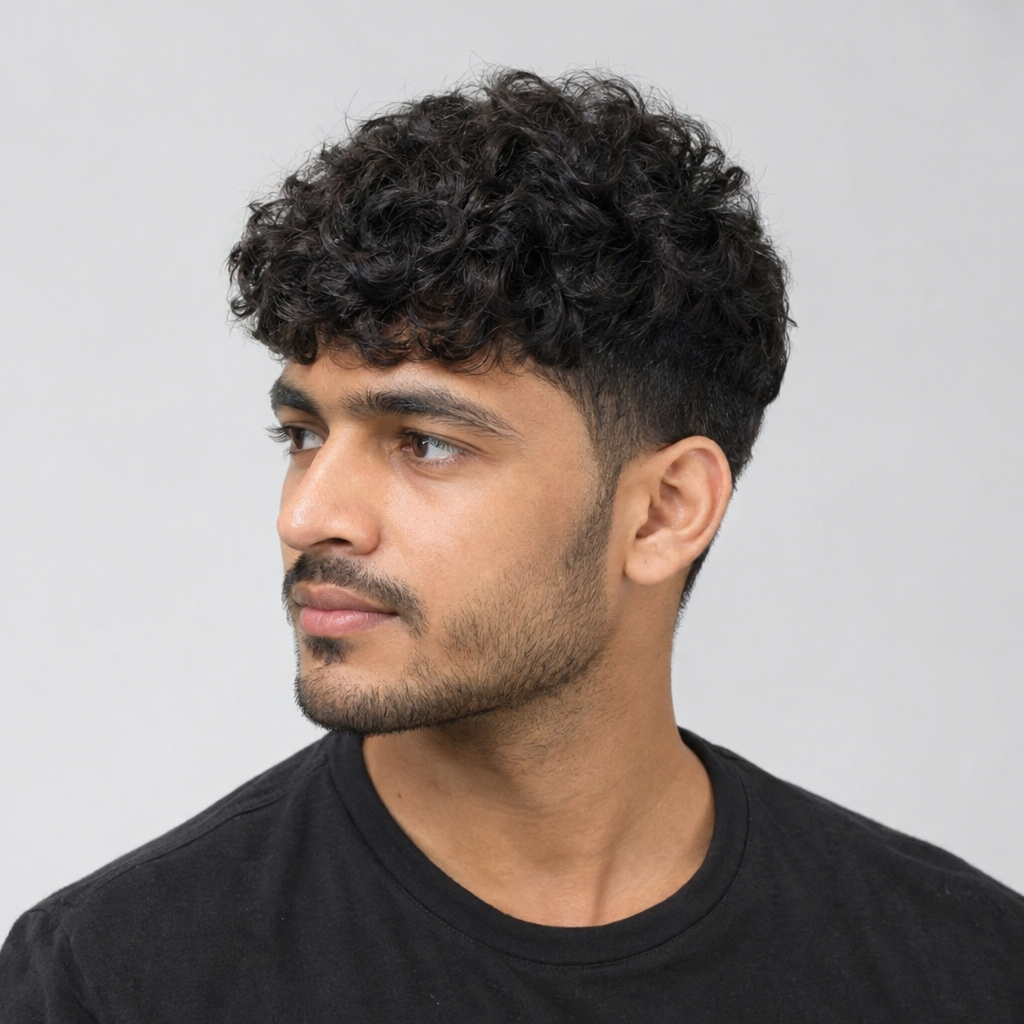
Curly Textured Crop
- Best if your curls look like: short curls with enough spring to create texture across the top and a soft forward edge.
- Face and lifestyle fit: useful for oval, heart, diamond and longer faces, especially when a little forehead coverage is wanted.
- Upkeep: low.
- Tell your barber: "Cut a short textured crop that follows my natural curl pattern, keep a soft forward fringe, and taper the sides without thinning the top heavily."
The crop keeps curls visible without a long morning routine. Its forward texture can soften a high forehead, and the compact shape survives humid days better than a tall, heavily styled cut.
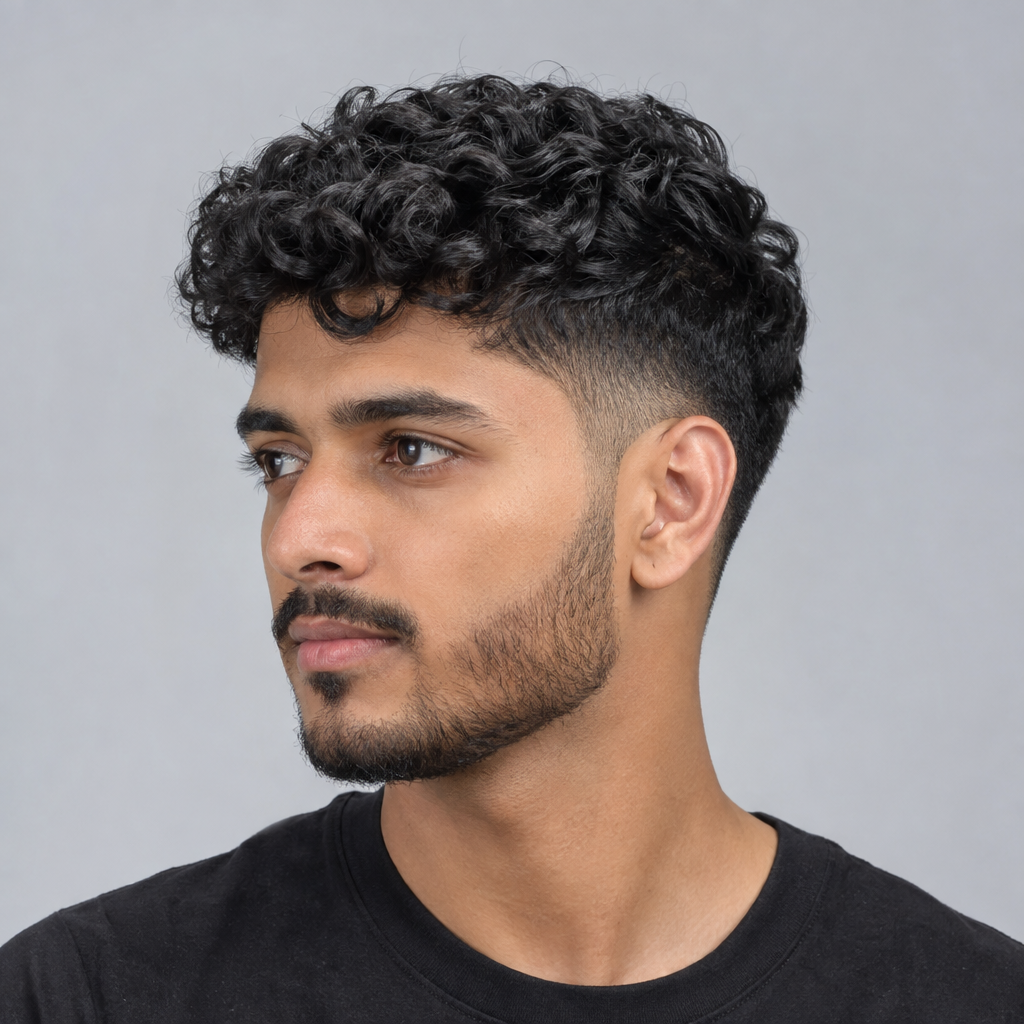
Low Taper Curls
- Best if your curls look like: full on top but in need of a cleaner outline around the ears, sideburns and neck.
- Face and lifestyle fit: a genuinely versatile default for most face shapes, colleges and offices alike.
- Upkeep: medium.
- Tell your barber: "Keep my natural curl volume on top and use a low taper only at the temples and neckline, with no high fade or aggressive thinning."
The taper supplies a neat outline while keeping enough side hair to balance your face. Picture your own curl volume sitting above a clean, low taper instead of a razor-sharp fade — that's the safest starting point if you're unsure where else to begin.
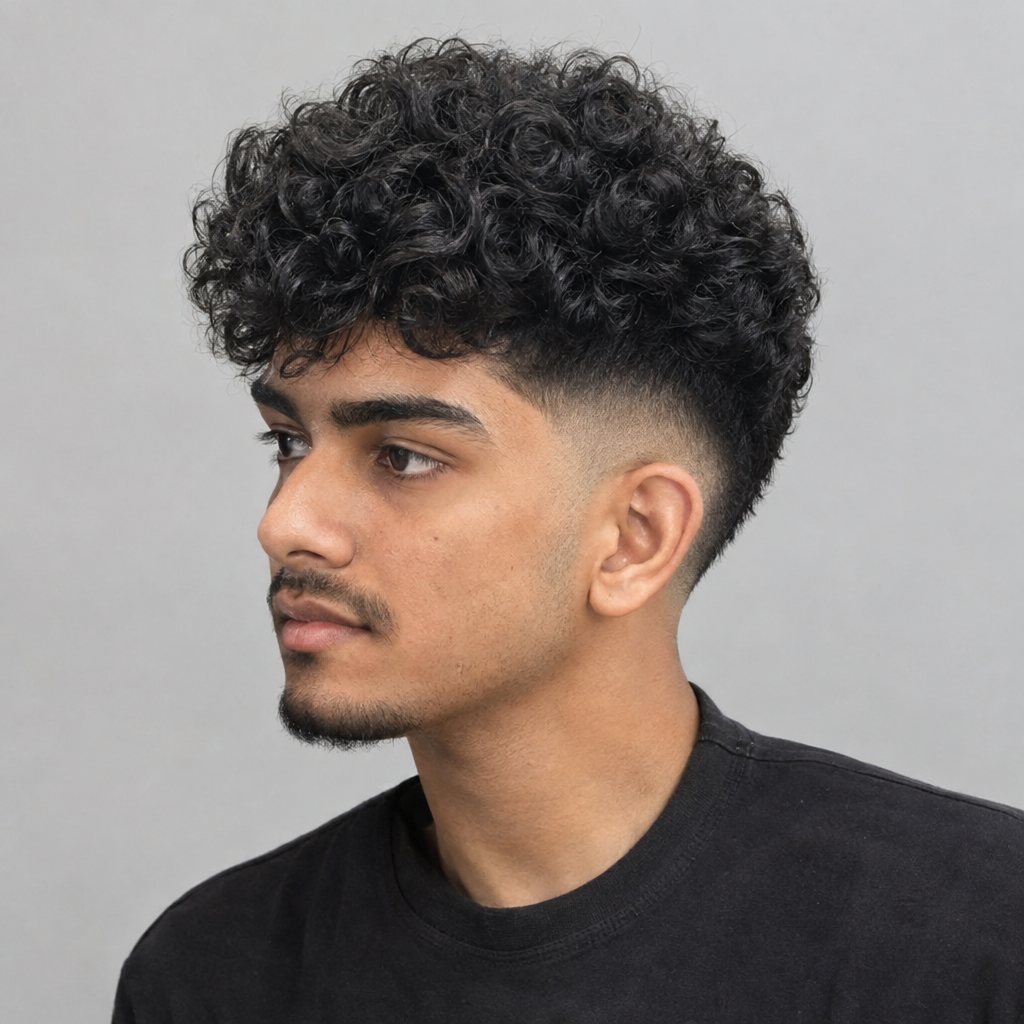
Drop Fade Curls
- Best if your curls look like: springy or compact curls that hold a full top above closely clipped sides.
- Face and lifestyle fit: best for oval, round, square and triangle faces wanting a cleaner side outline.
- Upkeep: medium.
- Tell your barber: "Give me a low-to-mid drop fade that curves behind the ears, keep the curly top full, and blend without creating a shelf above the fade."
The curved fade follows your head shape more naturally than a straight high fade. It controls humid-weather side puffiness while leaving enough curl on top for height.
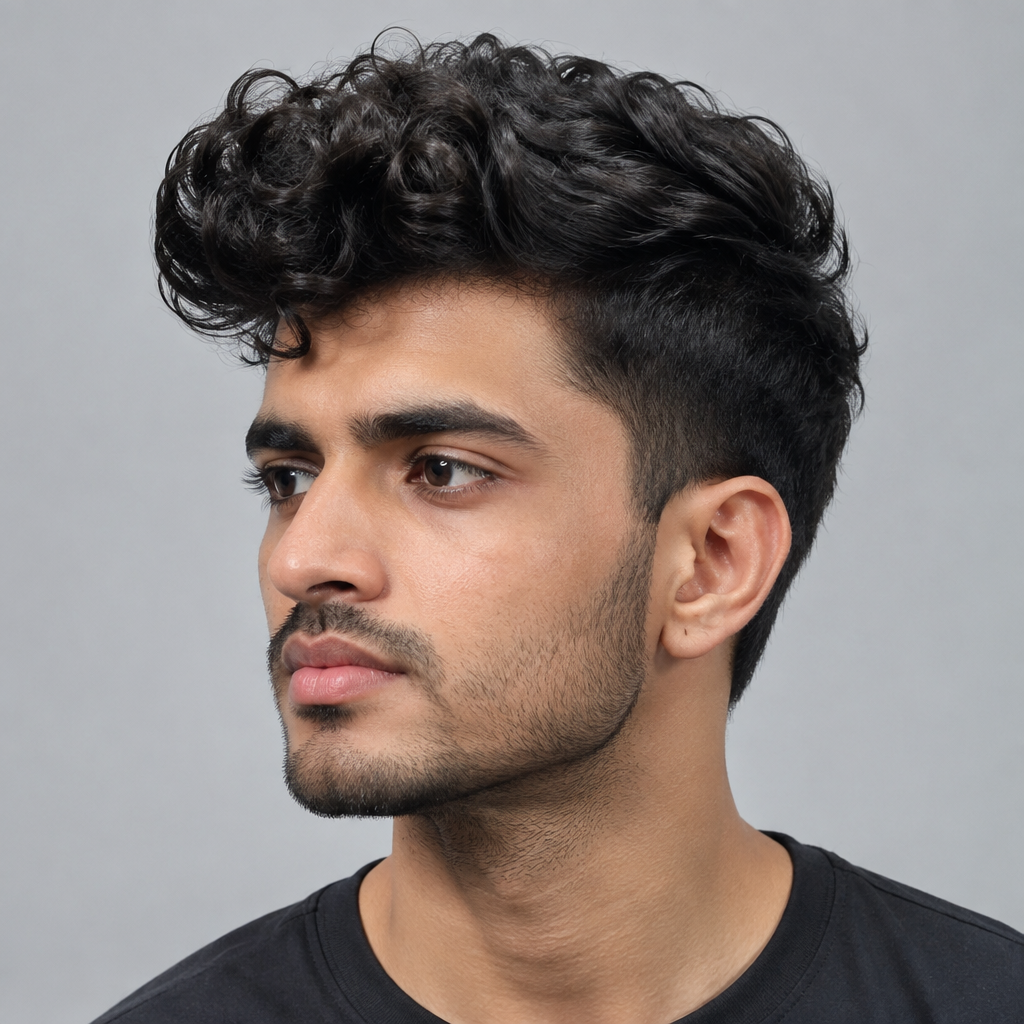
Curly Quiff
- Best if your curls look like: loose or springy curls with enough length at the front to lift up and back.
- Face and lifestyle fit: strong for round, square and triangle faces if you're fine with a few minutes of styling.
- Upkeep: medium.
- Tell your barber: "Leave 7 to 10 cm at the front for a curly quiff, graduate it shorter toward the crown, and keep the sides tapered with controlled width."
Front height lengthens a round face and balances a broader jaw. In humid weather it needs light cream and flexible hold, but natural curl movement stops it looking overly formal.
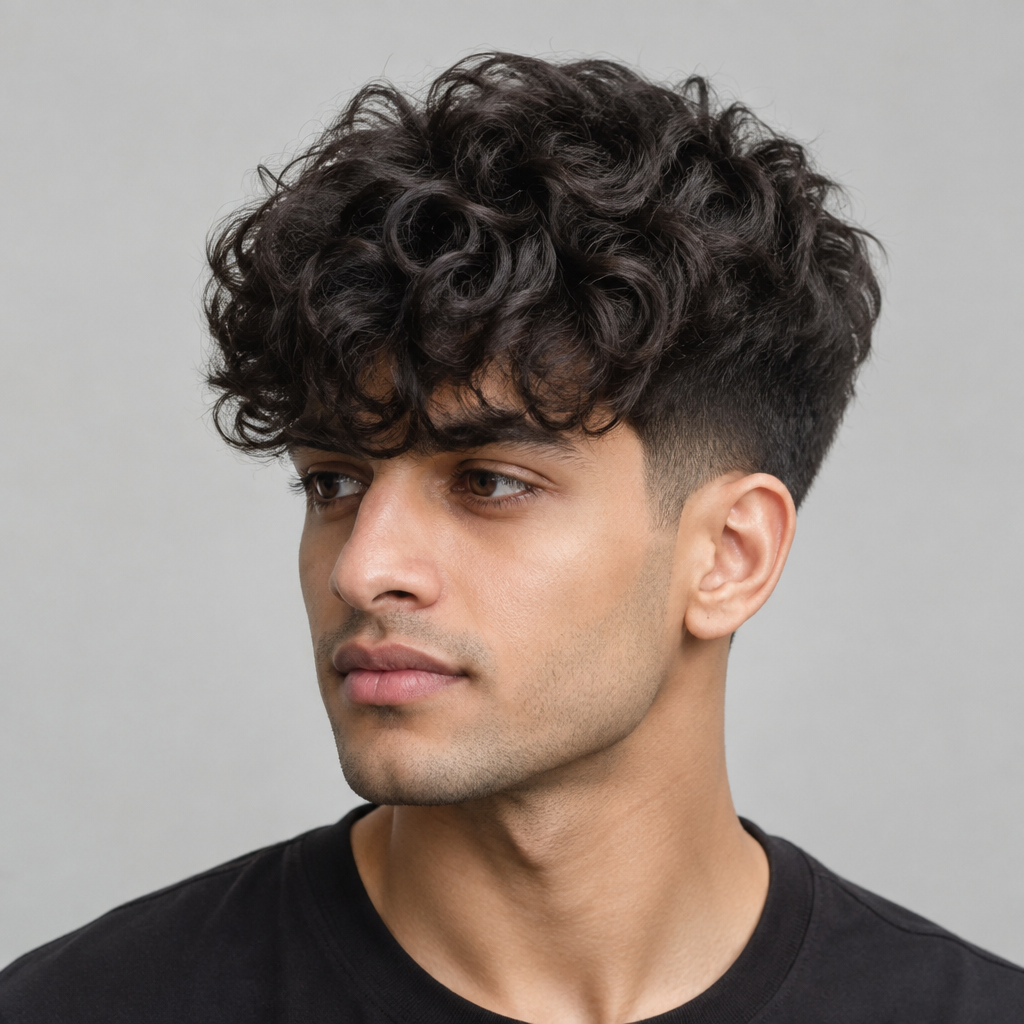
Curly Fringe
- Best if your curls look like: loose or springy curls that naturally fall toward the forehead rather than standing upright.
- Face and lifestyle fit: flattering for heart, diamond, rectangle and oblong faces, or anyone wanting forehead coverage.
- Upkeep: medium.
- Tell your barber: "Leave a soft curly fringe that sits around my brows when dry, add light top layers, and keep the sides neat without removing all their fullness."
The fringe visually shortens facial length and balances a broader forehead. The barber must cut for dry shrinkage — otherwise the front springs up noticeably shorter than the reference photo.
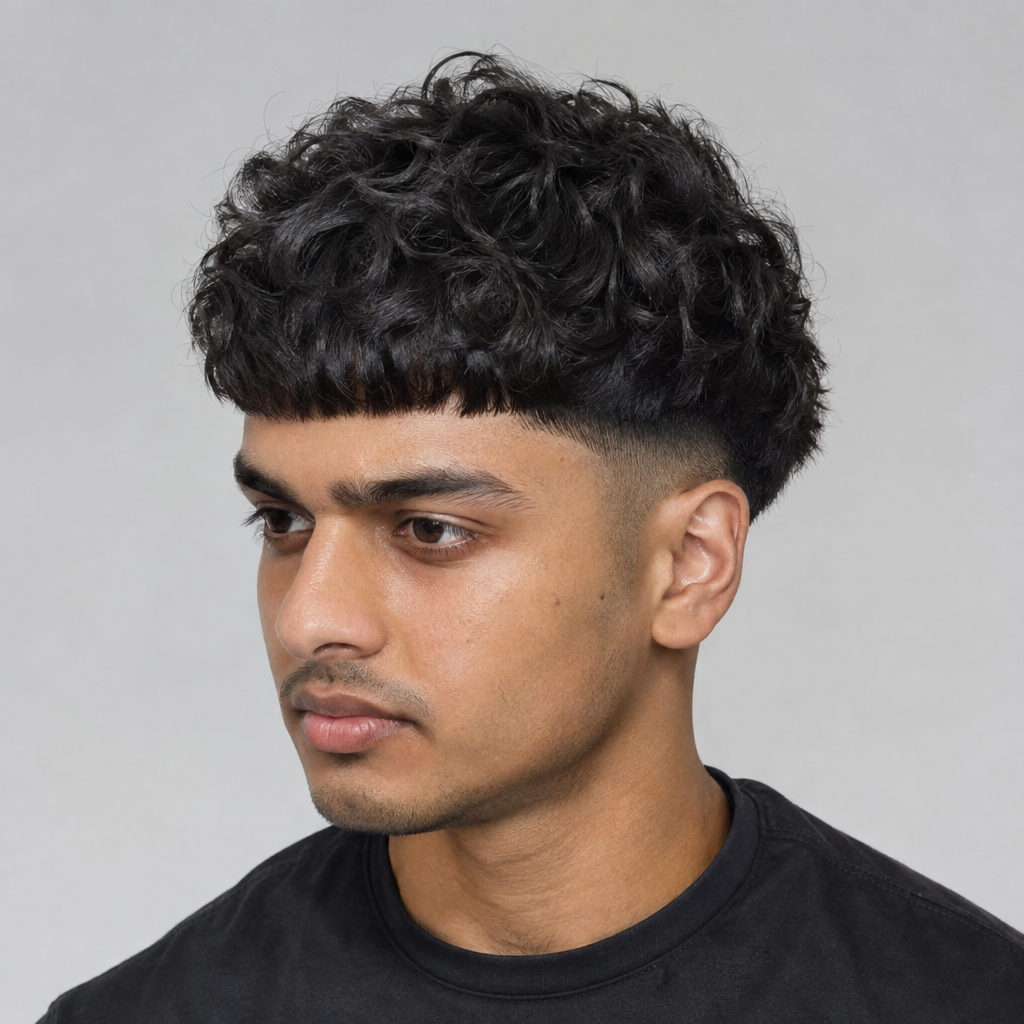
Curly Edgar
- Best if your curls look like: dense, tight curls that can form a solid top above a short, defined fringe.
- Face and lifestyle fit: a bold, youth-oriented cut for oval, diamond and oblong faces rather than conservative offices.
- Upkeep: high.
- Tell your barber: "Create a short curly Edgar with a controlled blunt fringe, compact textured top, and a low taper or fade that suits my head shape."
Dense curls stop the top from looking flat, and the fringe adds a strong graphic outline. It needs frequent edge maintenance, so it's worth picturing the fringe-to-fade contrast on your own face before committing.
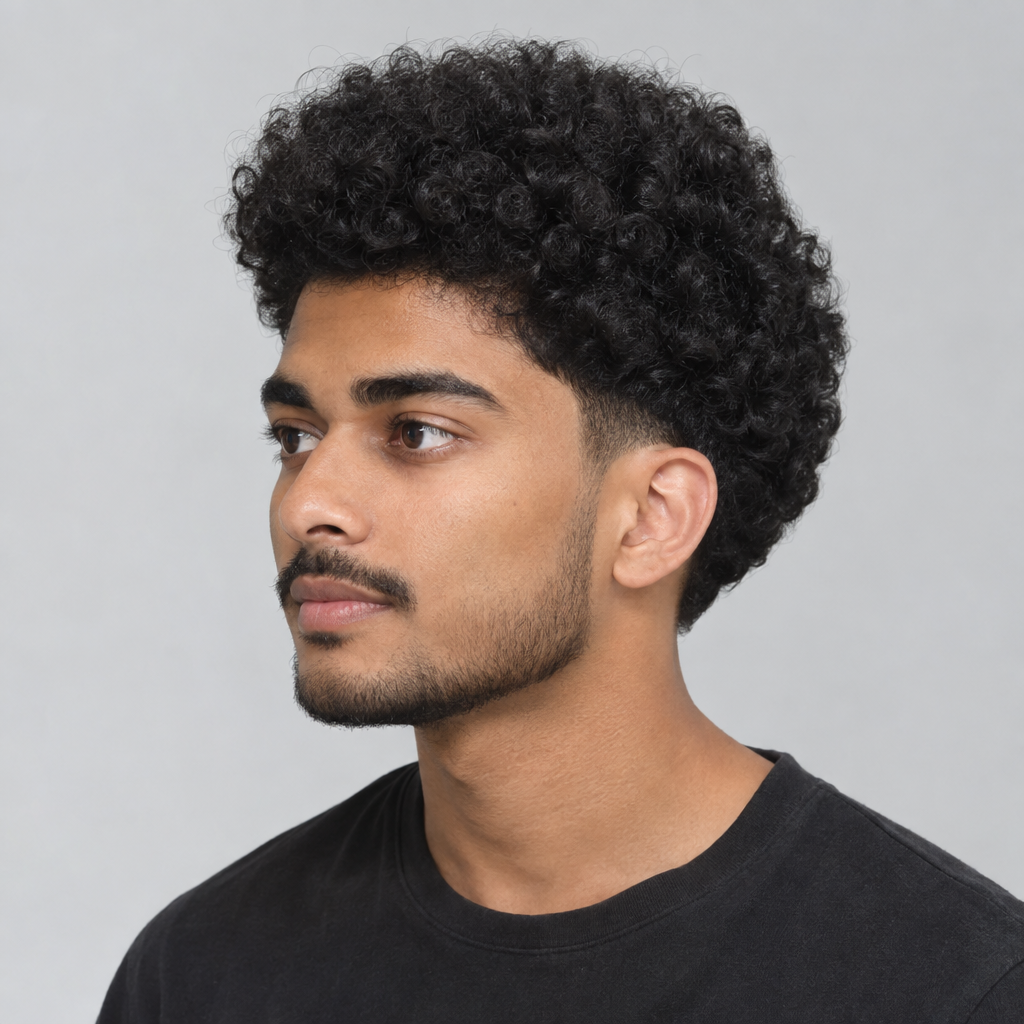
Tapered Curly Afro
- Best if your curls look like: dense, compact S- or Z-shaped curls that build rounded volume rather than hanging down.
- Face and lifestyle fit: works especially well across most face shapes once the outline is customised.
- Upkeep: medium.
- Tell your barber: "Shape my curls into a balanced rounded afro, taper only the temples and neckline, and remove uneven bulk without thinning out the ends."
This cut celebrates dense natural texture instead of forcing it into a loose-curl silhouette. The taper sharpens the perimeter for work or functions, while the rounded shape can be adjusted for height or side balance.
Best Medium-Length Curly Hairstyles for Men
Medium length is where curls often look their best with the least effort — long enough to show real curl pattern, short enough to skip constant fade upkeep.
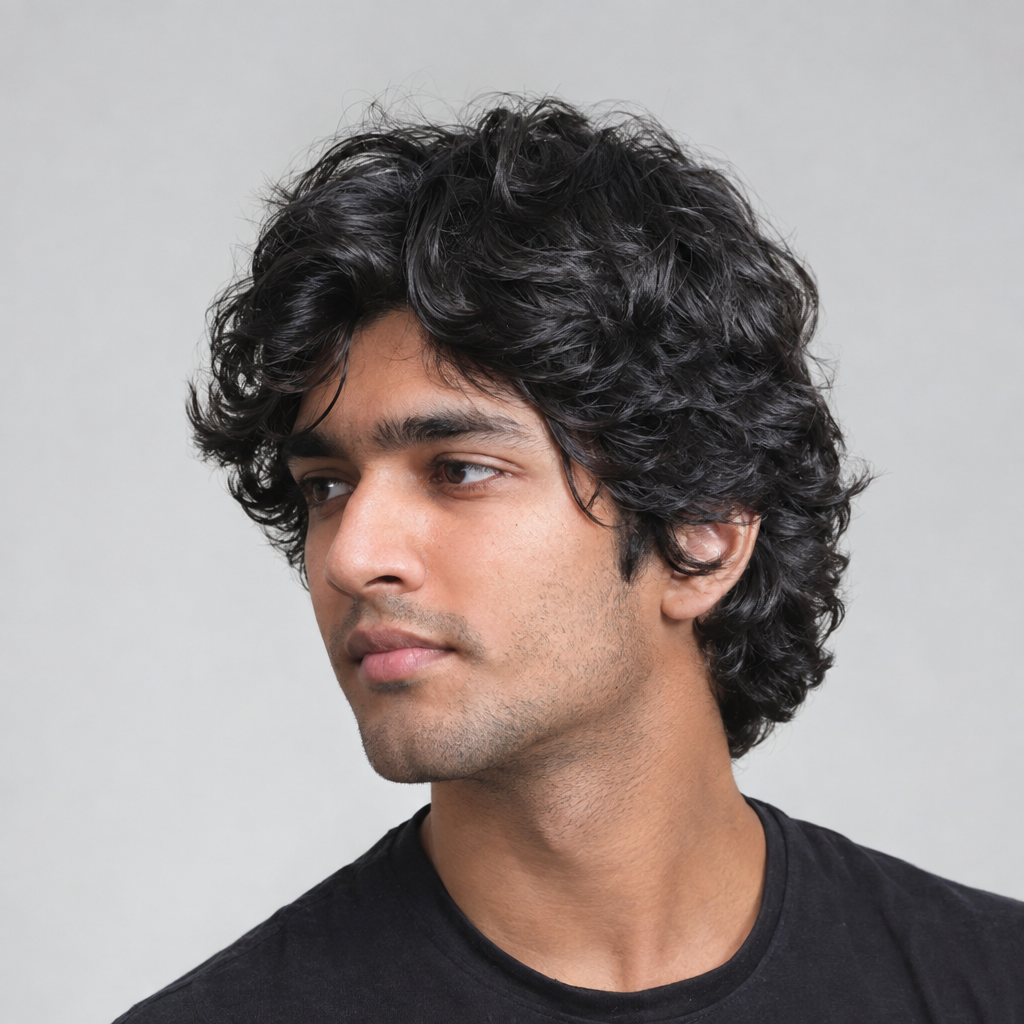
Medium Layered Curls
- Best if your curls look like: full curls around the ears and neck that turn bulky or triangular when grown out evenly.
- Face and lifestyle fit: a versatile medium cut for most face shapes and both college and office settings.
- Upkeep: medium.
- Tell your barber: "Keep medium length, add curl-by-curl layers for movement, preserve weight at the perimeter, and reduce bulk without using thinning shears everywhere."
Strategic layers let curls sit in a deliberate silhouette instead of expanding sideways. The length works for everyday wear and wedding-season styling without needing a dramatic fade.
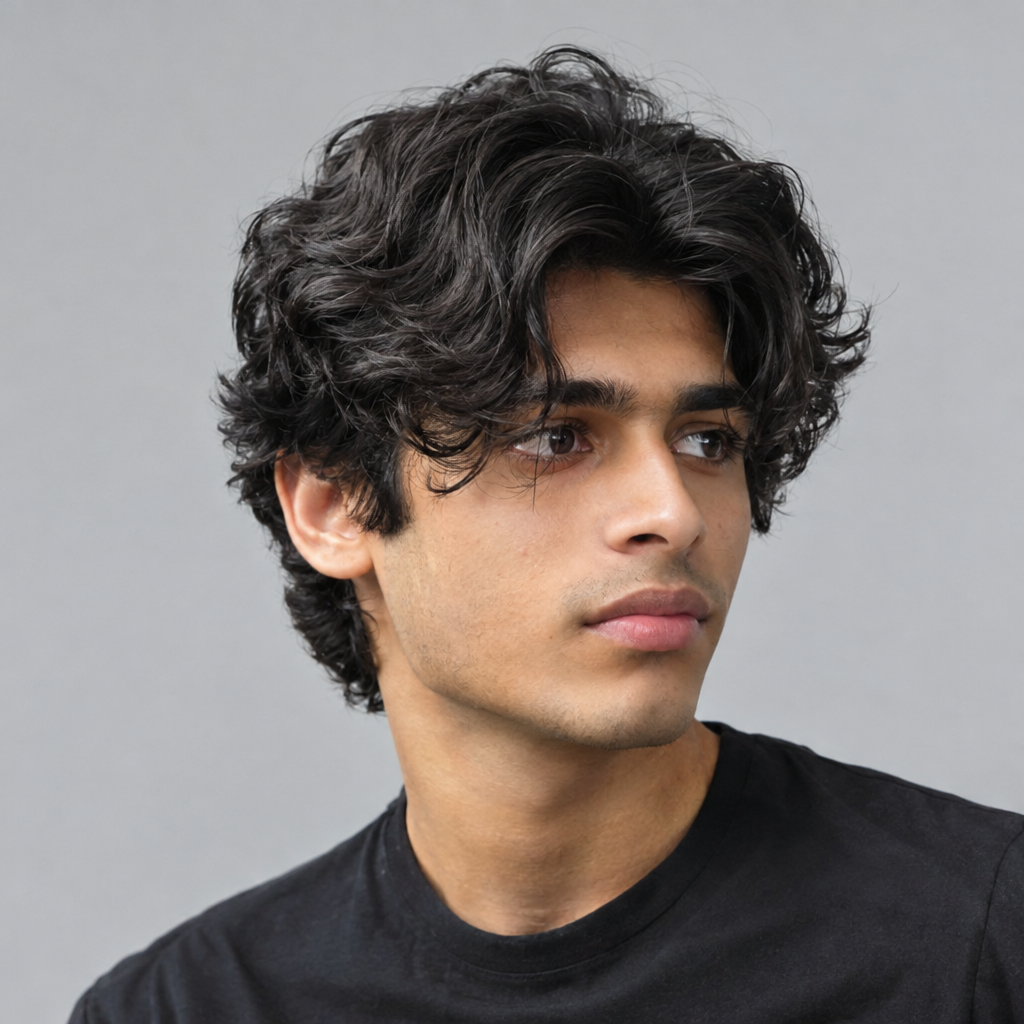
Curly Curtains
- Best if your curls look like: loose curls that naturally separate near the centre and fall toward the temples or cheekbones.
- Face and lifestyle fit: best for diamond, rectangle and oblong faces and relaxed college or creative-office styling.
- Upkeep: medium.
- Tell your barber: "Keep enough length for a natural middle part, layer the front to frame my cheekbones, and avoid cutting the curtain pieces too short after shrinkage."
The parted front adds width and breaks up the vertical line of a longer face. Loose curls create movement without a rigid part, though the front may need refreshing after a helmet commute.
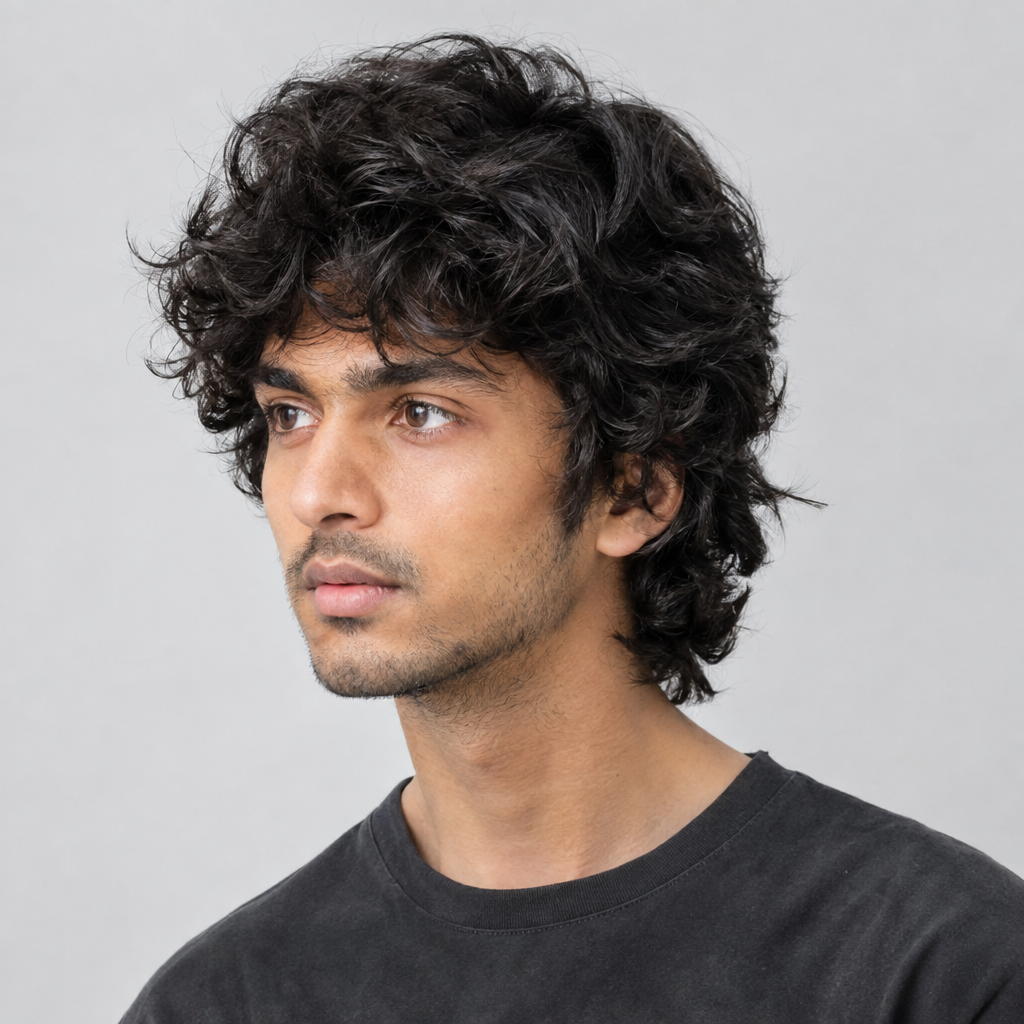
Curly Shag
- Best if your curls look like: loose or springy curls with natural volume that respond well to crown and face-framing layers.
- Face and lifestyle fit: suited to square, heart and oblong faces and a relaxed, creative silhouette.
- Upkeep: medium.
- Tell your barber: "Give me a medium curly shag with shorter crown layers, soft face framing and longer textured ends, while keeping enough weight to control frizz."
The layered outline softens angular features and gives longer faces useful side movement. It reads as intentionally relaxed in humid weather, but poorly placed layers can turn puffy fast.
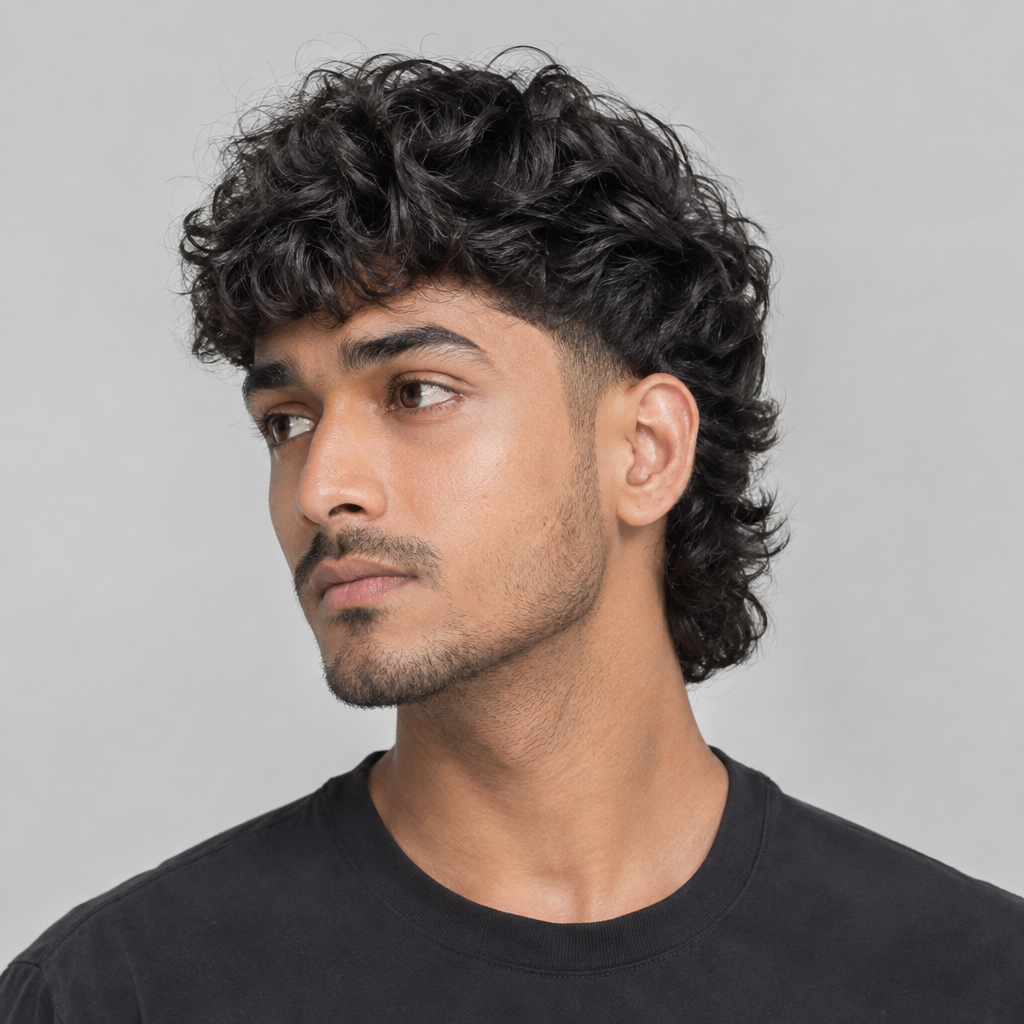
Modern Curly Mullet
- Best if your curls look like: dense enough to hold shape on top with enough length to move visibly at the back.
- Face and lifestyle fit: a statement cut for oval, round, diamond and triangle faces in less conservative settings.
- Upkeep: high.
- Tell your barber: "Cut a modern curly mullet with a textured top, low tapered temples, controlled side width and longer layered curls through the back."
Curl texture softens the mullet's strong outline and eases the transition into the longer back. A restrained temple taper makes it more office-adjacent than fully shaved sides would.
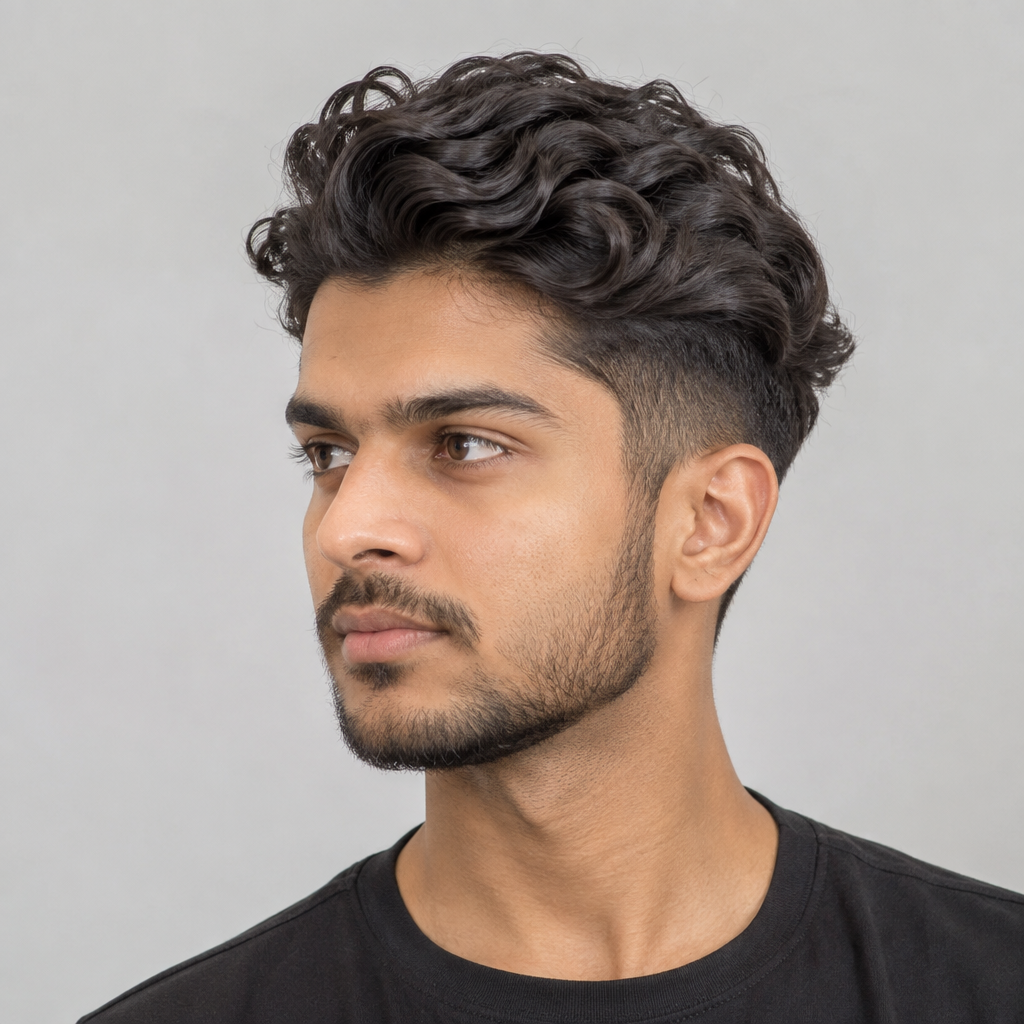
Curly Slick Back
- Best if your curls look like: loose curls with medium length that can be directed backward while staying visibly separated.
- Face and lifestyle fit: a polished option for oval, square, heart and diamond faces, offices and formal functions.
- Upkeep: high.
- Tell your barber: "Leave medium length on top so my curls can sweep back, lightly layer for movement, and taper the sides without disconnecting them."
It gives curls a formal direction without flattening them into a straight-haired slick back. A light cream or flexible gel handles Indian humidity better than heavy pomade, which can collapse finer loose curls.
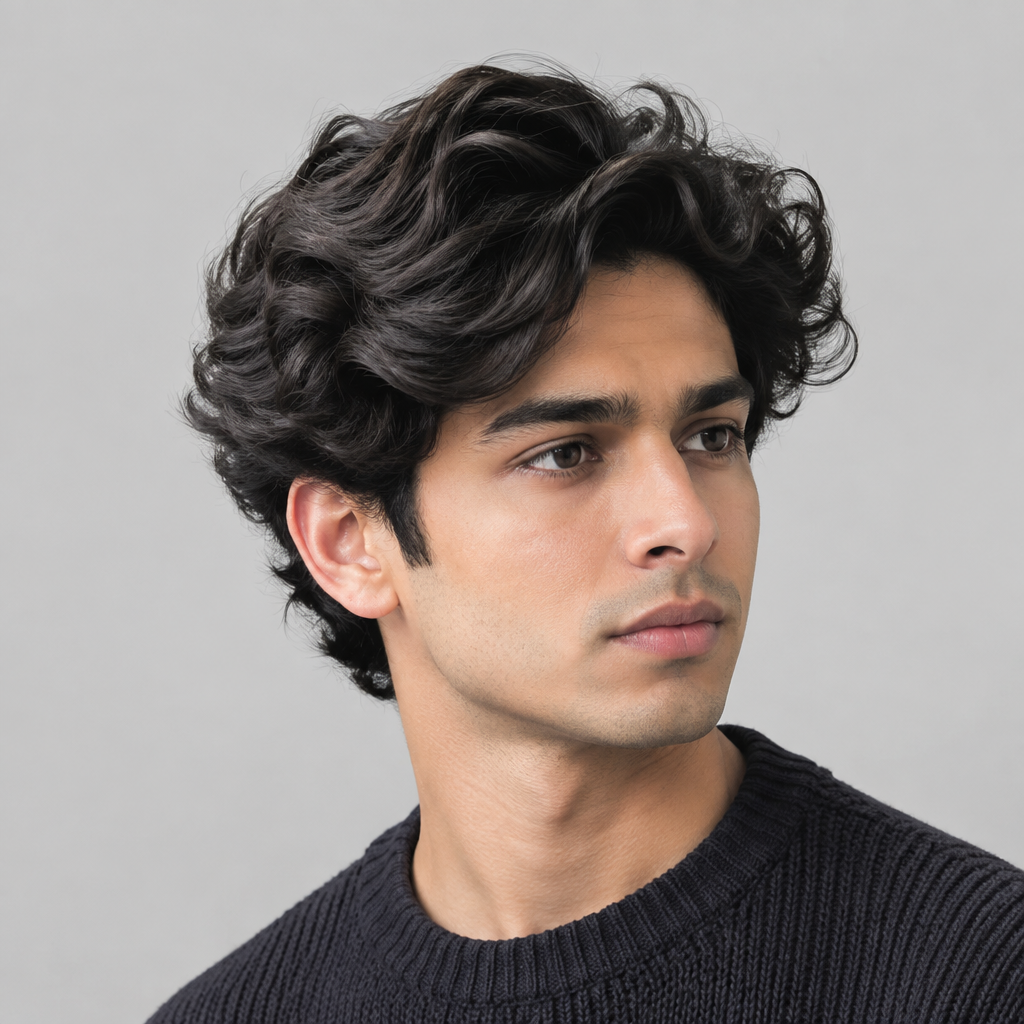
Curly Flow
- Best if your curls look like: loose curls that fall backward or sideways naturally around the ears instead of standing upright.
- Face and lifestyle fit: best for oval, square and rectangle faces comfortable with relaxed medium length.
- Upkeep: medium.
- Tell your barber: "Keep a medium curly flow with enough length around the ears and back to move naturally, and add long layers so the sides do not become triangular."
The flowing direction showcases loose curls while avoiding a fade's maintenance cycle. It can look polished for casual offices, but needs moisture and controlled layers so monsoon humidity doesn't widen the sides.
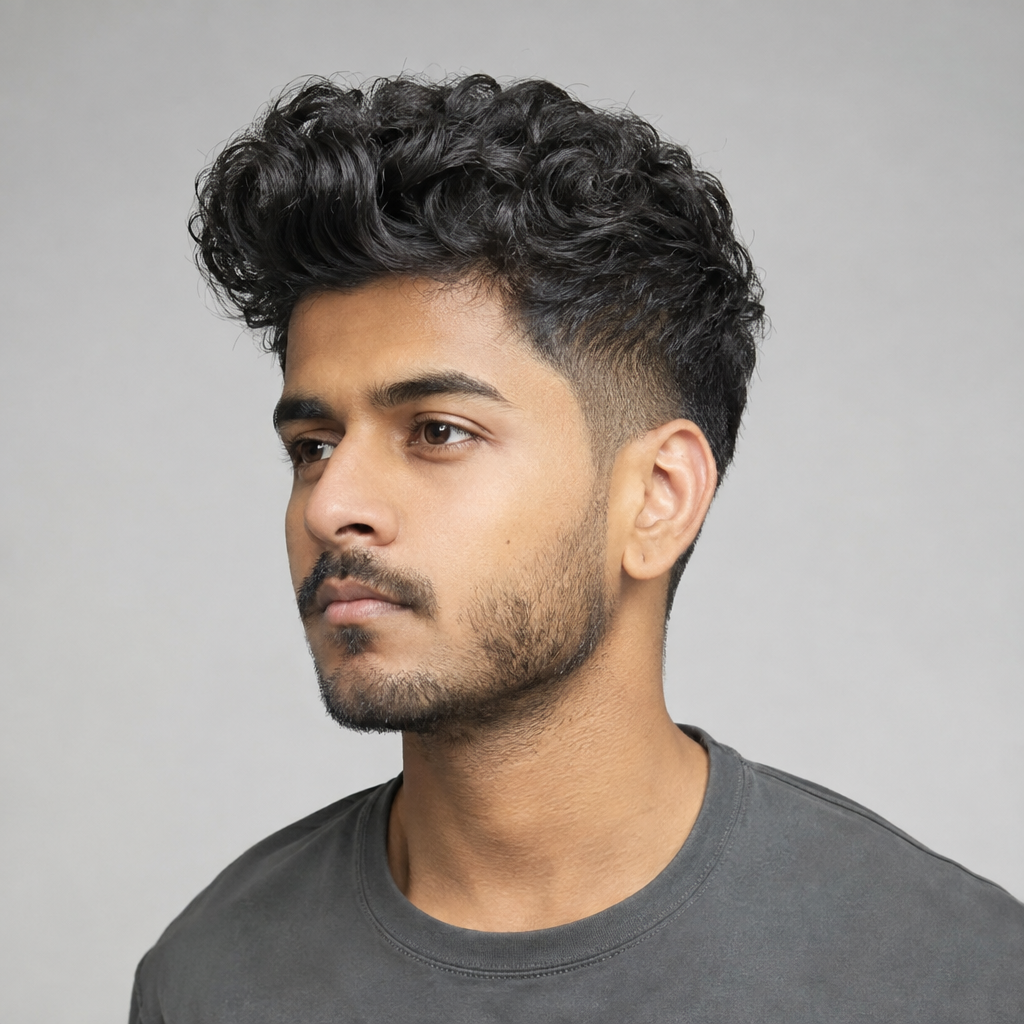
Curly Pompadour
- Best if your curls look like: loose or springy curls that build real height at the front without separating into thin pieces.
- Face and lifestyle fit: suited to round, square and triangle faces and dressier occasions.
- Upkeep: high.
- Tell your barber: "Leave 10 to 13 cm through the front for a curly pompadour, graduate the crown shorter, and use a low taper with enough side weight for balance."
The elevated front lengthens a round face and balances a strong jaw. It works well for weddings and evenings, but heat, sweat and helmets make it a poor everyday default.
Seen a few here that could work? Try mapping your favourite two or three onto your own photo — preview them on your own face shape and curl pattern before you sit in the chair.
Best Long Curly Hairstyles for Men
Long curly hair asks for more patience with detangling and drying, but it also gives you the most flattering, face-framing shapes on this whole list.
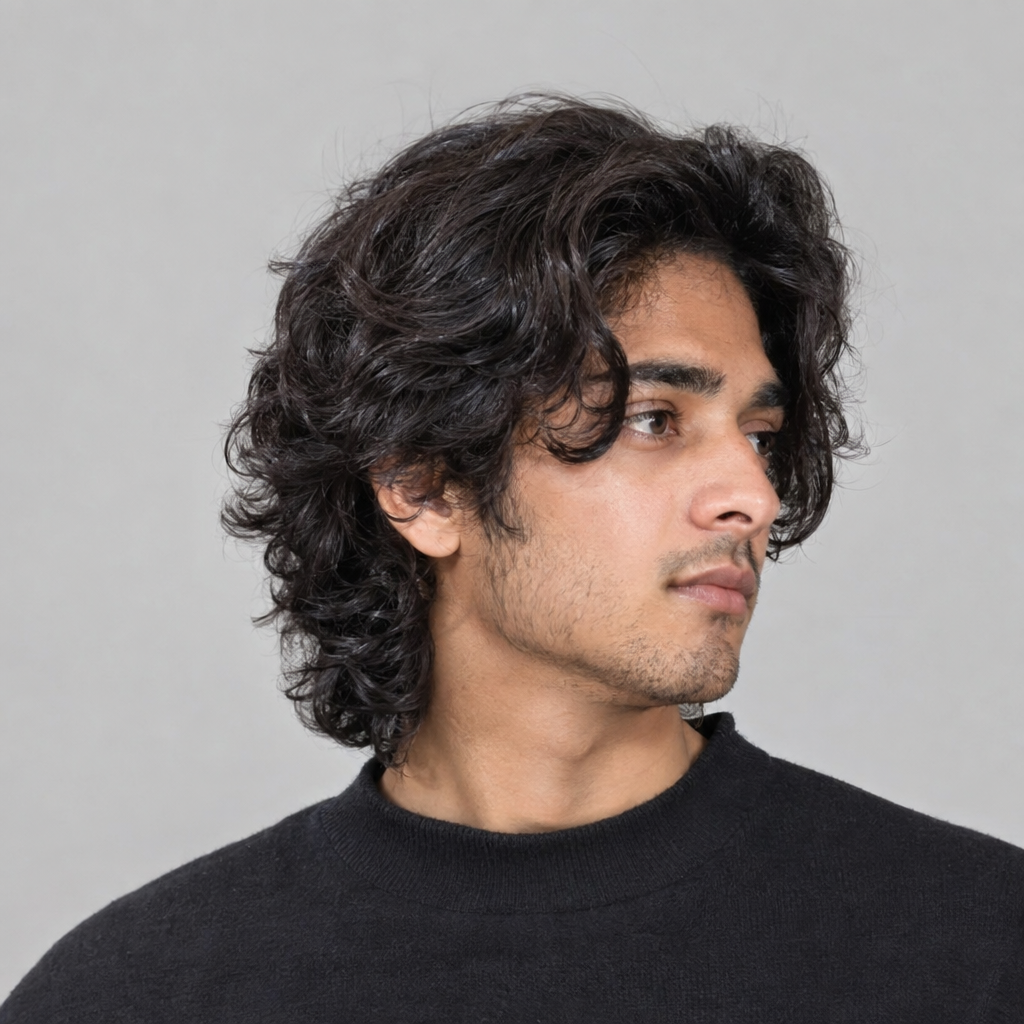
Long Layered Curls
- Best if your curls look like: reaching below the ears or shoulders, heavy at the crown and wide at the ends.
- Face and lifestyle fit: adaptable to most face shapes through careful layer placement.
- Upkeep: high.
- Tell your barber: "Keep my overall length, add long curl-conscious layers for crown lift and face framing, and preserve enough weight at the ends to prevent frizz."
Long layers stop grown-out curls forming a heavy triangular shape while keeping expressive length. It suits readers ready for conditioning, detangling and longer drying time in humid weather.
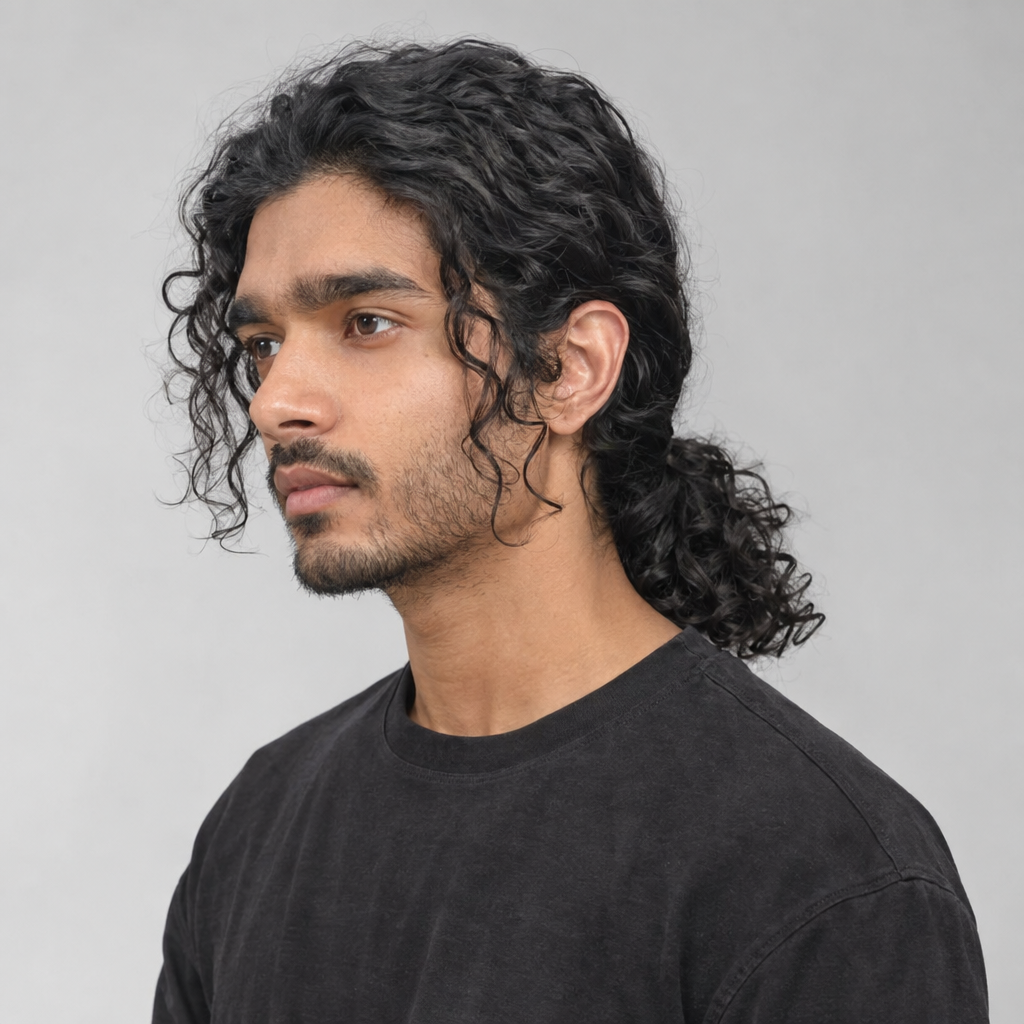
Curly Ponytail
- Best if your curls look like: long, loose or springy curls that gather comfortably without pulling at the hairline.
- Face and lifestyle fit: practical for oval, square and diamond faces, commuting, workouts and hot days.
- Upkeep: medium.
- Tell your barber: "Maintain enough even length to tie my curls back, add only long layers, and keep the front and perimeter strong rather than over-thinned."
A loose ponytail controls long curls during travel and heat while keeping their texture when released. Avoid tying it tightly every day if your hairline is already under stress.
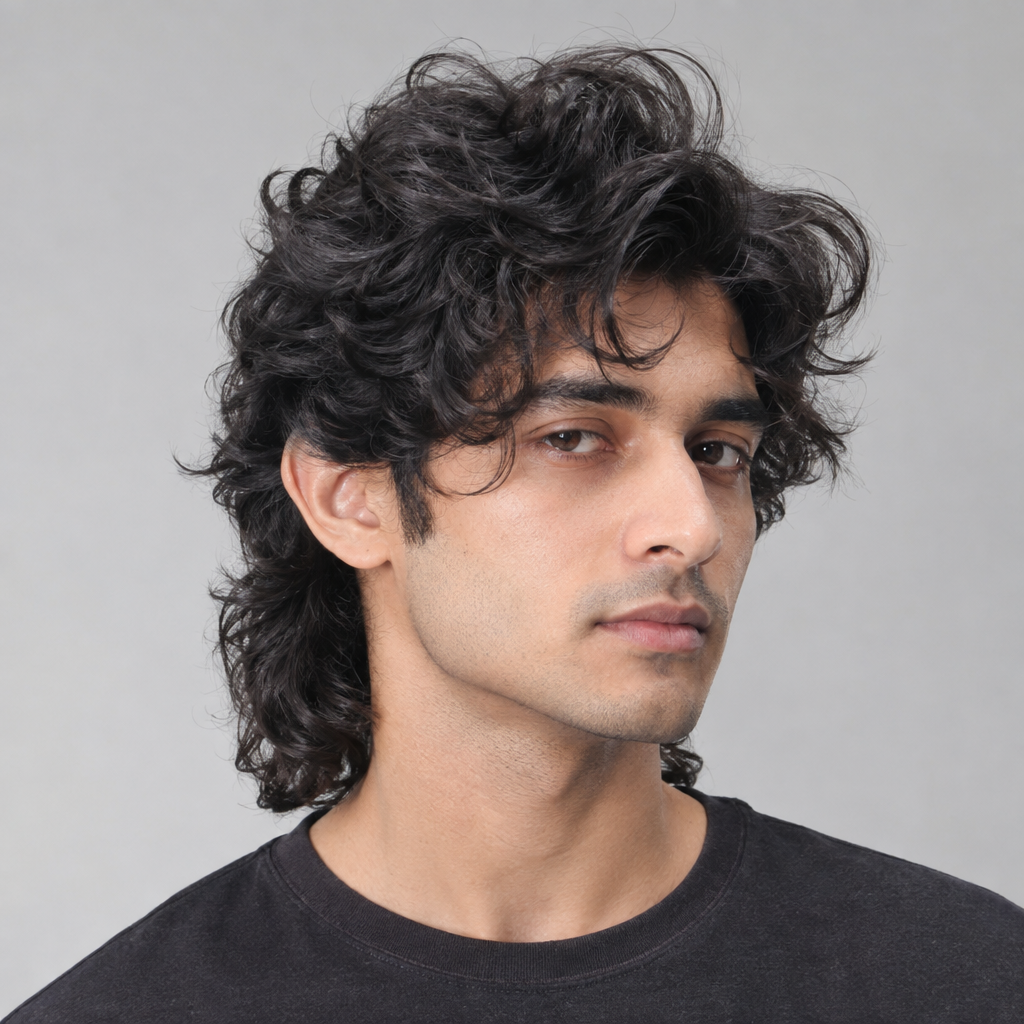
Curly Wolf Cut
- Best if your curls look like: loose or springy with enough crown volume to support shorter layers over a longer back.
- Face and lifestyle fit: a fashion-forward choice for oval, round, heart, diamond and triangle faces.
- Upkeep: high.
- Tell your barber: "Create a curly wolf cut with lifted crown layers, soft face framing and a longer back, but keep enough internal weight to control frizz."
Natural curl gives the wolf cut's layers separation without constant heat styling. The crown adds height for round faces, while face-framing pieces balance heart and diamond shapes.
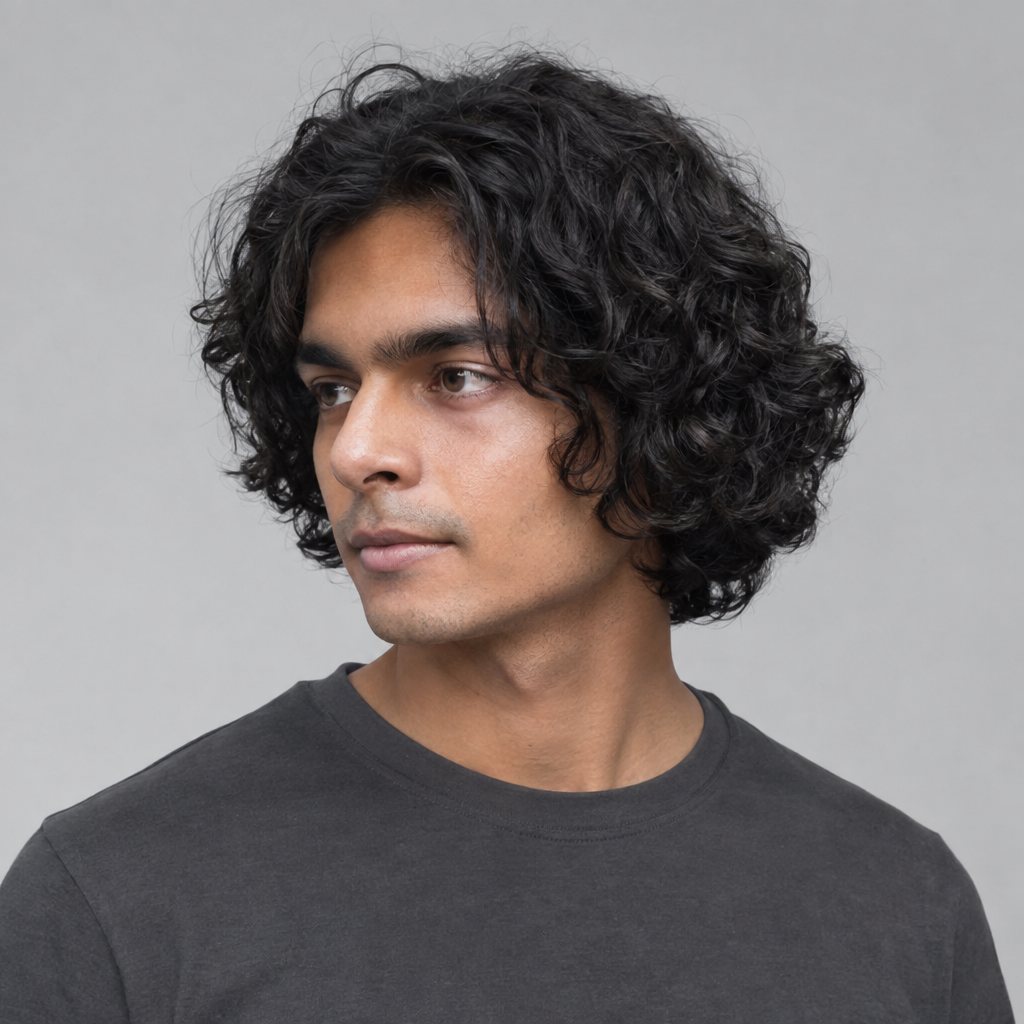
Curly Bob
- Best if your curls look like: loose or springy, falling toward the jaw or neck and forming a rounded perimeter.
- Face and lifestyle fit: best for heart, rectangle and oblong faces that benefit from jaw or side width.
- Upkeep: medium.
- Tell your barber: "Cut a curly bob around jaw-to-neck length, add minimal rounded layers for movement, and check the perimeter after my curls spring dry."
The bob's side fullness can balance a narrow jaw or shorten an oblong face visually. Simpler than a heavily layered shag, though the perimeter must be cut with shrinkage in mind.
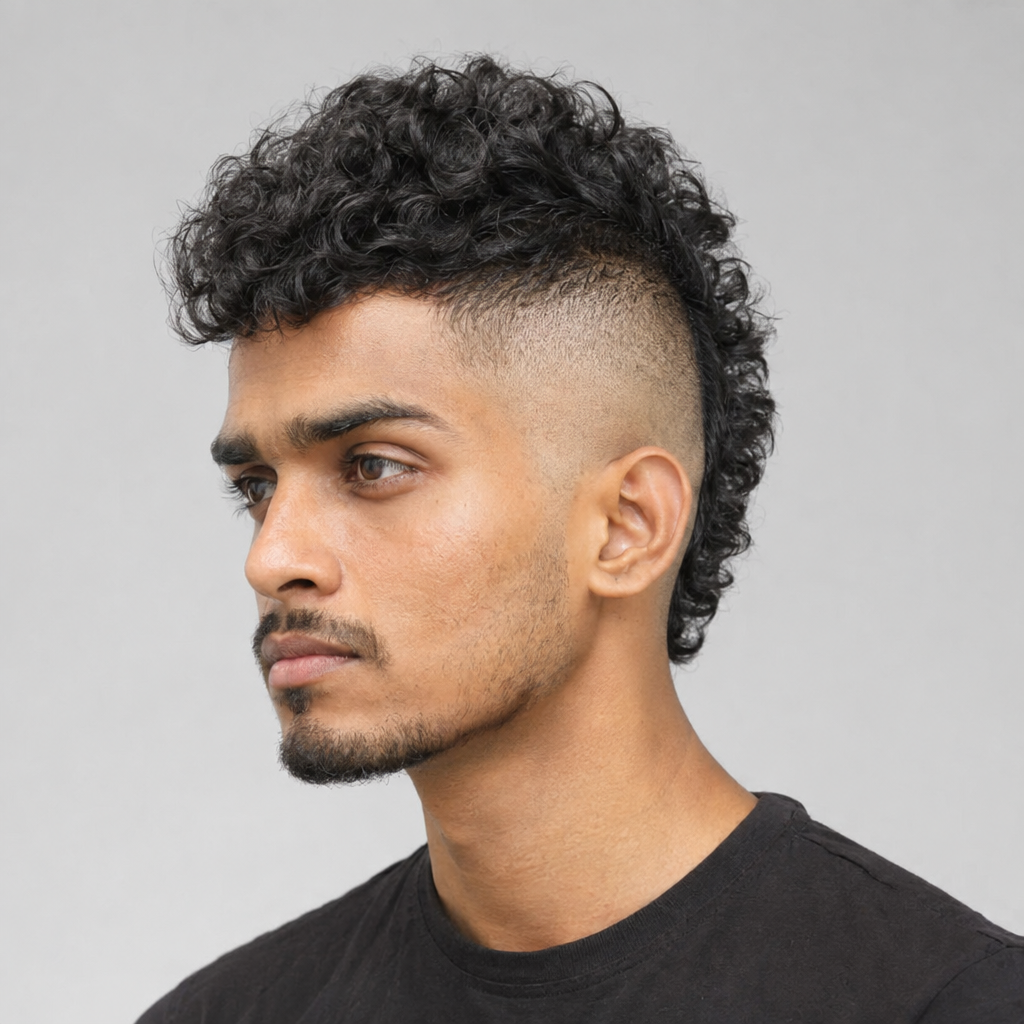
Curly Mohawk
- Best if your curls look like: springy or compact, dense enough to hold a defined strip from forehead through crown.
- Face and lifestyle fit: a bold choice for oval, round, square and triangle faces in non-conservative settings.
- Upkeep: high.
- Tell your barber: "Keep a defined strip of curls from front to back, fade the sides low enough to suit my face, and blend the edges without narrowing the centre excessively."
The central curl line adds height and sharp direction while close sides make dense texture easier to manage. Because the side removal changes your face's proportions so much, it's worth checking the fade height on your own photo first.
How to Choose a Curly Hairstyle That Will Suit You
If you're stuck, start here: a layered top with a low taper is the safest bet for most Indian men with curly hair. It shows off curl movement, keeps side bulk in check, and reads fine in both a classroom and a client meeting. Move away from that default only for specific reasons.
- Choose a shorter, more compact shape if your curls are fine or lower in density — bulk and long layers can make thin curls look thinner.
- Choose deliberate internal layering, not aggressive thinning, if your curls are dense — thinning shears create fuzzy, broken-looking ends on thick curls.
- Choose a clean-sided cut (crew cut, low taper, textured crop) for strict offices; save quiffs, pompadours and mullets for relaxed dress codes or events.
- Choose fringes or curtains if you want forehead coverage, and lifted or swept-back styles if your hairline is strong and you're happy to show it.
Not sure exactly which face shape you're working with? A quick front-facing face shape check makes the next section far more useful. Once you've narrowed it to two finalists, comparing them side by side on your own face beats guessing from someone else's photo.
Which Curly Hairstyle Suits Your Face Shape?
Every face shape has one practical design goal, and the styles below consistently show up across loose, springy and dense curl types for that shape.
- Oval: preserve balanced proportions without excessive height or side width — Low Taper Curls, Medium Layered Curls, Long Layered Curls, Curly Crew Cut and Curly Wolf Cut come up most often.
- Round: add height and definition while controlling width at the cheeks — Low Taper Curls, Curly Quiff, Curly Pompadour, Modern Curly Mullet and Drop Fade Curls work consistently well.
- Square: keep masculine structure while softening hard corners with curl movement — Low Taper Curls, Medium Layered Curls, Long Layered Curls, Curly Crew Cut and Drop Fade Curls suit this shape across curl types.
- Heart: soften forehead width and add balance near the jaw — Curly Textured Crop, Low Taper Curls, Curly Fringe, Medium Layered Curls and Long Layered Curls are the strongest picks.
- Diamond: soften prominent cheekbones and add controlled forehead or jaw width — Low Taper Curls, Medium Layered Curls, Long Layered Curls, Curly Fringe and Curly Edgar tend to work best.
- Rectangle: limit vertical height and retain useful fullness at the sides — Curly Textured Crop, Curly Fringe, Medium Layered Curls, Curly Crew Cut and Curly Bob are the reliable options.
- Oblong: shorten the visual face length with fringe or side movement — Curly Textured Crop, Curly Fringe, Long Layered Curls, Curly Bob and Curly Edgar do this consistently.
- Triangle: add interest near the forehead while avoiding extra jaw emphasis — Low Taper Curls, Medium Layered Curls, Modern Curly Mullet, Long Layered Curls and Curly Mohawk are the strongest fits.
As a general rule, loose curls suit flowing, layered styles particularly well because they move rather than stack, while tighter and denser curls hold cropped, rounded shapes better because they naturally build volume upward instead of hanging down. See how one of these silhouettes would actually sit on your own curl pattern and jawline — try your shortlist on a photo of yourself before booking the appointment.
How Density, Shrinkage and Your Hairline Change the Cut
Two men with the same face shape and curl type can still need different haircuts because of density, shrinkage and hairline — three things a photo alone won't tell your barber.
- Fine or lower-density curls generally look fuller in compact shapes with restrained layering; heavy layering can make sparse-looking areas more obvious.
- Dense curls usually need strategic layers or tapered edges rather than blanket thinning, which tends to create frizzy, uneven ends instead of real bulk reduction.
- Wet curls can dry noticeably shorter than they look in the chair — ask your barber to cut with shrinkage in mind, especially for fringes and any dramatic length change.
- A receding or uneven hairline usually looks better under a fringe or forward texture; a strong, low hairline can carry lifted or swept-back styles comfortably.
Low-Maintenance Curly Haircuts for College, Office and Helmets
The curly crew cut, textured crop, low taper curls and drop fade are the genuinely low-effort options for daily commutes — quick to dry, quick to reset, and forgiving under a helmet.
- Put your helmet on only once hair is fully dry; damp curls flatten and take longer to bounce back.
- After a commute, rehydrate flattened roots with a small amount of water and curl cream on your fingertips rather than brushing them out.
- Not every easy-to-style cut is easy on your barber's calendar — fades still need edge clean-ups every two to three weeks even if your morning routine is short.
- If your office dress code is relaxed, a curly quiff or curly flow gives more personality without adding much daily effort.
What to Ask Your Barber for a Curly Haircut
Bring a reference photo that actually matches your curl size, density and current length — not just the haircut name — and use language your barber can act on immediately.
- Curly Crew Cut: "Keep about 2.5 to 4 cm of curl on top, taper the temples and neckline, and leave enough length for the curls to form when dry."
- Curly Textured Crop: "Cut a short textured crop that follows my natural curl pattern, keep a soft forward fringe, and taper the sides without thinning the top heavily."
- Low Taper Curls: "Keep my natural curl volume on top and use a low taper only at the temples and neckline, with no high fade or aggressive thinning."
- Drop Fade Curls: "Give me a low-to-mid drop fade that curves behind the ears, keep the curly top full, and blend without creating a shelf above the fade."
- Curly Quiff: "Leave 7 to 10 cm at the front for a curly quiff, graduate it shorter toward the crown, and keep the sides tapered with controlled width."
- Curly Fringe: "Leave a soft curly fringe that sits around my brows when dry, add light top layers, and keep the sides neat without removing all their fullness."
- Curly Edgar: "Create a short curly Edgar with a controlled blunt fringe, compact textured top, and a low taper or fade that suits my head shape."
- Tapered Curly Afro: "Shape my curls into a balanced rounded afro, taper only the temples and neckline, and remove uneven bulk without thinning out the ends."
- Medium Layered Curls: "Keep medium length, add curl-by-curl layers for movement, preserve weight at the perimeter, and reduce bulk without using thinning shears everywhere."
- Curly Curtains: "Keep enough length for a natural middle part, layer the front to frame my cheekbones, and avoid cutting the curtain pieces too short after shrinkage."
- Curly Shag: "Give me a medium curly shag with shorter crown layers, soft face framing and longer textured ends, while keeping enough weight to control frizz."
- Modern Curly Mullet: "Cut a modern curly mullet with a textured top, low tapered temples, controlled side width and longer layered curls through the back."
- Curly Slick Back: "Leave medium length on top so my curls can sweep back, lightly layer for movement, and taper the sides without disconnecting them."
- Curly Flow: "Keep a medium curly flow with enough length around the ears and back to move naturally, and add long layers so the sides do not become triangular."
- Curly Pompadour: "Leave 10 to 13 cm through the front for a curly pompadour, graduate the crown shorter, and use a low taper with enough side weight for balance."
- Long Layered Curls: "Keep my overall length, add long curl-conscious layers for crown lift and face framing, and preserve enough weight at the ends to prevent frizz."
- Curly Ponytail: "Maintain enough even length to tie my curls back, add only long layers, and keep the front and perimeter strong rather than over-thinned."
- Curly Wolf Cut: "Create a curly wolf cut with lifted crown layers, soft face framing and a longer back, but keep enough internal weight to control frizz."
- Curly Bob: "Cut a curly bob around jaw-to-neck length, add minimal rounded layers for movement, and check the perimeter after my curls spring dry."
- Curly Mohawk: "Keep a defined strip of curls from front to back, fade the sides low enough to suit my face, and blend the edges without narrowing the centre excessively."
Also ask the barber to check how your curls sit once fully dry before calling the haircut finished, and avoid automatic razor cutting or heavy thinning shears if your curls tend to frizz at the ends. If you're weighing a new fringe, a first fade or a big length change, it genuinely helps to see the change on your own face first rather than hoping it translates from someone else's photo.
How to Style Men's Curly Hair in Indian Heat and Humidity
A simple, repeatable routine beats a shelf full of products. Condition every wash, blot rather than rub with a soft T-shirt or microfibre towel, apply leave-in conditioner or curl cream to soaking wet hair, scrunch gently upward, then air-dry or diffuse on low heat.
- Loose curls generally need a lighter hand — too much cream and they weigh down flat.
- Tighter, drier curls usually need richer moisture and a firmer hold product to resist humidity and hold their shape through the day.
- Sea salt spray adds texture but dries curls out with frequent use — treat it as an occasional finish, not a daily staple.
- Monsoon humidity and sweat both undo styling faster than usual, so keep a small tube of curl cream or a tiny amount of water handy to refresh, rather than reapplying full product mid-day.
- Hard water can leave a dulling residue on curls over time, which a periodic clarifying shampoo helps clear before you go back to your regular conditioner.
How Often Should Men Trim and Wash Curly Hair?
Fades and Edgars need barber attention roughly every two to four weeks to stay sharp; a taper or a simple shaped short cut can usually stretch to four to six weeks. Medium and long layered curls hold their shape for six to twelve weeks depending on growth and split ends.
Wash according to your own scalp, sweat and product buildup rather than a fixed schedule — two to three washes a week suits many men, more if you train daily, less if your scalp runs dry. A satin pillowcase or bonnet is a genuinely useful, entirely optional way to cut down on overnight friction and frizz. For a fuller routine tailored to Indian conditions, this curly hair care guide for men goes deeper into washing, conditioning and refreshing between cuts.
Curly Haircut Mistakes to Avoid
- Copying a reference photo with a visibly different curl size, density or hairline to your own — the same haircut name can produce a completely different result.
- Choosing a high fade without considering how much wider your top curls will look against suddenly narrow sides.
- Letting the barber cut a fringe to its intended length while it's stretched wet — it will sit much shorter once it springs back dry.
- Allowing thinning shears across every dense area indiscriminately, which usually creates frizz rather than genuine bulk reduction.
- Brushing dry curls with a regular brush, which breaks up the curl pattern into frizz instead of defined shape.
- Piling on heavy oil over unwashed, product-heavy hair instead of clarifying first.
- Assuming a style is low-maintenance day-to-day just because it needs frequent barber visits, or the reverse — the two are not the same thing.
Frequently asked questions
Which haircut is best for curly hair men?
A layered curly top with a low taper is the safest starting point for most men. It preserves visible curl movement, controls side bulk and can be adjusted for work or college. Dense curls may need internal layering, while finer curls usually benefit from a shorter, more compact shape.
Is short or long hair better for men with curls?
Short curls are quicker to wash and dry, but fades require frequent barber visits. Medium length usually offers the best balance because curls can form properly without long-hair upkeep. Long curls suit men prepared for careful detangling, conditioning and longer drying times.
What curly haircut makes a round face look slimmer?
Choose controlled sides with some height on top, such as a curly quiff, curly pompadour, drop fade or low taper with lifted curls. Avoid a very wide, rounded shape at cheek level because it can emphasise facial width.
What should I tell my barber before cutting curly hair?
Show a reference photo with curls and density similar to yours. State the desired dry length, fade or taper height, fringe position and how much daily styling you will do. Ask the barber to allow for shrinkage and avoid aggressive thinning that could create frizzy ends.
Should curly hair be cut wet or dry?
Either method can work when the barber understands curls. A dry assessment shows the natural shape and shrinkage, while controlled damp cutting can create an even foundation. The important step is checking the silhouette in its naturally curled state before finishing.
How do men stop curly hair becoming frizzy in humidity?
Apply leave-in conditioner or curl cream to very damp hair, add a light gel if stronger humidity resistance is needed, and avoid touching the curls while they dry. Blot with a soft T-shirt or microfibre towel instead of rubbing with a rough bath towel.
How often should men with curly hair shampoo?
Use scalp condition, sweat and buildup as the guide rather than following a rigid schedule. Many men can shampoo two or three times weekly, but frequent workouts or an oily scalp may require more washing with a gentle cleanser. Always restore slip and moisture with conditioner.
Which curly hairstyle works best with a motorcycle helmet?
A curly crew cut, textured crop, low taper or short drop fade is easiest to reset after wearing a helmet. Put the helmet on only after the hair is fully dry, and refresh flattened curls with damp hands and a tiny amount of curl cream after commuting.
Can men with thinning hair wear curly hairstyles?
Yes. A short textured crop or compact crew cut can use natural curl texture to create visual fullness. Avoid overly long, separated curls or a very high-contrast skin fade if either choice makes sparse areas more visible.
How often should a curly haircut be trimmed?
A fade may need cleaning every two to four weeks, while a taper or short shaped cut can often go four to six weeks. Medium and long layered curls may hold their shape for six to twelve weeks, depending on growth, split ends and the intended silhouette.
Shortlist Your Next Curly Hairstyle
If nothing else, remember the three safest defaults: a curly crew cut or low taper for short and low-effort, medium layered curls for the best balance of shape and ease, and long layered curls if you're ready for the extra care. Save your favourite reference photo, copy its exact barber phrase from the list above, and take both to your next appointment.
Before you book, it's worth one more look — compare your two or three shortlisted curly hairstyles on your own face and see which one you'd actually want to walk out wearing.