28 Hairstyles for Men With Long Hair: Find Your Best Look
From a shoulder-length flow you can wear loose to a low bun that survives a helmet commute, here are 28 long hairstyles matched to your face shape, texture, and everyday routine.
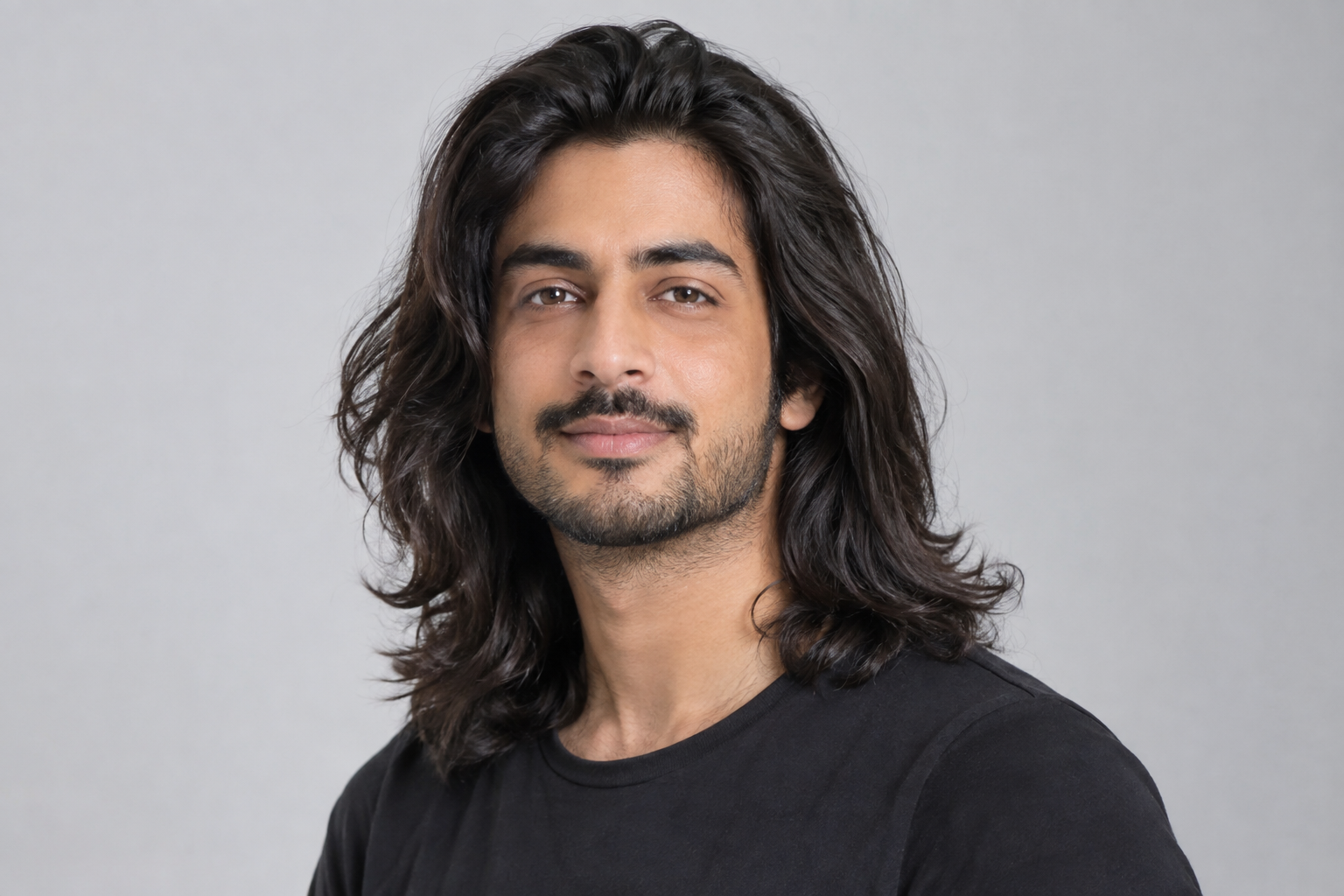
Growing your hair past your collar through Delhi's summer or Mumbai's monsoon is its own kind of commitment — one bad haircut and you're stuck living with it for another year of growing out. This guide skips the trend talk and gets straight to 28 real long hairstyles for men, grouped by how they actually fall and live day to day: loose and flowing, wavy or curly, tied back for work and commutes, or cut with a taper, fade, or undercut. Match your own hair against the photos below before you read a single word further.
28 Long Hairstyles for Men: Which Photo Matches Your Goal?
Before you commit to a length or a layer, decide which overall shape you actually want to live with every day: hair that swings loose and natural, hair that ties back cleanly for work, hair with visible texture and volume, or hair cut sharply against short sides. The table below lines up all 28 styles by length, the face shapes they flatter most, and how much daily effort they ask for, so you can shortlist before scrolling through every photo.
| Hairstyle | Best length | Best face shapes | Maintenance |
|---|---|---|---|
| Shoulder-Length Flow | Long | Oval, Square, Diamond | Low |
| Long Layered Cut | Long | Oval, Round, Heart, Triangle | Medium |
| Centre-Part Curtains | Long | Oval, Heart, Oblong | Medium |
| Deep Side-Part Long Hair | Long | Round, Diamond, Rectangle | Medium |
| Sleek One-Length Hair | Long | Oval | Medium |
| Bro Flow | Long | Round, Diamond, Triangle | Low |
| Long Wavy Surfer Hair | Long | Square, Diamond, Oblong | Medium |
| Loose Waves with Crown Lift | Long | Round, Heart, Rectangle, Triangle | Medium |
| Long Curly Shag | Long | Square, Heart, Rectangle, Oblong | High |
| Long Curly Layers | Long | Round, Diamond, Triangle | Medium |
| Shaped Long Afro | Long | Square, Rectangle, Oblong | High |
| Long Twists | Long | Square, Diamond, Oblong | Medium |
| Long Braids | Long | Oval, Heart | Medium |
| Half-Up Half-Down Hair | Long | Round, Heart, Diamond | Low |
| Low Man Bun | Long | Oval, Heart, Rectangle | Low |
| High Man Bun | Long | Round, Triangle | Low |
| Low Ponytail | Long | Square, Diamond, Oblong | Low |
| Braided Ponytail | Long | Rectangle | Medium |
| Slicked-Back Long Hair | Long | Oval, Triangle | Medium |
| Long Undercut | Long | Round, Triangle | High |
| Long Hair with Tapered Sides | Long | Round | Medium |
| Long Top with Fade | Long | Triangle | High |
| Long Wolf Cut | Long | Oval, Square, Oblong | High |
| Long Mop-Top | Long | Square, Rectangle, Oblong | Medium |
| Modern Long Mullet | Long | Rectangle, Triangle | High |
| Face-Framing Long Layers | Long | Square, Heart, Diamond | Medium |
| Blunt Shoulder-Length Cut | Long | Heart, Rectangle, Oblong | Low |
| Ultra-Long Natural Hair | Long | Oval | High |
Skim that shortlist, then see for yourself — preview any of these long styles on a photo of your own face before reading the full details below.
Loose and Flowing Long Hairstyles
These nine styles keep hair down and moving, relying on parting, layering, and a healthy perimeter rather than ties or clippers to do the work.
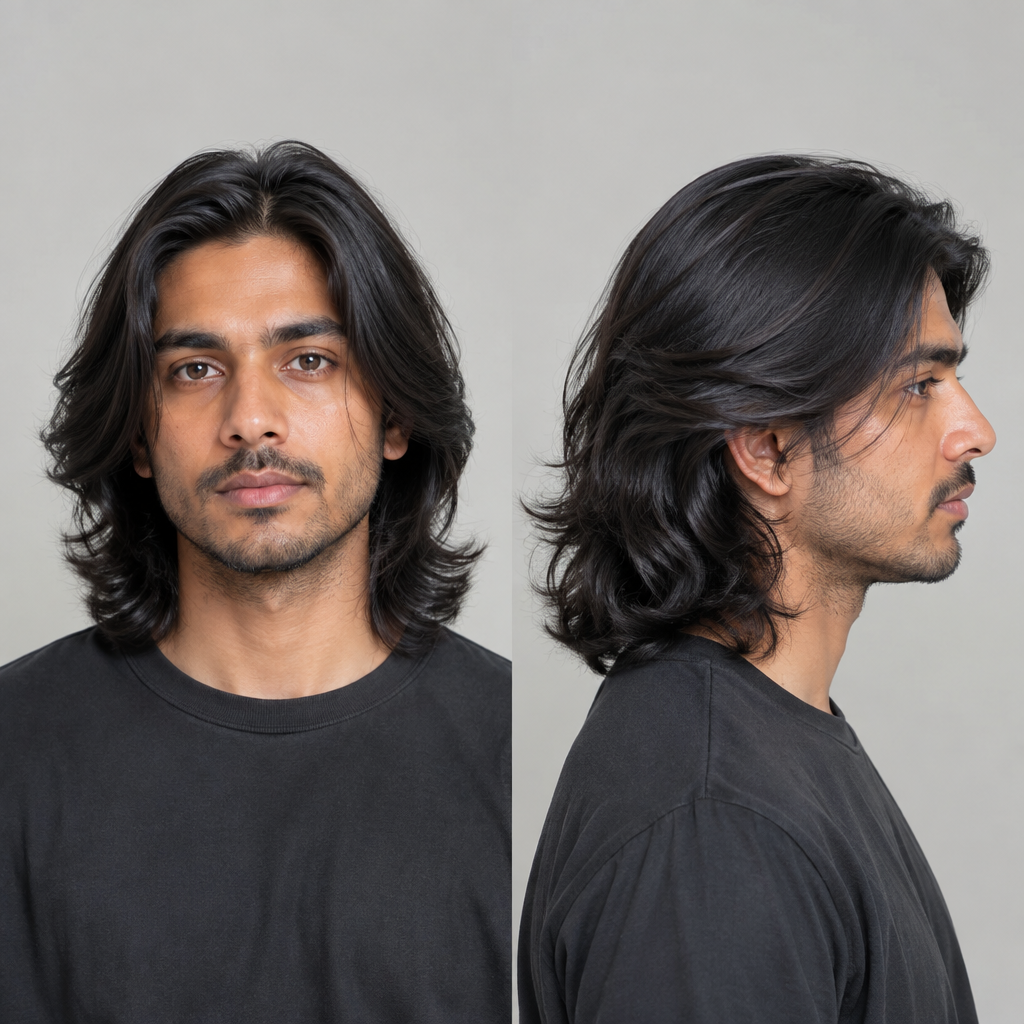
Shoulder-Length Flow
- Best if your hair looks like: straight or softly wavy hair that naturally sweeps back and reaches your shoulders.
- Face/lifestyle fit: a relaxed option for men who want movement without daily precision styling — flatters oval, square, and diamond faces.
- Upkeep: low.
- Tell your barber: “Keep the length at my shoulders, clean the damaged ends, and add only subtle long layers so it flows back without losing weight.”
Why it works: this is an easy entry into long hair because it can be worn loose, tucked behind the ears, or tied low. In Indian heat, a light layered shape stops the hair feeling like a heavy curtain while keeping enough length to tie back on a bad-hair day.
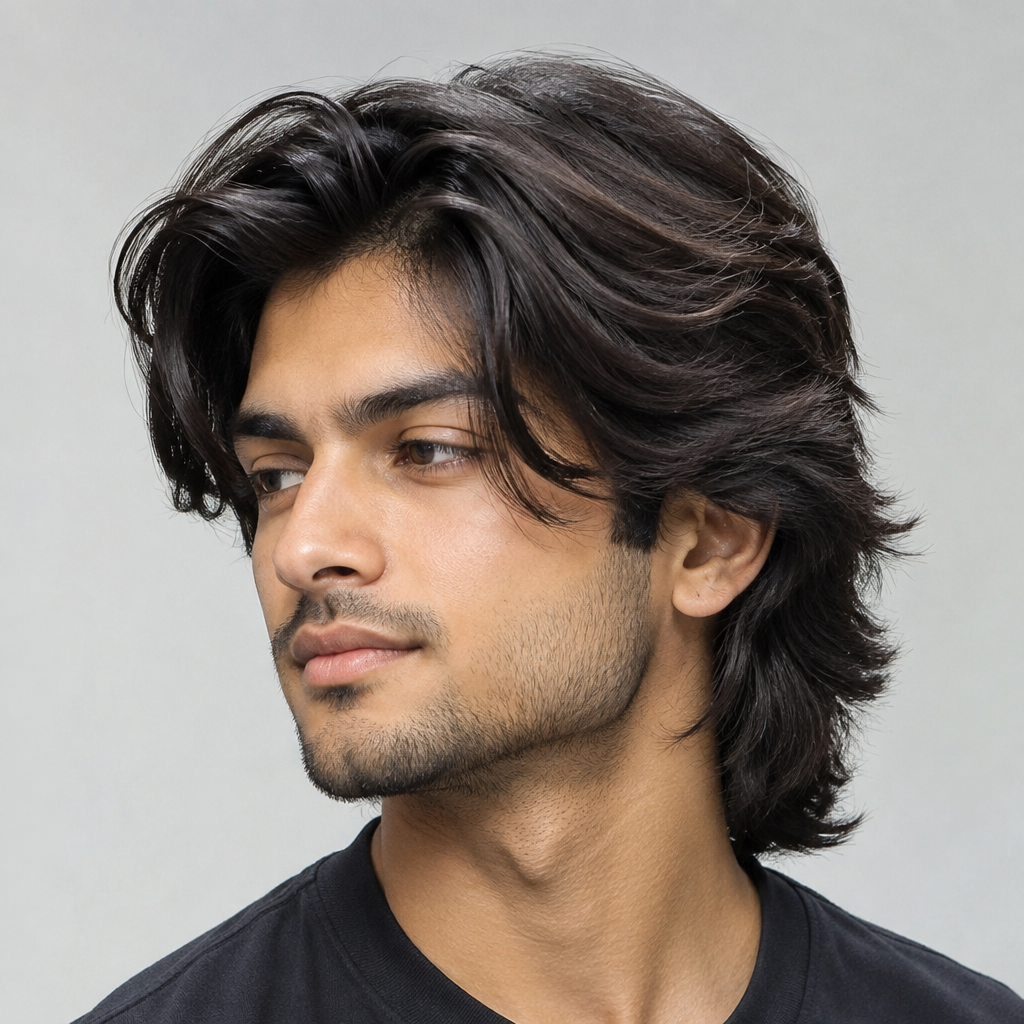
Long Layered Cut
- Best if your hair looks like: dense straight, wavy, or loosely curled hair that feels bulky through the middle and ends.
- Face/lifestyle fit: for men who want long hair to move without sacrificing ponytail length — works for oval, round, heart, and triangle faces.
- Upkeep: medium.
- Tell your barber: “Keep the perimeter long and full, add long internal layers to remove bulk, and make sure the shortest layers still tie back.”
Why it works: strategic layers stop dense hair forming a triangular or helmet-like shape and help it dry faster in humid weather — as long as the barber avoids over-thinning the visible ends.
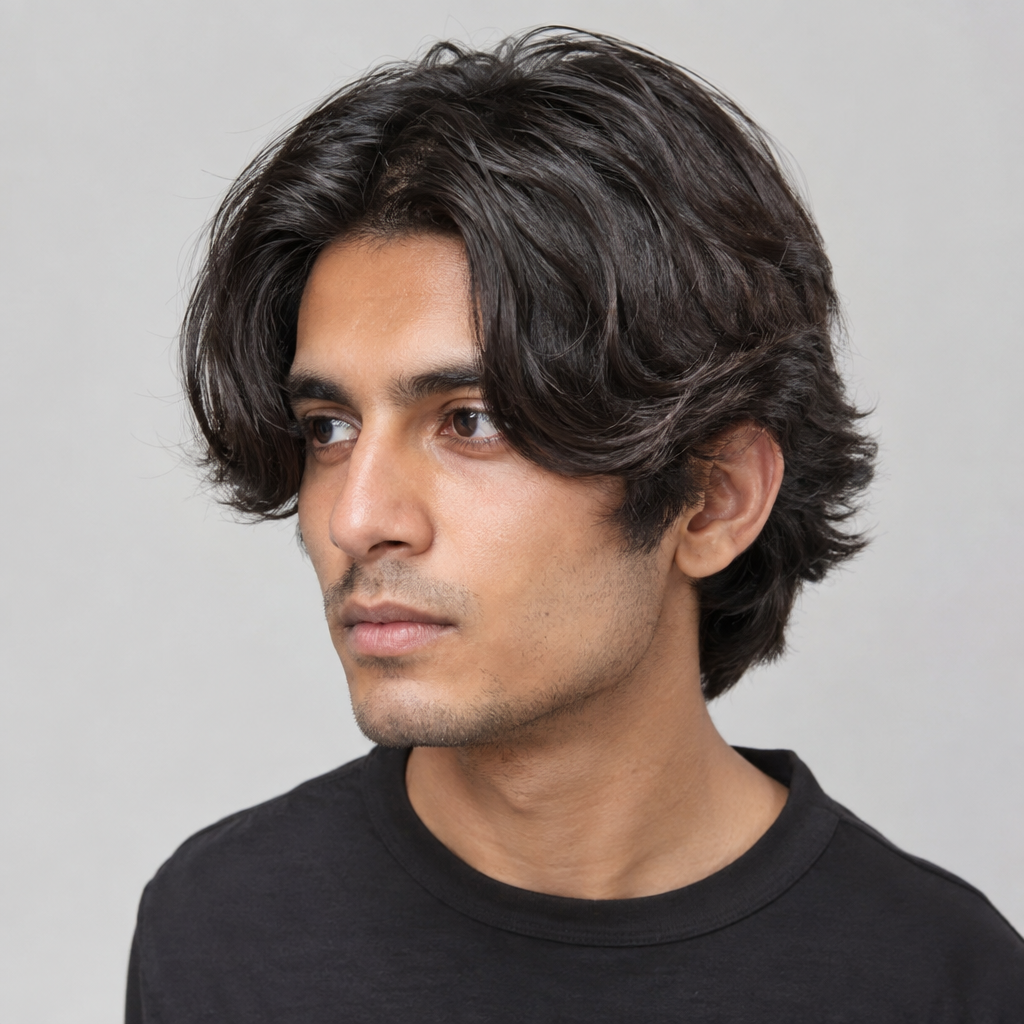
Centre-Part Curtains
- Best if your hair looks like: straight or gently wavy hair that already separates near the centre.
- Face/lifestyle fit: frames cheekbones well for oval, heart, and oblong faces if you're comfortable with length around the face.
- Upkeep: medium.
- Tell your barber: “Create a natural centre part with long curtain sections starting around my cheekbones, and blend them into the shoulder length.”
Why it works: the balanced part frames the face without a severe slick-back, and it reads polished for college or creative offices, though flat roots may need a quick blow-dry to hold the part.
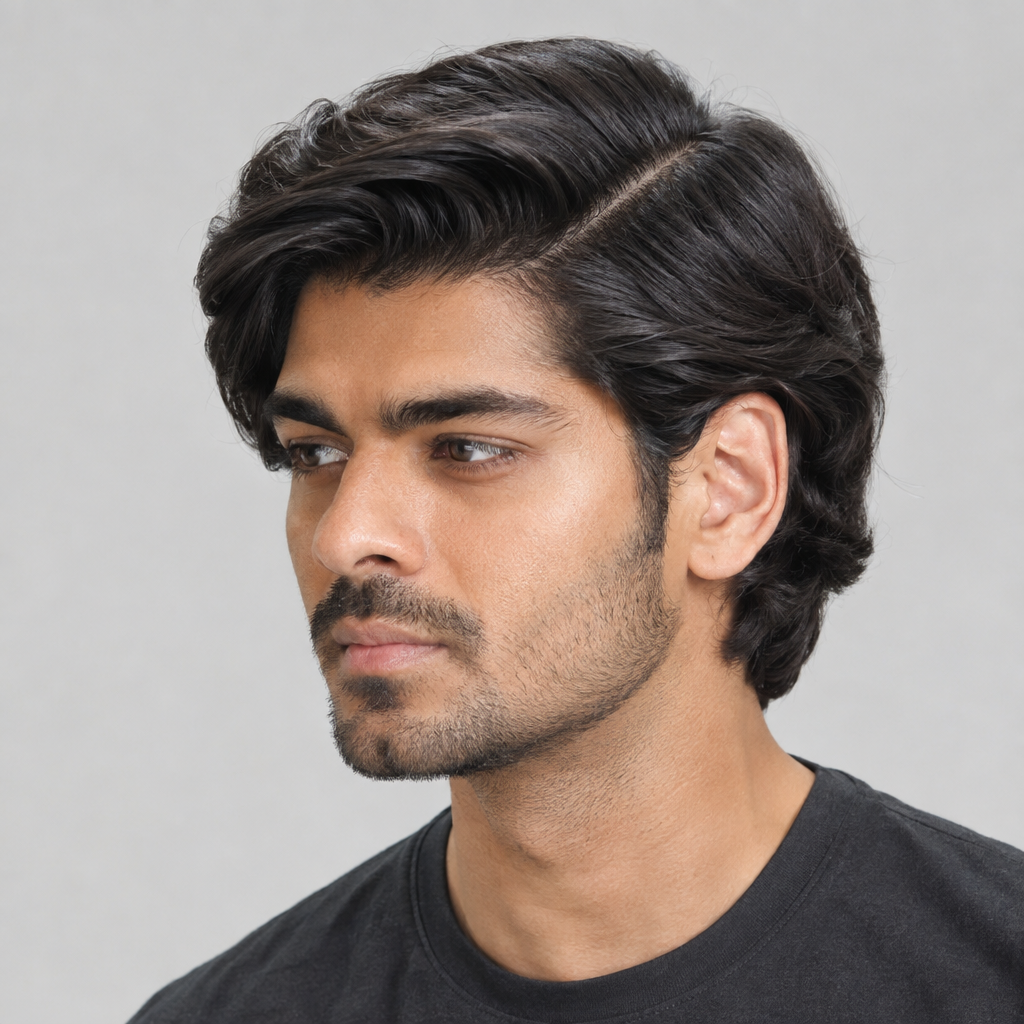
Deep Side-Part Long Hair
- Best if your hair looks like: straight, wavy, or softly curled hair that accepts a defined part.
- Face/lifestyle fit: adds structure for the office and useful asymmetry for round, diamond, and rectangle faces.
- Upkeep: medium.
- Tell your barber: “Keep my overall length, build a deep side part, and add long face-framing layers that sweep across without becoming a short fringe.”
Why it works: shifting volume to one side creates angles that can visually shorten a long face, and the style moves easily from a neat desk look to something softer in the evening.
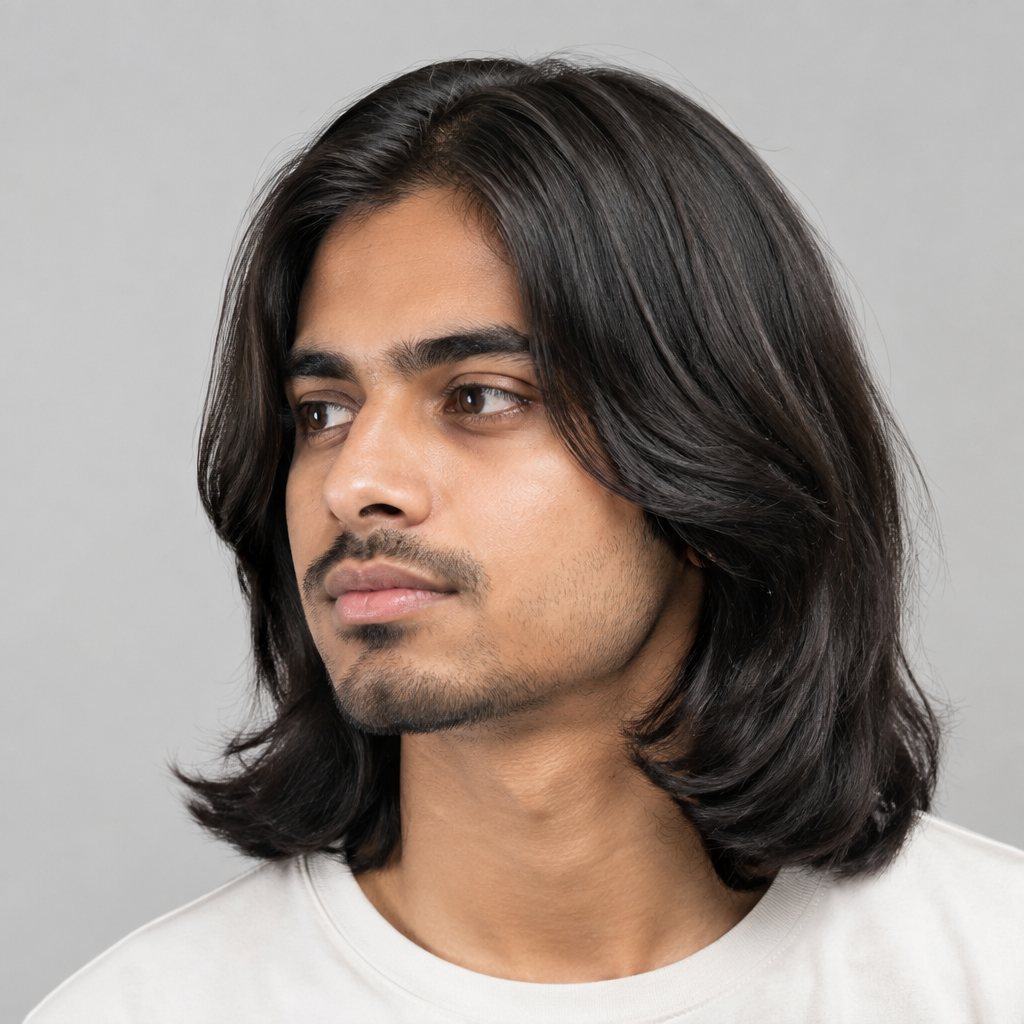
Sleek One-Length Hair
- Best if your hair looks like: naturally straight, smooth hair with enough density for a clean baseline.
- Face/lifestyle fit: a minimalist, polished look best suited to oval faces and men willing to maintain smoothness.
- Upkeep: medium.
- Tell your barber: “Keep this mostly one length with a clean, dense perimeter and no short layers; remove only the dry or split ends.”
Why it works: a strong baseline makes straight long hair look intentional instead of overgrown, though humidity and hard-water dullness expose damage fast, so gentle conditioning matters more than usual here.
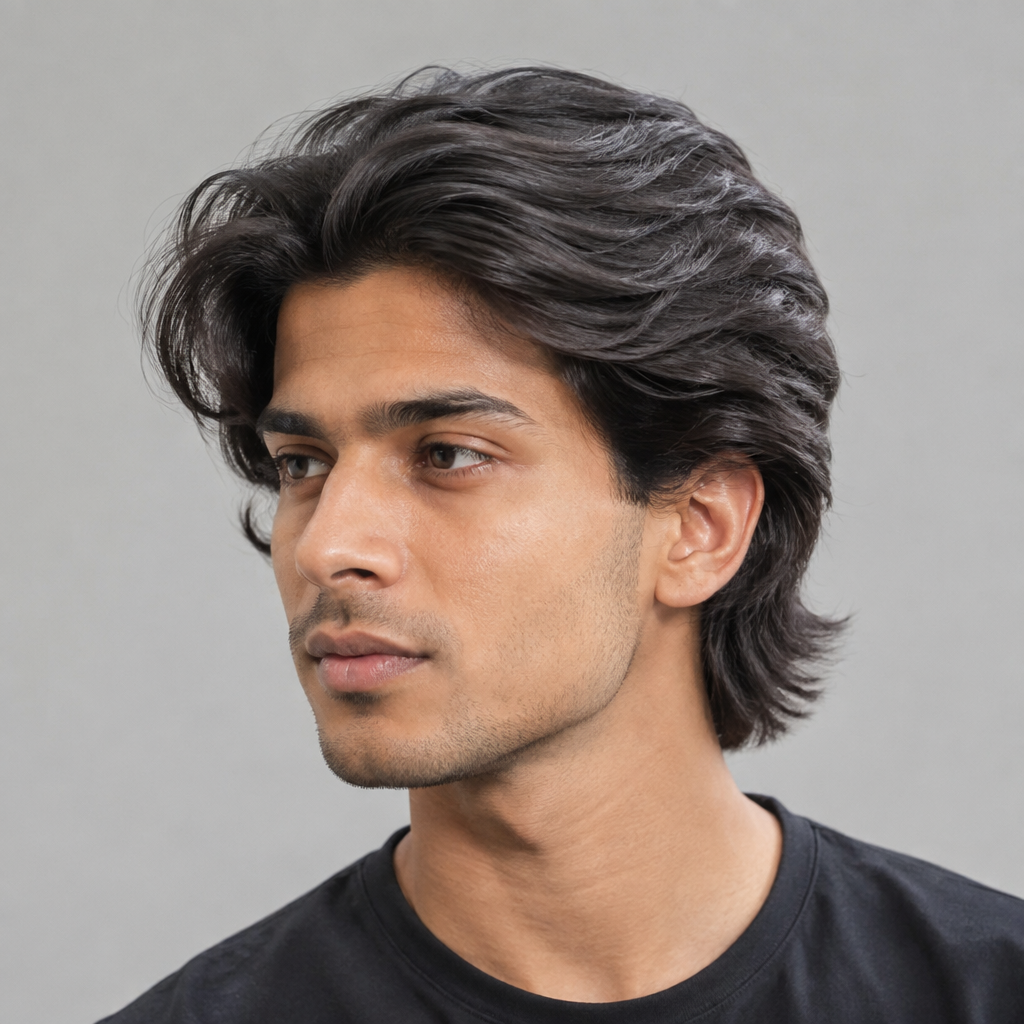
Bro Flow
- Best if your hair looks like: medium-to-dense hair with enough bend to sweep away from your forehead.
- Face/lifestyle fit: casual and tuckable, good for round, diamond, and triangle faces.
- Upkeep: low.
- Tell your barber: “Keep the front long enough to sweep behind my ears, add subtle movement through the ends, and avoid short disconnected layers.”
Why it works: the pushed-back shape clears your eyes without looking heavily styled, and a little leave-in conditioner usually resets it after a helmet commute.
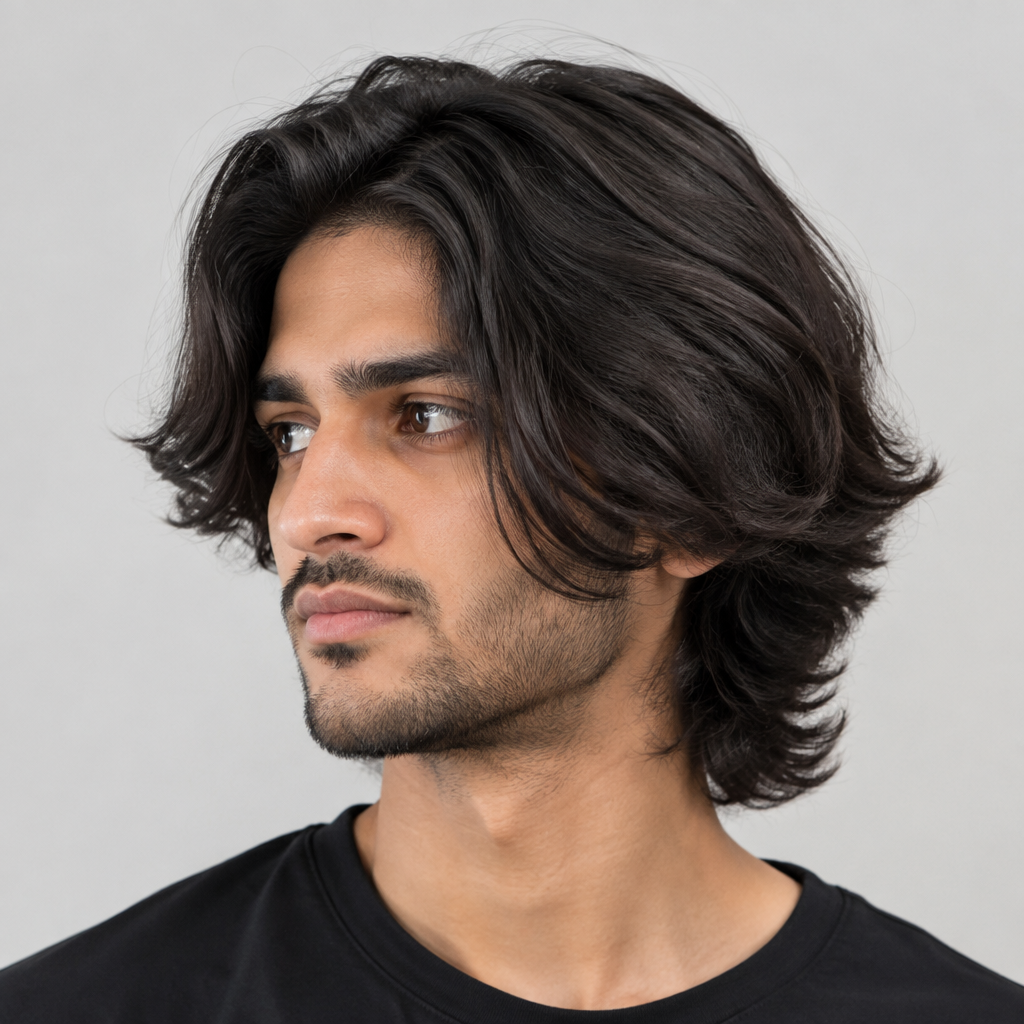
Face-Framing Long Layers
- Best if your hair looks like: straight, wavy, or loose-curled hair that sits heavy or blank around the cheeks and jaw.
- Face/lifestyle fit: softens a strong jaw for square, heart, and diamond faces without cutting the back length.
- Upkeep: medium.
- Tell your barber: “Keep my overall length, add face-framing layers beginning around my cheekbones or jaw, and blend them into the long perimeter.”
Why it works: shorter movement near the face draws attention to the eyes and cheekbones and softens hard edges — ask the barber to pick the starting point for your jaw specifically, not a generic photo.
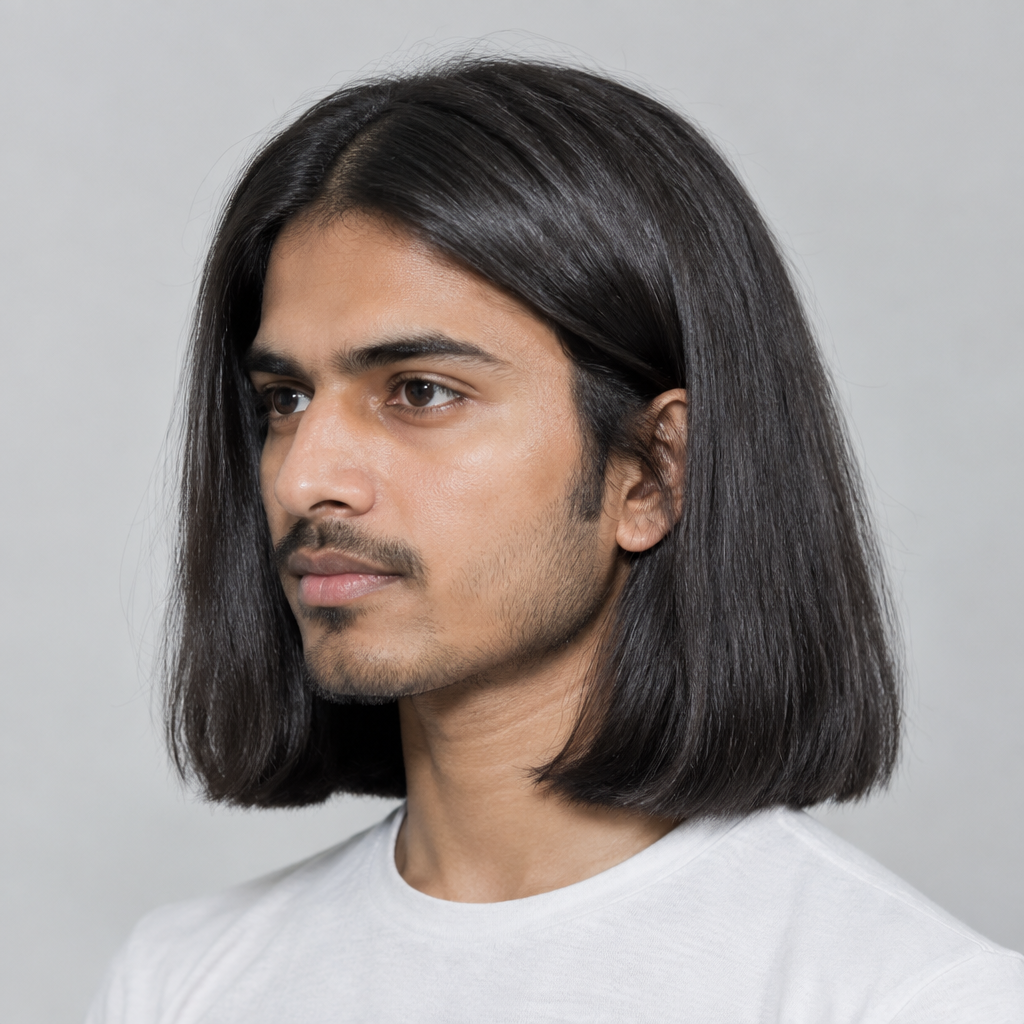
Blunt Shoulder-Length Cut
- Best if your hair looks like: fine-to-medium straight or slightly wavy hair that looks thinner once heavily layered.
- Face/lifestyle fit: a strong, simple shape that suits heart, rectangle, and oblong faces well.
- Upkeep: low.
- Tell your barber: “Cut a clean blunt line at my shoulders, preserve maximum fullness at the ends, and avoid thinning shears or short layers.”
Why it works: a compact baseline gives finer hair more visual weight and keeps daily styling simple, while the shoulder-level width balances longer face shapes without extra crown height.
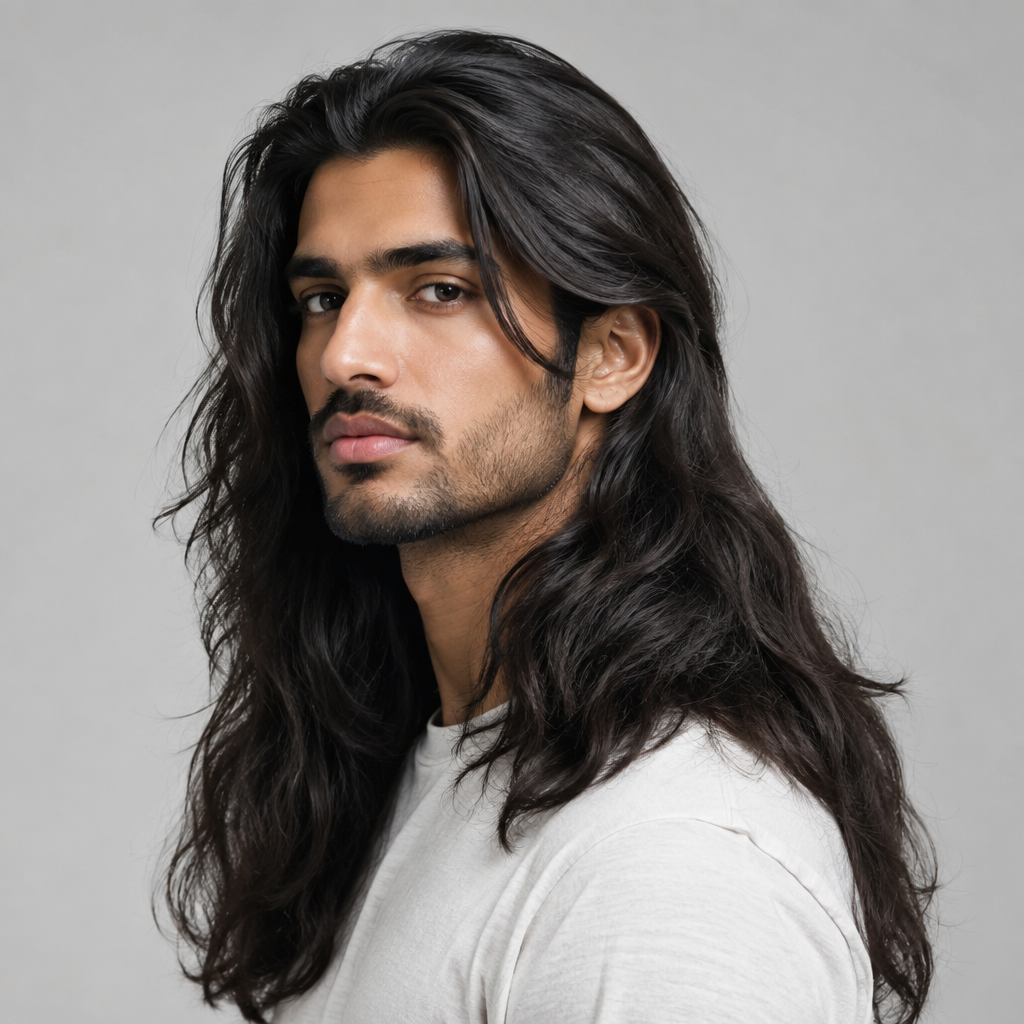
Ultra-Long Natural Hair
- Best if your hair looks like: healthy hair reaching well below the shoulders, in any natural texture.
- Face/lifestyle fit: for men prioritising length retention over frequent restyling — flatters oval faces particularly well.
- Upkeep: high.
- Tell your barber: “Retain as much length as possible, remove only split or transparent ends, and keep the shape simple enough to wear loose, braided, or tied.”
Why it works: dramatic length gives you the widest range of loose, braided, ponytail, and bun options, but it does demand more wash-day time and careful handling in dust, heat, and hard water.
Wavy, Curly and High-Texture Long Hairstyles
If your hair does not fall flat on its own — it waves, curls, coils, or puffs — these ten styles work with that natural shape instead of fighting it.
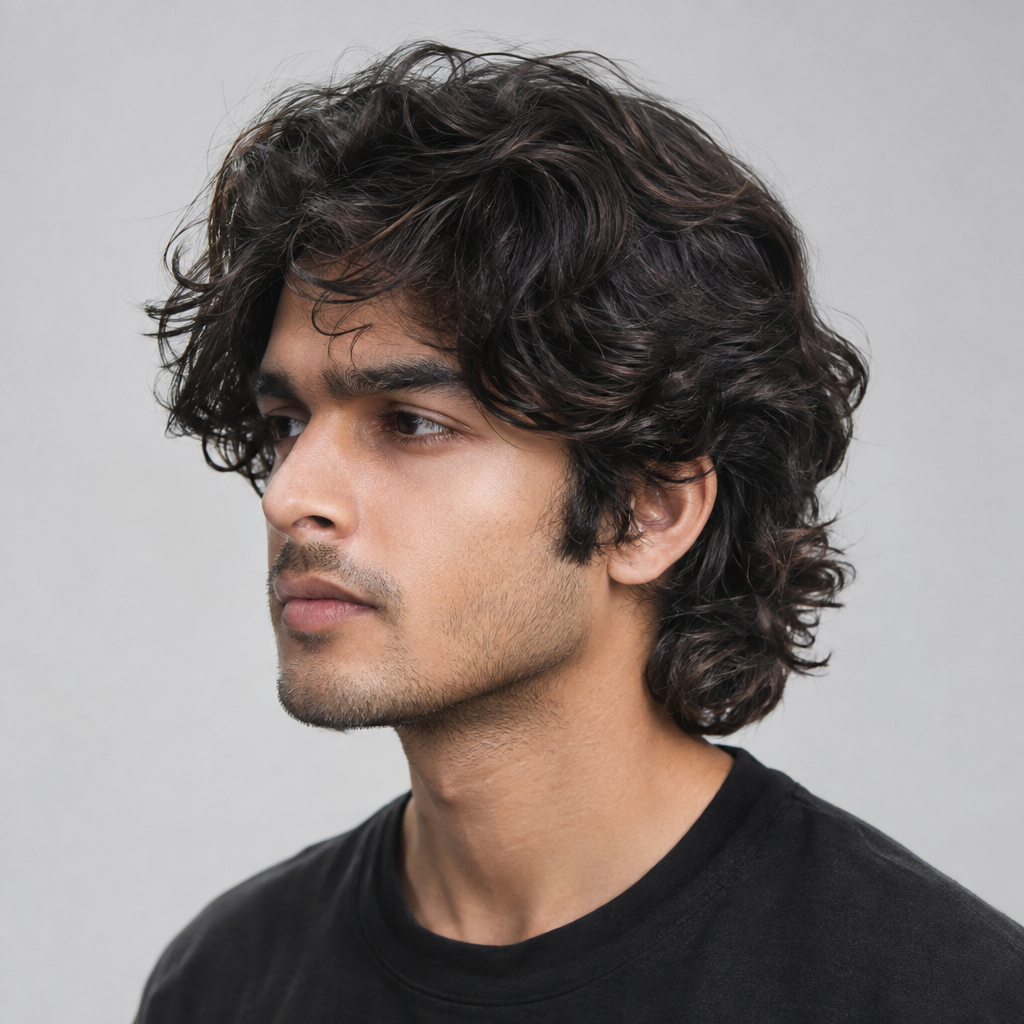
Long Wavy Surfer Hair
- Best if your hair looks like: hair that dries into visible S-shaped waves with a slightly irregular, airy finish.
- Face/lifestyle fit: relaxed dress codes and men who like natural texture over a sharp finish — good for square, diamond, and oblong faces.
- Upkeep: medium.
- Tell your barber: “Keep the shoulder length, add long layers that encourage my waves, and leave enough weight at the ends to prevent frizz.”
Why it works: the natural bends add width and movement without much styling effort; in humidity, a light curl cream or gel outperforms a drying salt spray that can leave waves brittle.
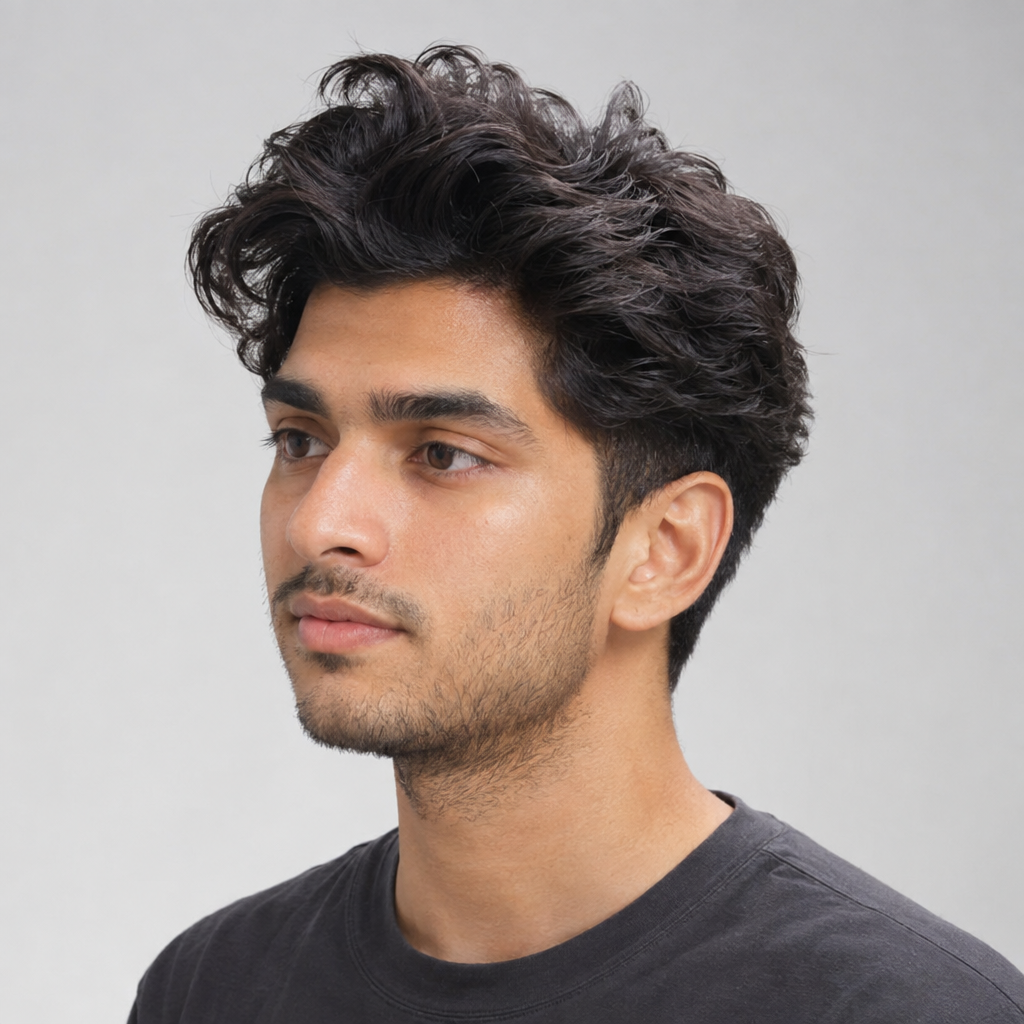
Loose Waves with Crown Lift
- Best if your hair looks like: fine-to-medium hair with loose bends that tends to sit flat at the roots.
- Face/lifestyle fit: controlled height without shaved sides — flatters round, heart, rectangle, and triangle faces.
- Upkeep: medium.
- Tell your barber: “Keep the length below my shoulders, add light long layers for movement, and preserve enough fullness for lift at the crown.”
Why it works: a touch of crown lift lengthens a rounder outline while the waves stop the style looking rigid; lightweight mousse holds better than heavy cream on fine roots in hot weather.
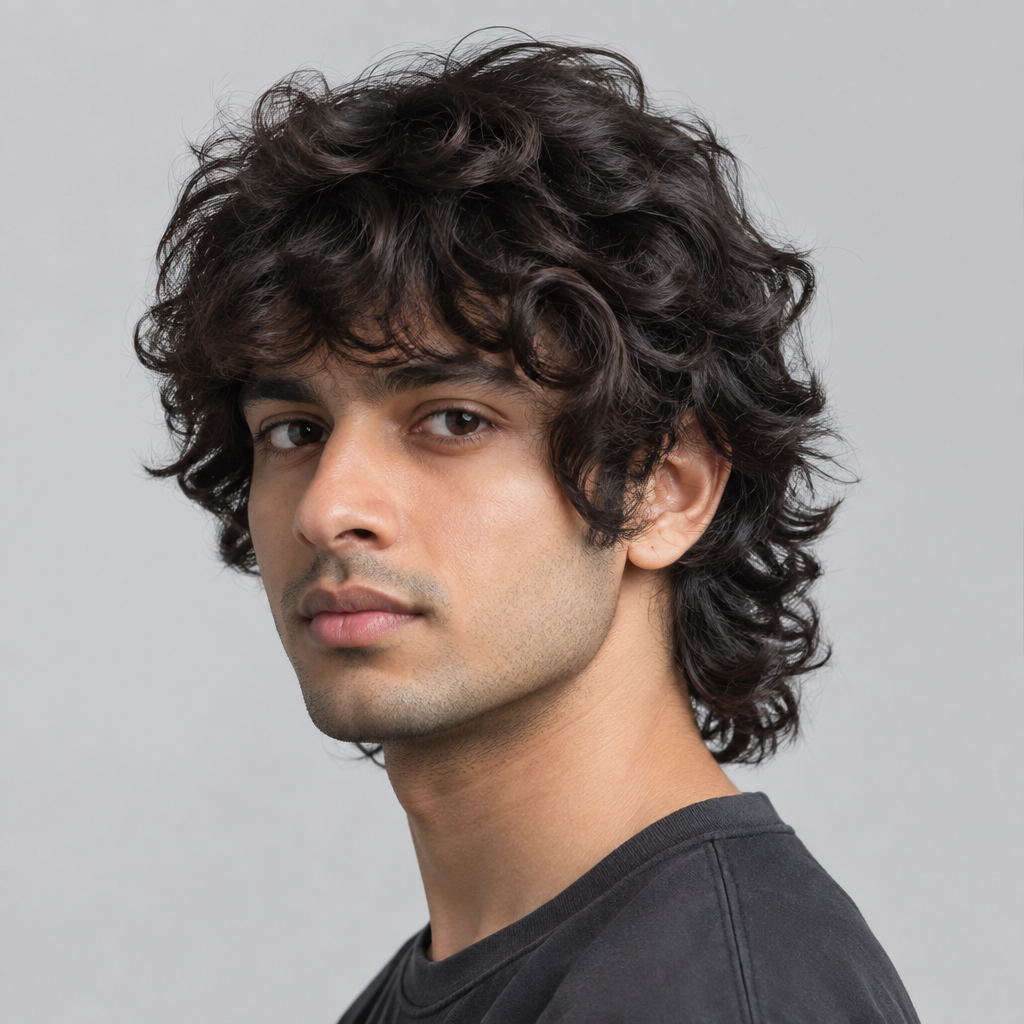
Long Curly Shag
- Best if your hair looks like: springy curls that build bulk at the sides and benefit from visible separation.
- Face/lifestyle fit: bold and expressive, best for square, heart, rectangle, and oblong faces comfortable with fringe.
- Upkeep: high.
- Tell your barber: “Give me a long curly shag with rounded layers, controlled width at the sides, and a curl-by-curl fringe that works at its dry length.”
Why it works: layering distributes curl volume instead of letting it pool at the ends; ask your stylist to judge the fringe on dry, sprung-up hair so it doesn't finish shorter than planned.
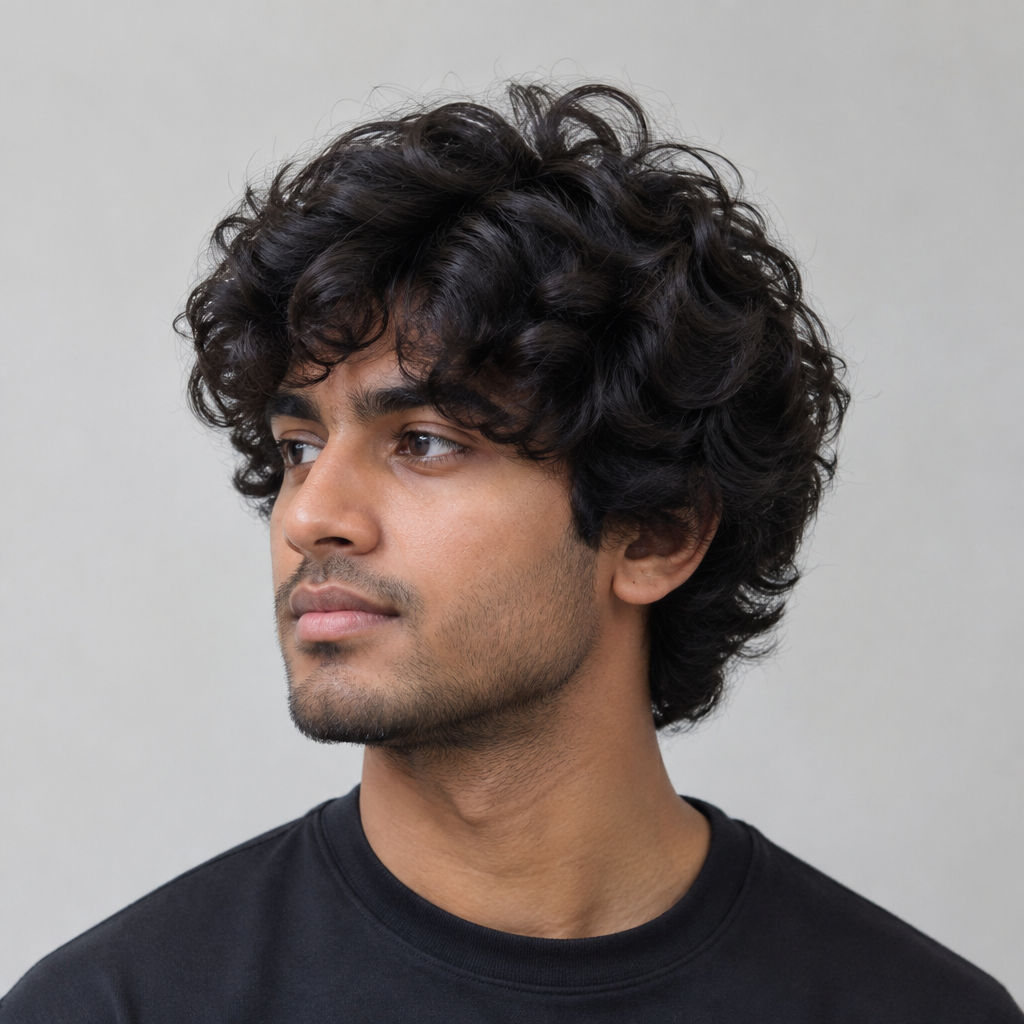
Long Curly Layers
- Best if your hair looks like: defined curls that hang below the ears or shoulders and turn heavy at one length.
- Face/lifestyle fit: versatile curl definition without a heavy shag, good for round, diamond, and triangle faces.
- Upkeep: medium.
- Tell your barber: “Keep my curls long and rounded, add graduated layers to distribute the weight, and judge every layer at its dry, sprung-up length.”
Why it works: rounded layering balances volume while keeping enough length to tie back, and it adapts to office wear better than a dramatic shag — a leave-in followed by a light-hold gel keeps it defined in humidity.
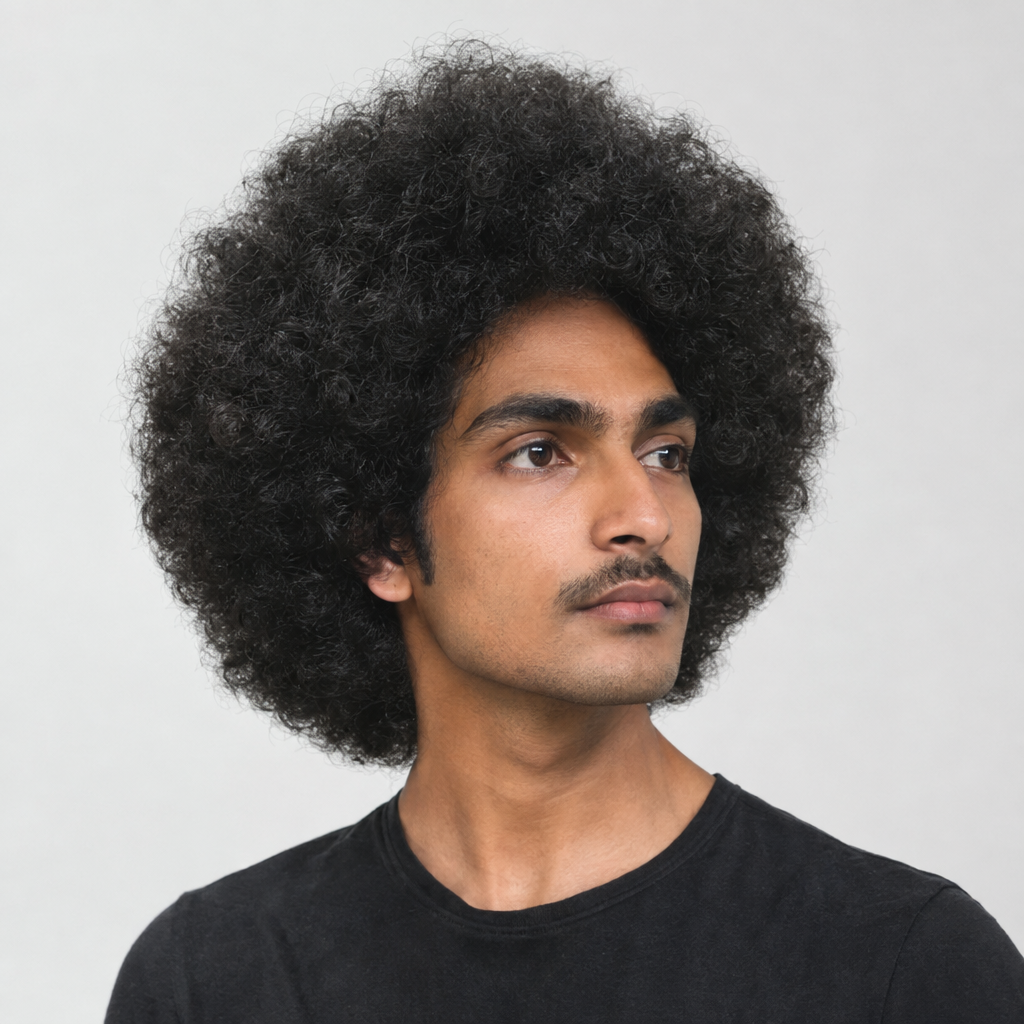
Shaped Long Afro
- Best if your hair looks like: dense curls or coils that grow outward and hold a rounded silhouette.
- Face/lifestyle fit: celebrates natural volume and balances square, rectangle, and oblong faces.
- Upkeep: high.
- Tell your barber: “Preserve my length and natural volume, shape an even rounded silhouette, and balance the sides without thinning or cutting into the coils aggressively.”
Why it works: a deliberate outline turns volume into shape instead of letting it sit flat; consistent moisture and gentle detangling matter more day to day than any single styling step.
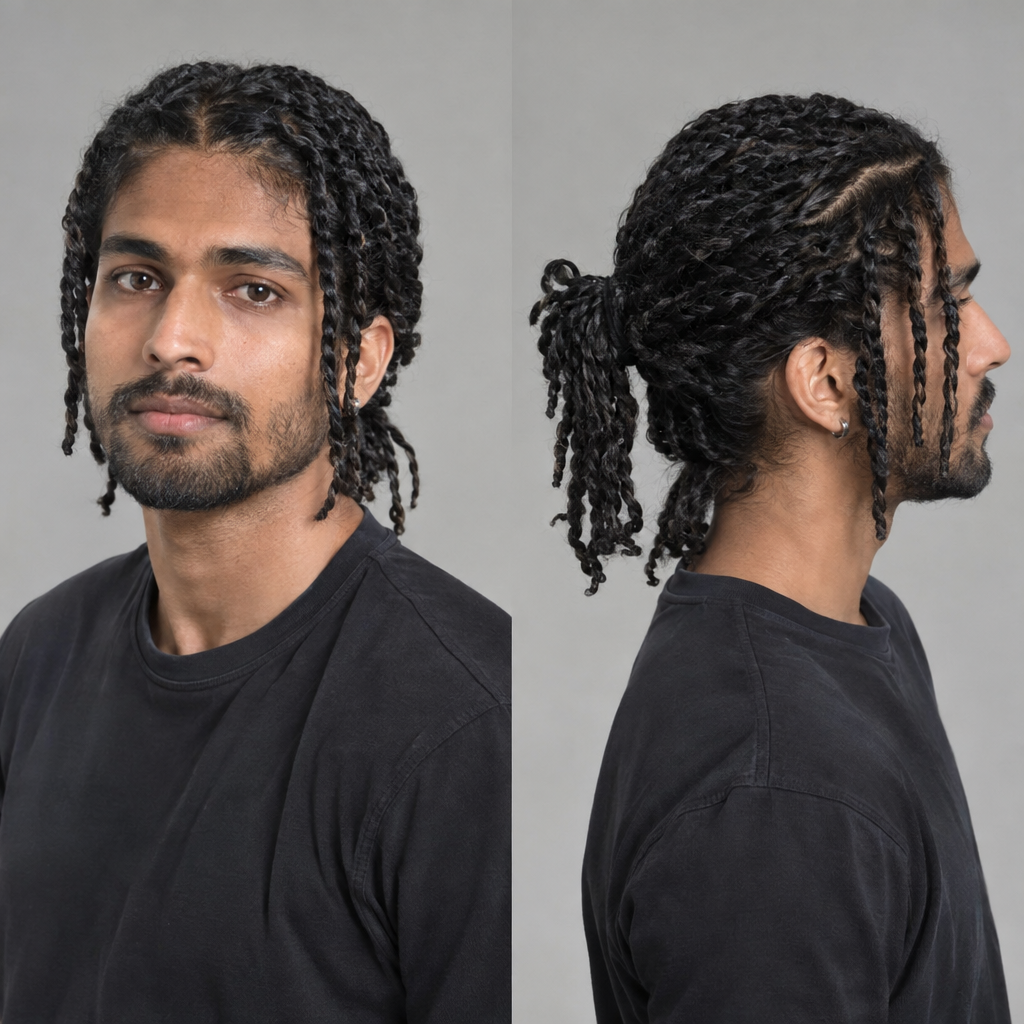
Long Twists
- Best if your hair looks like: dense curly or coily hair with enough length to divide into defined rope-like sections.
- Face/lifestyle fit: protective and versatile — worn loose, half-up, or tied — good for square, diamond, and oblong faces.
- Upkeep: medium.
- Tell your barber: “Preserve the full length, clean only the damaged ends, and create medium long twists with neat sections and comfortable tension at the roots.”
Why it works: twists cut down on daily detangling and make long, textured hair easier to manage through heat and travel — just make sure the roots are never installed painfully tight, and the scalp still gets washed underneath.
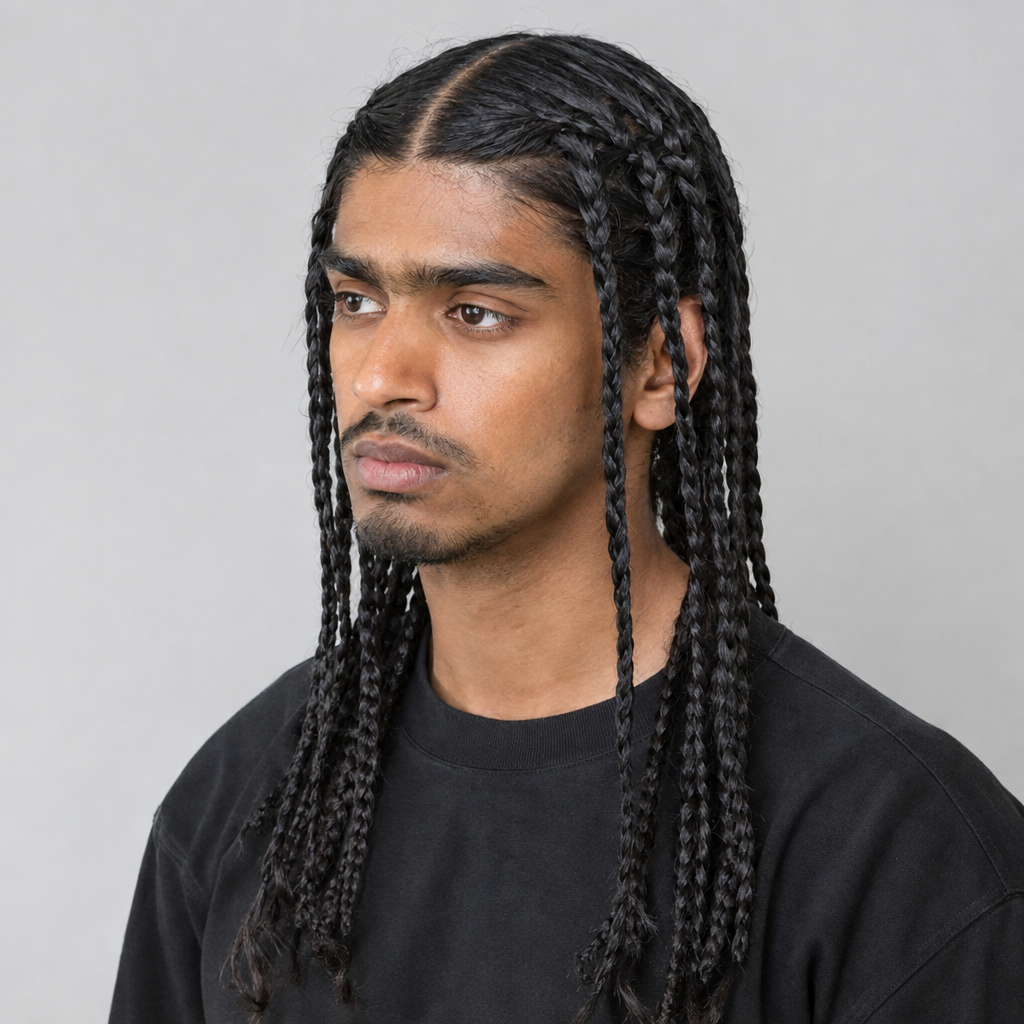
Long Braids
- Best if your hair looks like: hair with enough density and length for individual braids or clean sectioned plaits.
- Face/lifestyle fit: a statement protective look that stays practical when tied back — suits oval and heart faces.
- Upkeep: medium.
- Tell your barber: “Keep my length, tidy only the ends, and create long medium-size braids with clean parts and low tension around the hairline.”
Why it works: braids keep length organised and open several tied variations, but treat them as maintenance, not a break from it — cleanse the scalp, dry it fully, and take the style out before matting sets in.
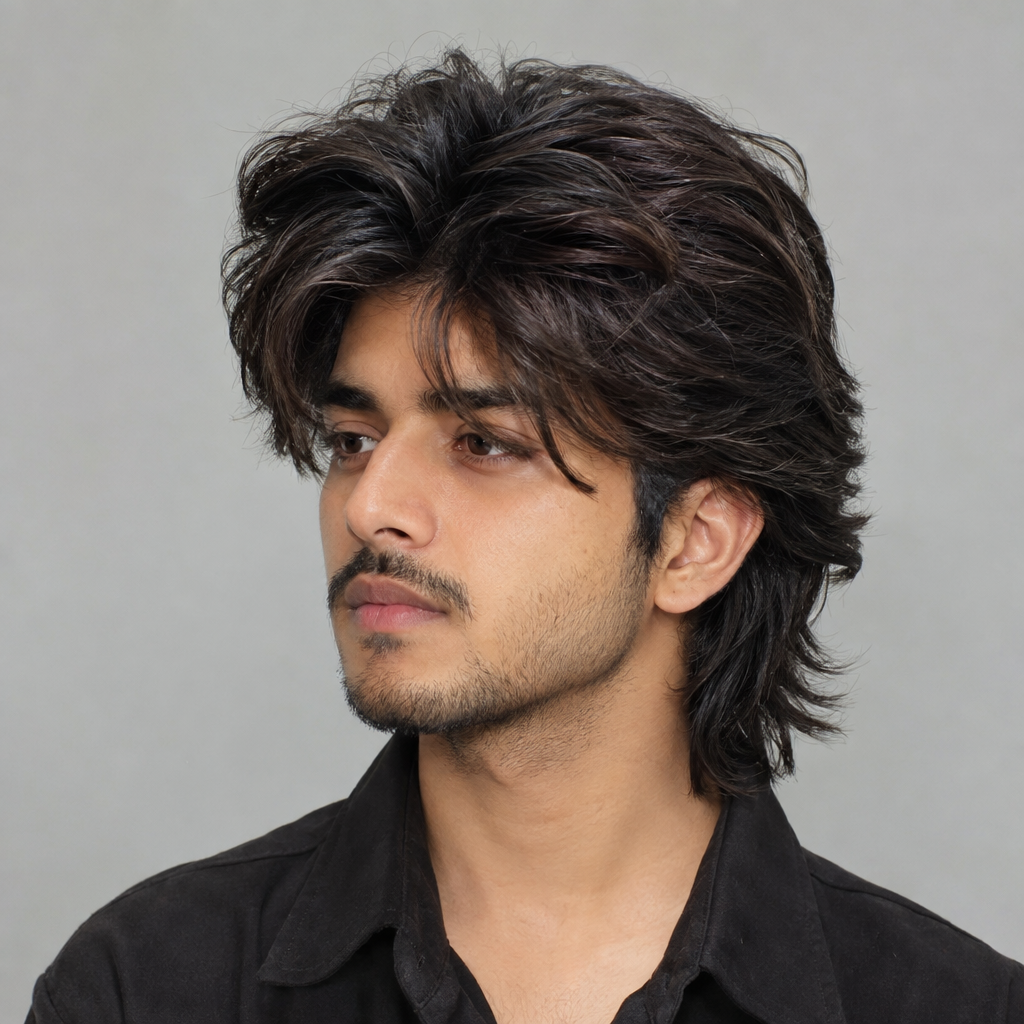
Long Wolf Cut
- Best if your hair looks like: thick, wavy, or curly hair that can support crown volume and heavily textured layers.
- Face/lifestyle fit: trend-forward movement for oval, square, and oblong faces who don't want a conservative finish.
- Upkeep: high.
- Tell your barber: “Create a long wolf cut with volume at the crown, connected shaggy layers, tapered ends, and enough lower length to keep the silhouette long.”
Why it works: it turns natural bulk into controlled movement and adds width around a longer face, but the layer placement needs to be deliberate — careless thinning leaves the lower section sparse.
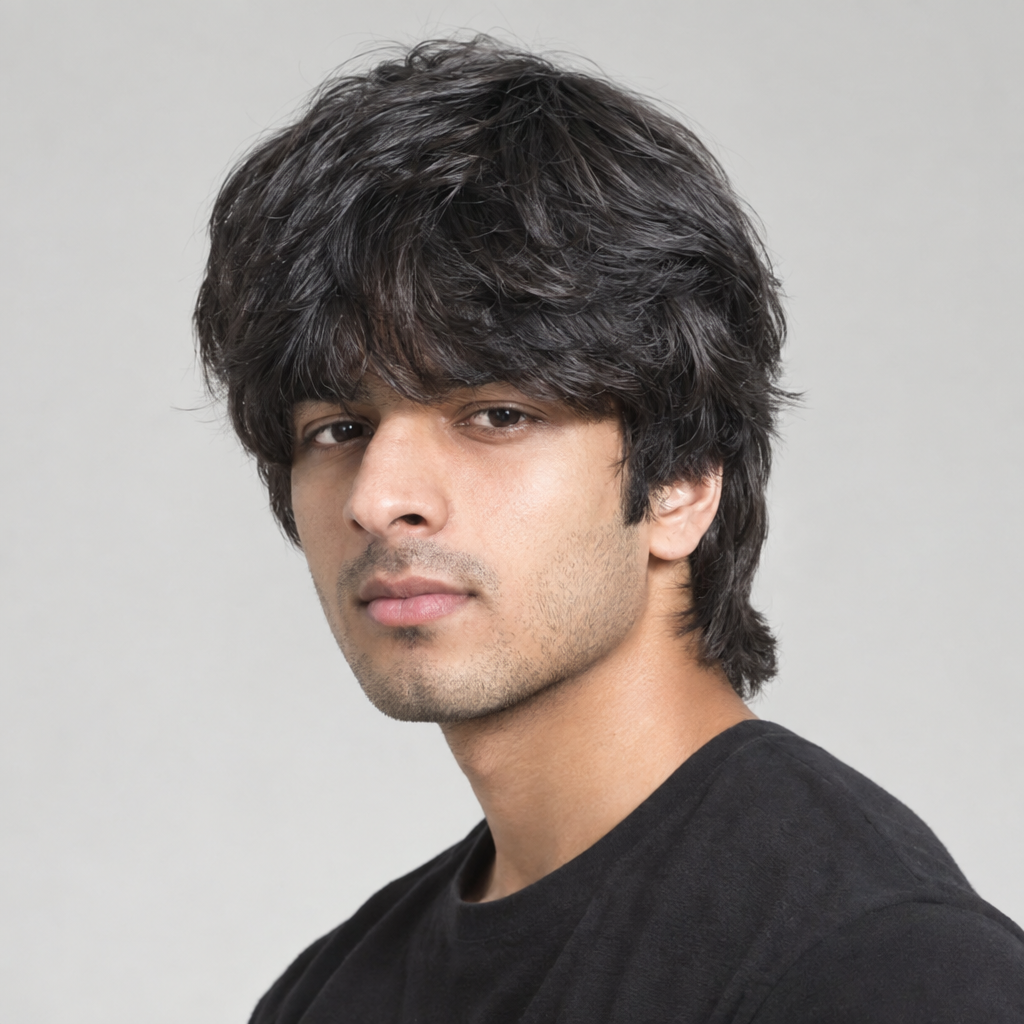
Long Mop-Top
- Best if your hair looks like: straight or wavy hair with natural body and enough softness to form a forward fringe.
- Face/lifestyle fit: youthful and forehead-shortening, good for square, rectangle, and oblong faces.
- Upkeep: medium.
- Tell your barber: “Give me a long layered mop-top with a soft eyebrow-to-cheekbone fringe, rounded side movement, and no harsh disconnected sections.”
Why it works: the forward fringe reduces vertical space while the sides add width; lightweight mousse gives cleaner separation than wax, which turns the fringe greasy fast in humidity.
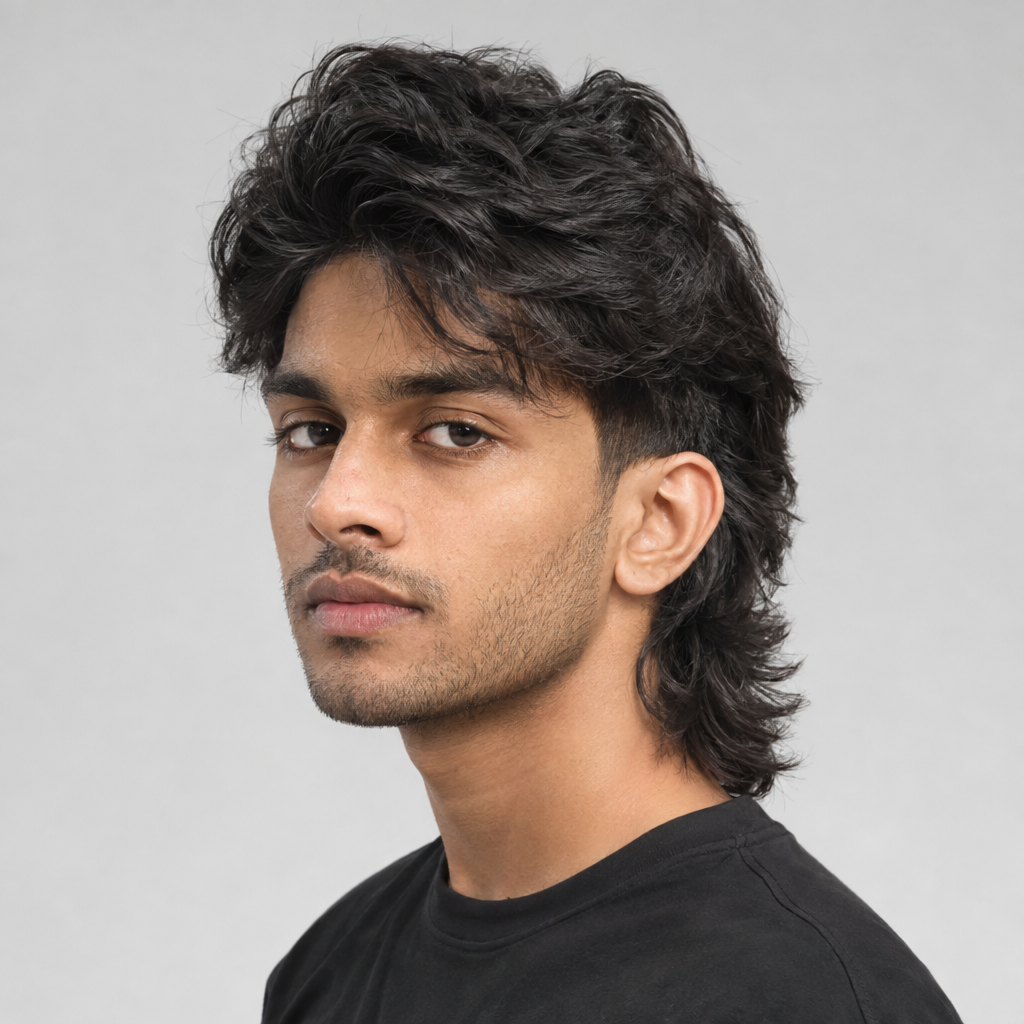
Modern Long Mullet
- Best if your hair looks like: wavy or straight hair suited to shorter face-framing sides and obvious length at the back.
- Face/lifestyle fit: a directional, fashion-forward choice for rectangle and triangle faces where the dress code allows it.
- Upkeep: high.
- Tell your barber: “Create a soft modern mullet with textured crown volume, controlled width around the temples, and clearly retained length through the back.”
Why it works: the wider upper silhouette balances a jaw-heavy triangle face, and a textured fringe interrupts a long rectangular one, but it needs a stylist confident enough not to leave the back looking accidentally disconnected.
Tied-Back Long Hairstyles for Work, Heat and Commutes
For offices, classrooms, and any day you're on a bike or under a helmet, these six styles keep long hair controlled without cutting a single centimetre off.
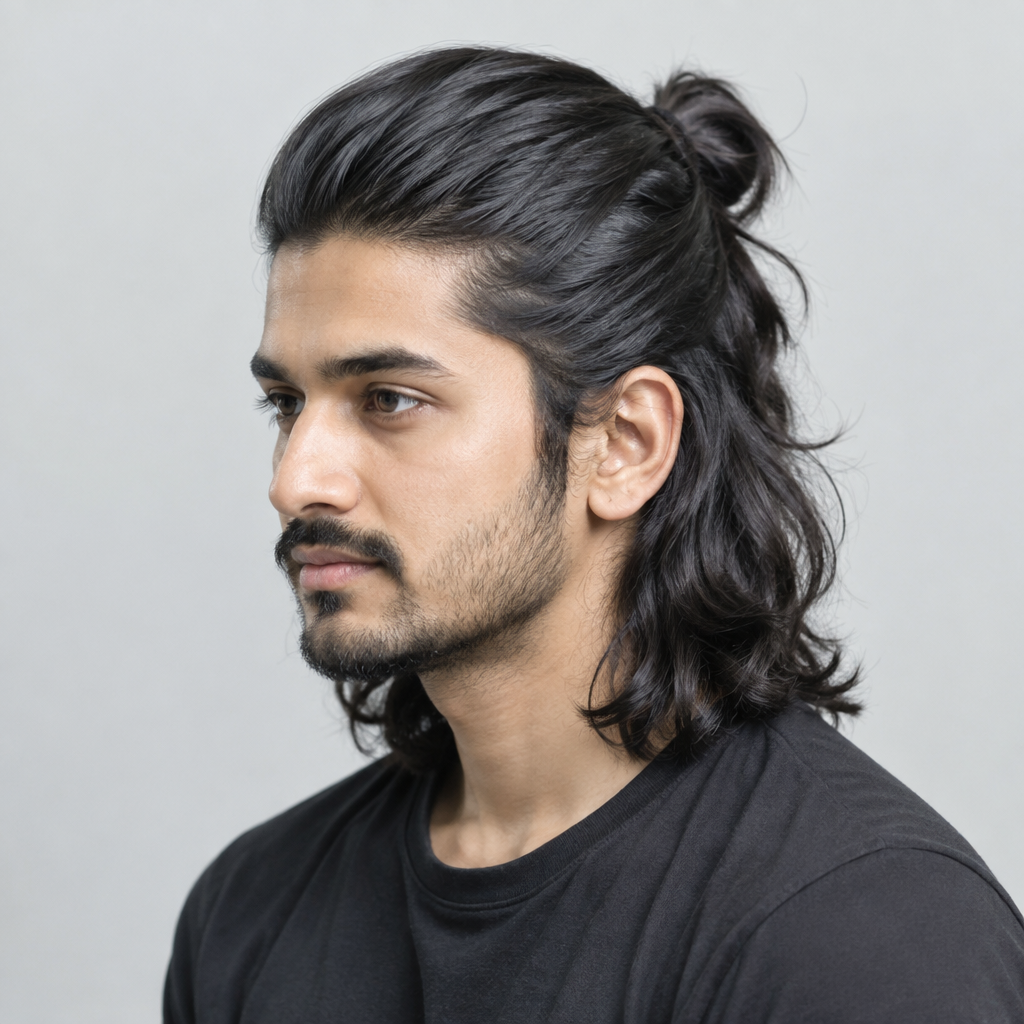
Half-Up Half-Down Hair
- Best if your hair looks like: long hair, in almost any texture, that reaches far enough to secure the crown section.
- Face/lifestyle fit: keeps your face open while still showing off length — good for round, heart, and diamond faces.
- Upkeep: low.
- Tell your barber: “Keep enough length around the crown and sides for a half-up tie, and add only long blended layers that won't fall out around my face.”
Why it works: it's practical for functions and casual offices, and it puts far less tension on the hairline than pulling every strand back all day.
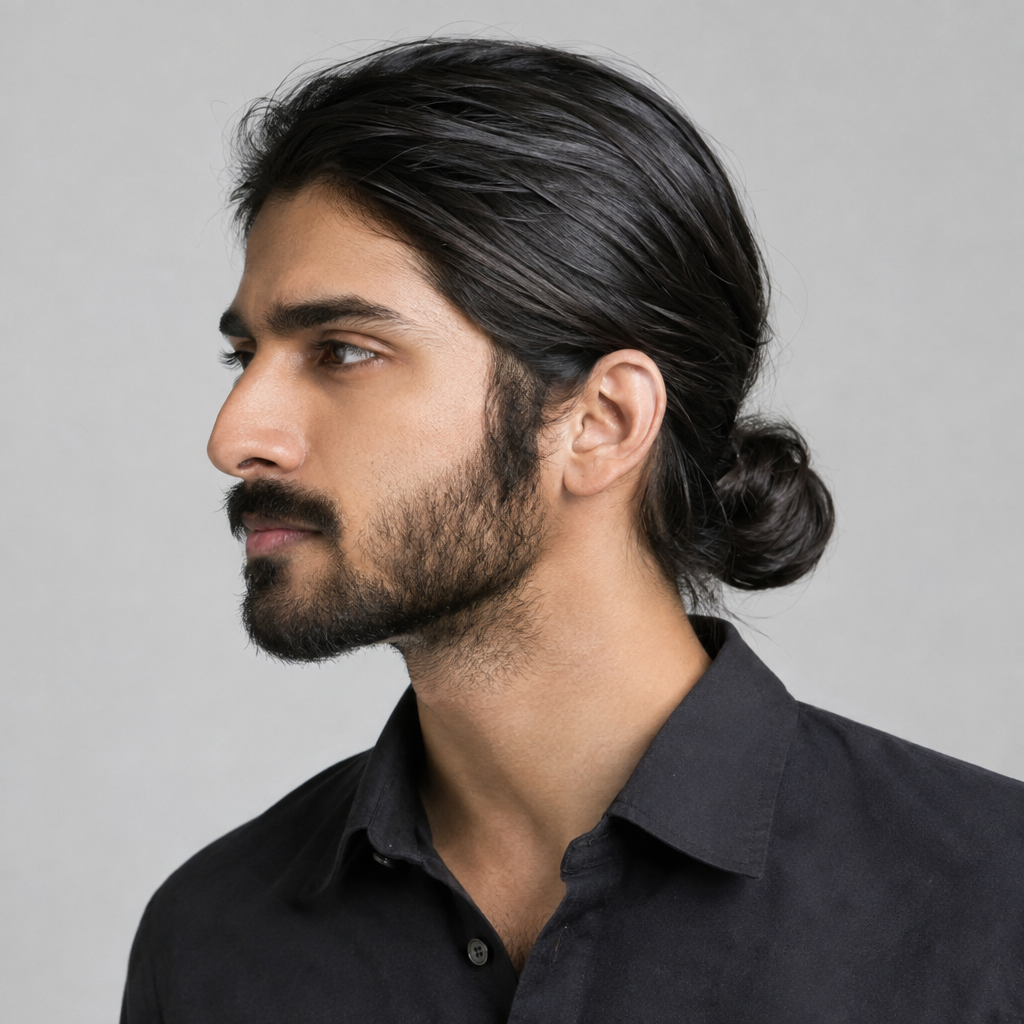
Low Man Bun
- Best if your hair looks like: hair long enough for the front and sides to meet comfortably at the nape.
- Face/lifestyle fit: one of the most office-friendly long styles going, and good for oval, heart, and rectangle faces.
- Upkeep: low.
- Tell your barber: “Keep every important section long enough to reach a low bun, clean the perimeter, and avoid short layers around my temples and ears.”
Why it works: the low position reads controlled rather than adding height to an already long face — use a snag-free tie and vary the tension so daily wear doesn't stress your temples or nape.
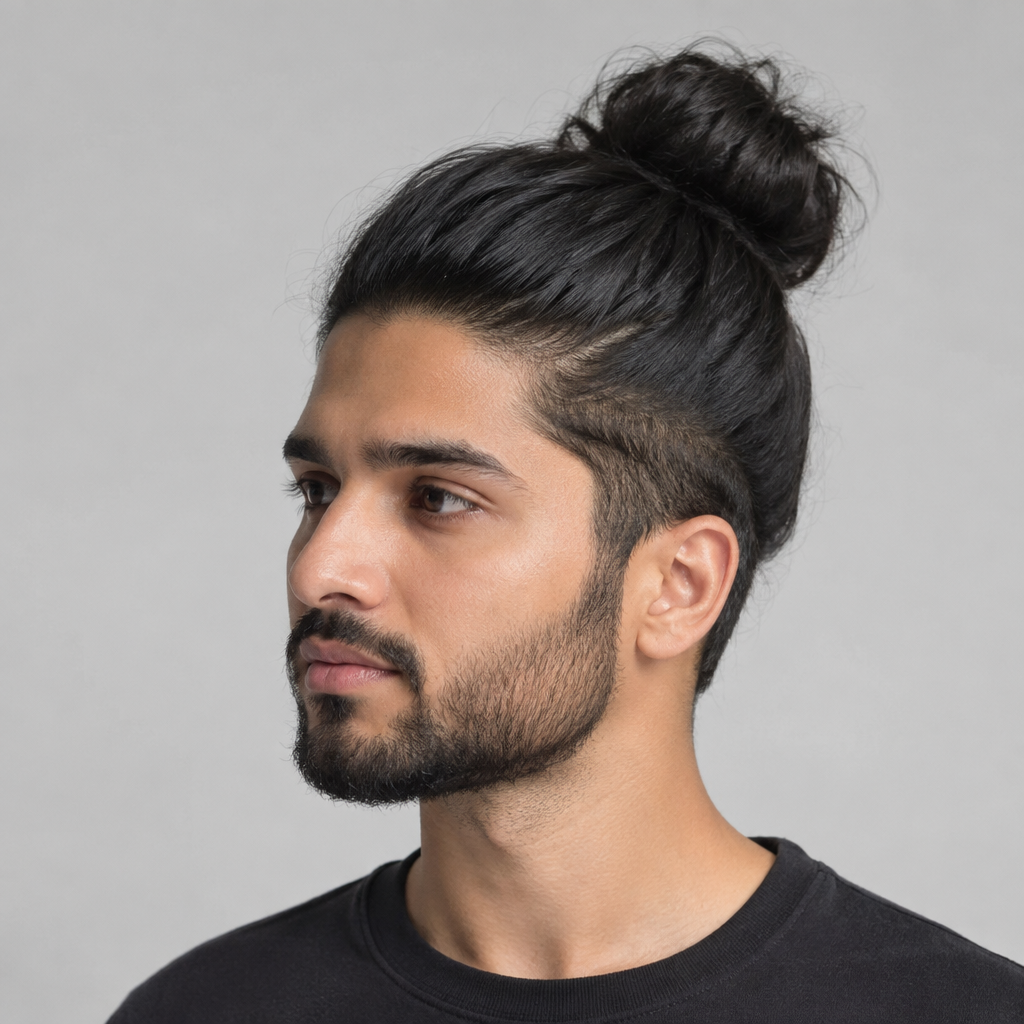
High Man Bun
- Best if your hair looks like: long, reasonably dense hair that forms a full bun without painful pulling.
- Face/lifestyle fit: visible height for round and triangle faces, or workouts where you want hair fully off the neck.
- Upkeep: low.
- Tell your barber: “Preserve enough length throughout to reach a high bun cleanly, and remove damaged ends without creating short pieces that drop out.”
Why it works: the elevated bun lengthens a rounder face and clears the neck in hot weather — skip it, or wear it looser, if your face is already long, since extra height can exaggerate that.
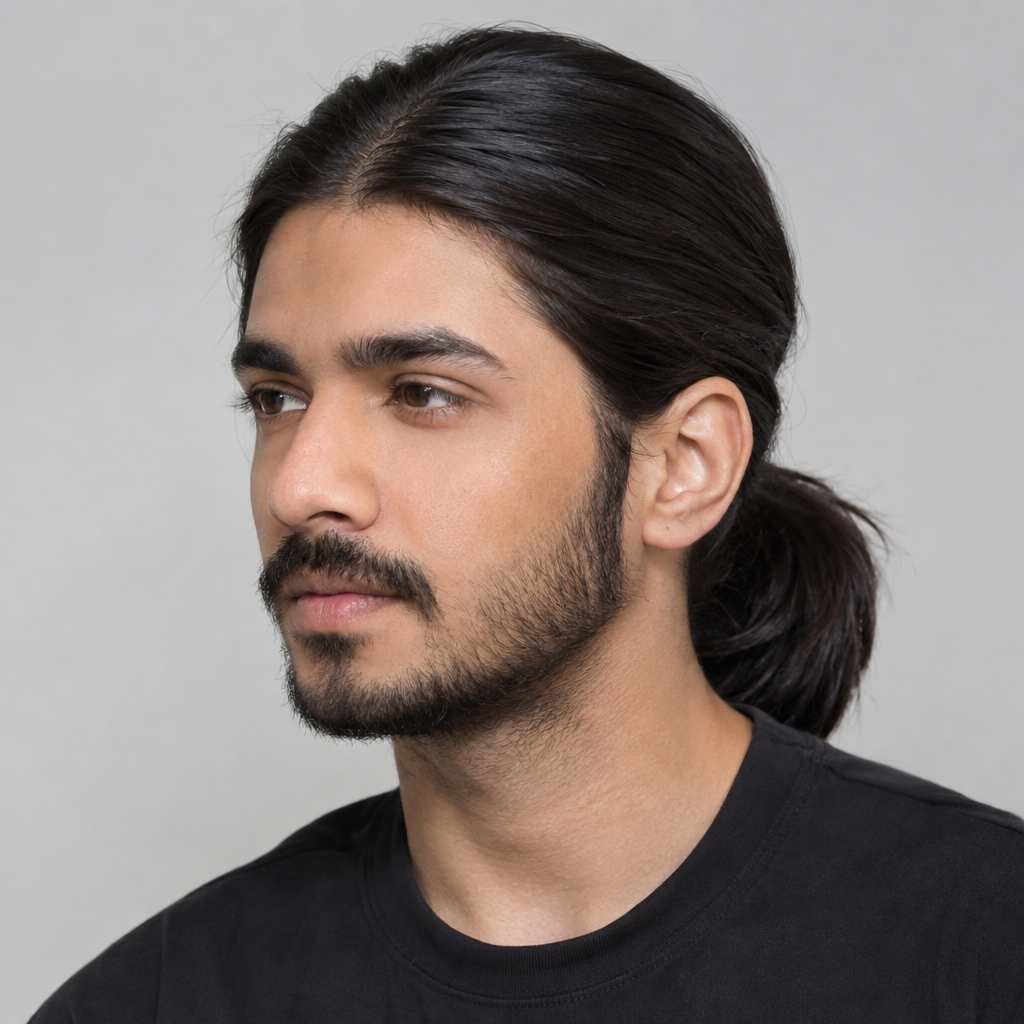
Low Ponytail
- Best if your hair looks like: shoulder-length or longer hair that gathers at the nape without loose front pieces.
- Face/lifestyle fit: the fastest, most understated tied option for square, diamond, and oblong faces.
- Upkeep: low.
- Tell your barber: “Keep the front, sides, and crown long enough for a clean low ponytail, with a full perimeter and no short disconnected layers.”
Why it works: it controls hair without the added height of a bun and generally fits under a helmet, provided the tie sits where it won't create a pressure point.
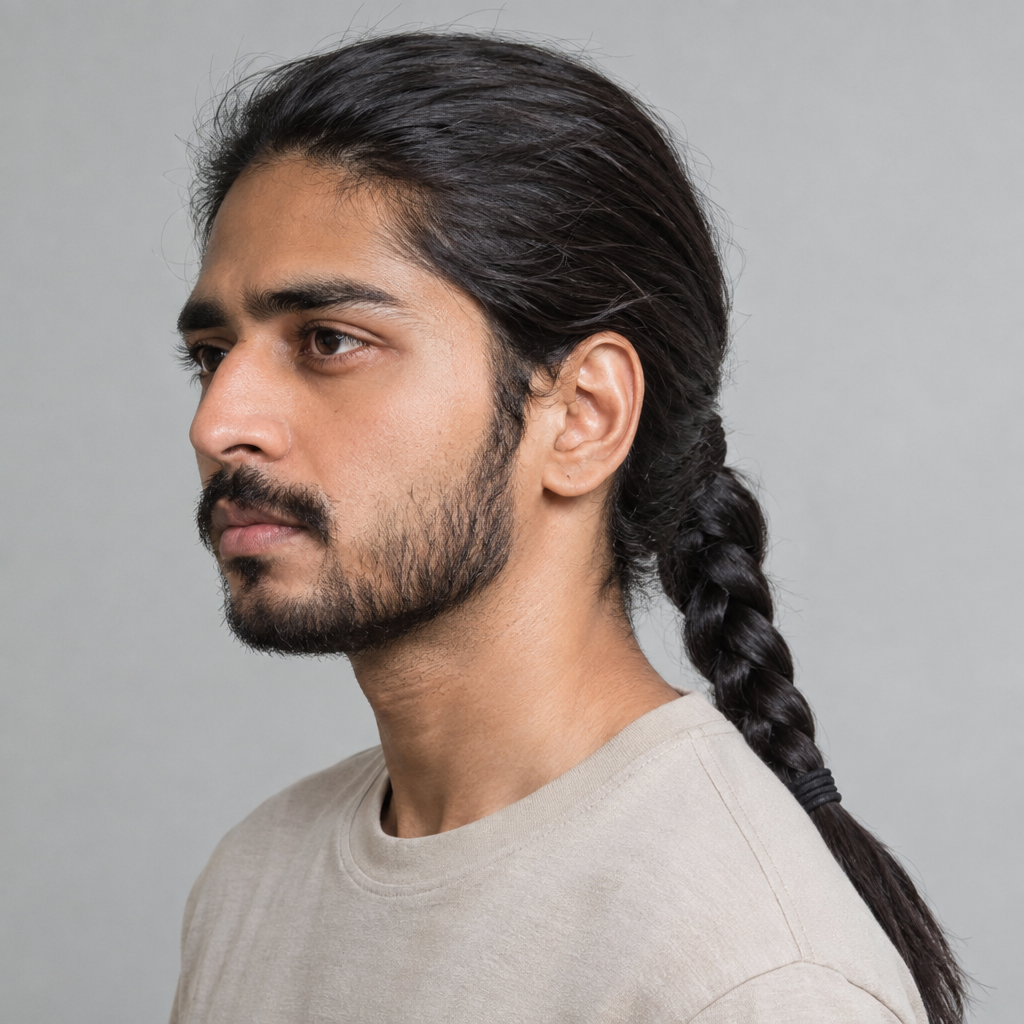
Braided Ponytail
- Best if your hair looks like: hair long enough to gather smoothly and continue into a substantial three-strand braid.
- Face/lifestyle fit: built for active days and windy commutes, and it suits rectangle faces particularly well.
- Upkeep: medium.
- Tell your barber: “Preserve a strong, even perimeter for a long braided ponytail and keep all major sections long enough to gather at the nape.”
Why it works: braiding the tail cuts down on tangling during workouts and travel, and the lower placement adds side-to-back structure rather than exaggerating vertical length.
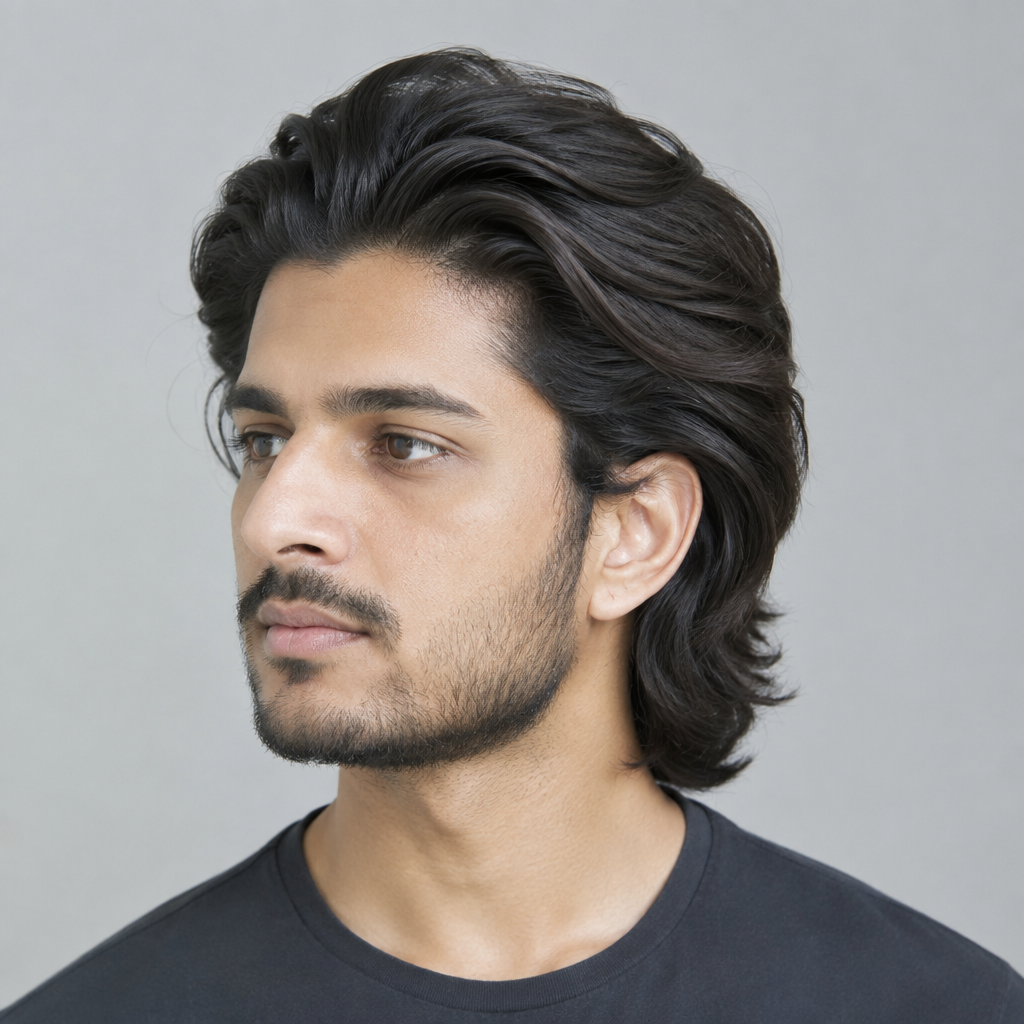
Slicked-Back Long Hair
- Best if your hair looks like: straight or wavy hair that can be directed away from the forehead without springing forward.
- Face/lifestyle fit: sharp and formal-ready, flattering oval and triangle faces.
- Upkeep: medium.
- Tell your barber: “Keep the top and sides long enough to sweep straight back, blend the outline cleanly, and avoid short fringe pieces.”
Why it works: exposing the forehead sharpens the whole look for weddings and formal events; use a flexible-hold product rather than heavy wet-look gel in humidity so it stays controlled without looking greasy.
Long Hairstyles with Tapers, Fades and Undercuts
These three styles keep real length on top while removing bulk lower down with clippers — the biggest visual change on this list, and the one with the longest grow-out if you change your mind.
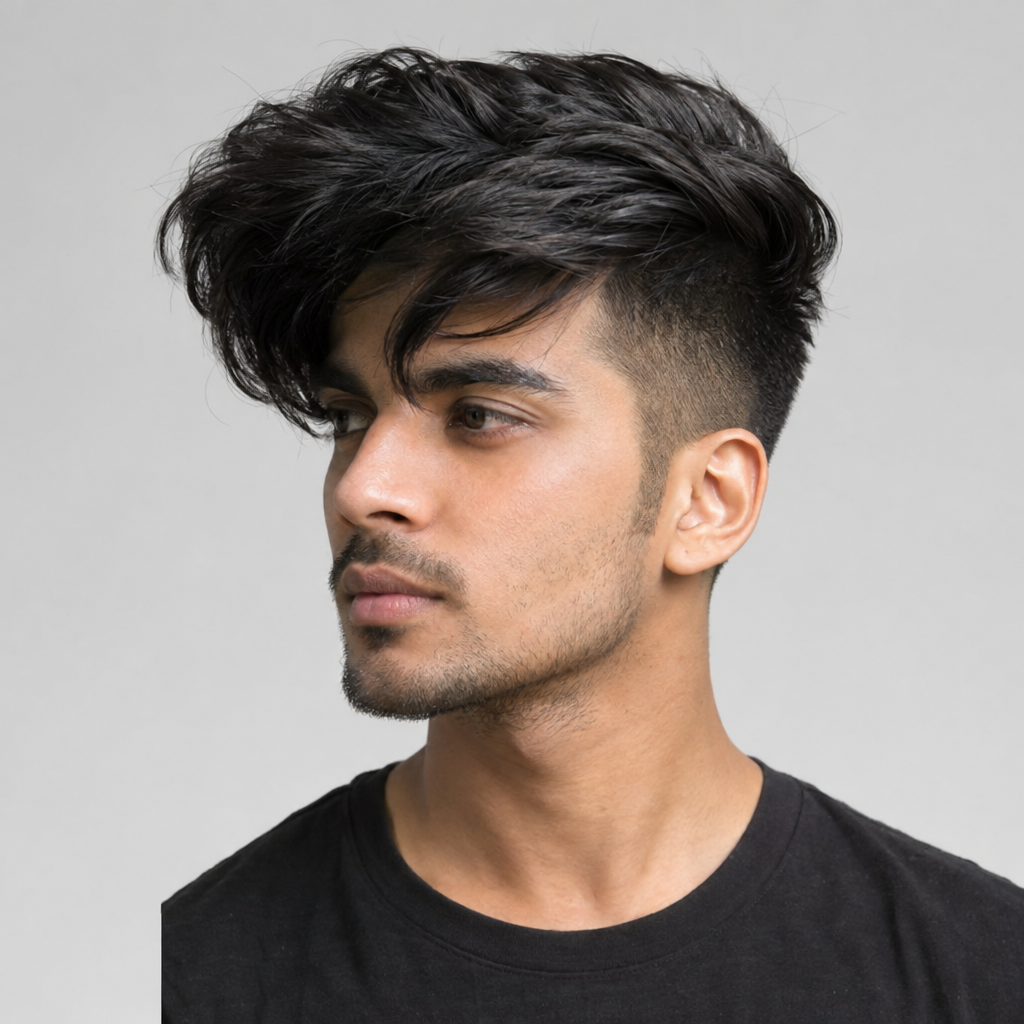
Long Undercut
- Best if your hair looks like: a long top with enough density to contrast strongly against clipped sides and back.
- Face/lifestyle fit: a bold transformation for round and triangle faces, worth it if you accept frequent side maintenance.
- Upkeep: high.
- Tell your barber: “Keep the full top long enough to wear loose or tied, disconnect it cleanly from a low undercut, and show me exactly where the shaved section will sit.”
Why it works: removing side bulk can lengthen a round face and cools dense hair down considerably — the trade-off is a severe contrast and a genuinely awkward regrowth stage, which is exactly why it's worth previewing before the clippers come out.
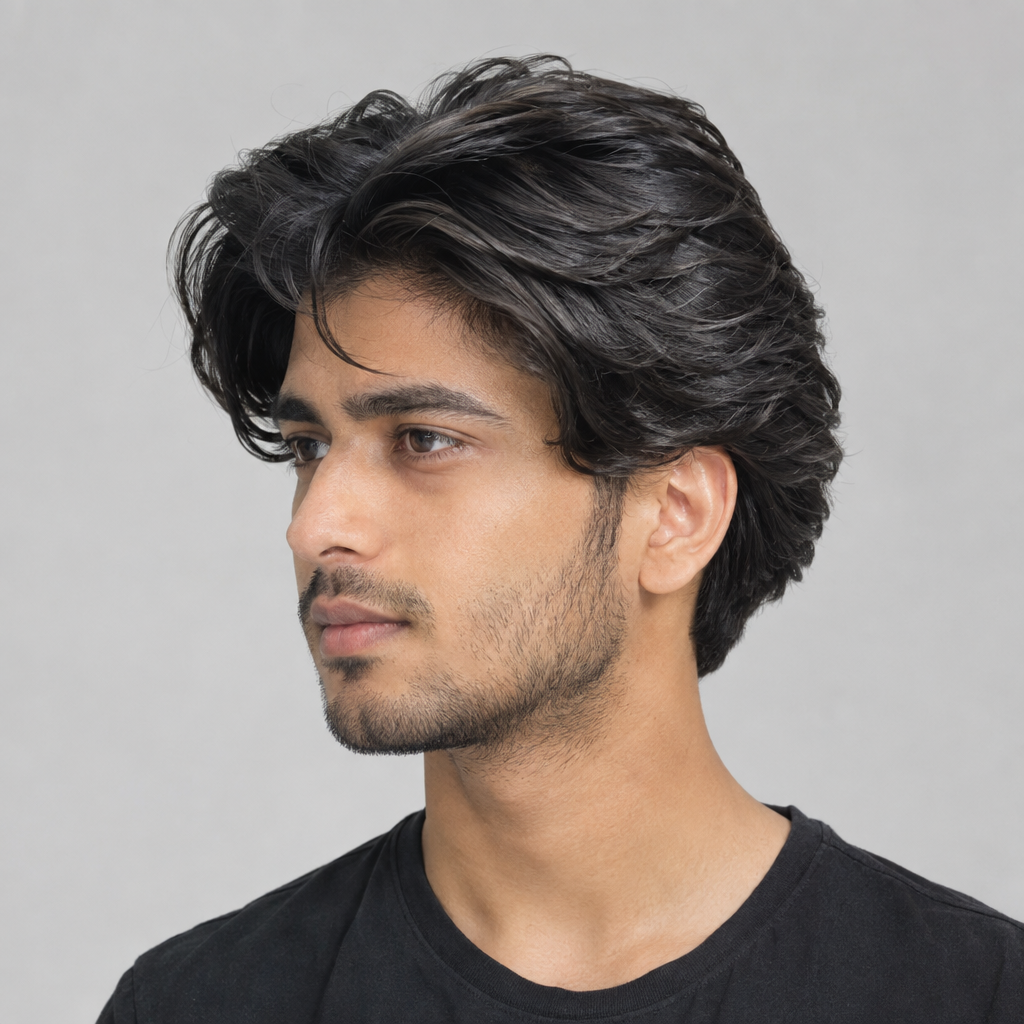
Long Hair with Tapered Sides
- Best if your hair looks like: long hair that feels untidy mainly around the ears, sideburns, and neckline.
- Face/lifestyle fit: a cleaner alternative to a full undercut for offices and first-time long-hair wearers, good for round faces.
- Upkeep: medium.
- Tell your barber: “Preserve the long top and back, add a soft taper only at the sideburns and neckline, and keep enough side length to blend when worn loose.”
Why it works: a soft taper adds a groomed edge without sacrificing an entire panel of length, and it produces a far easier grow-out than an undercut or high fade.
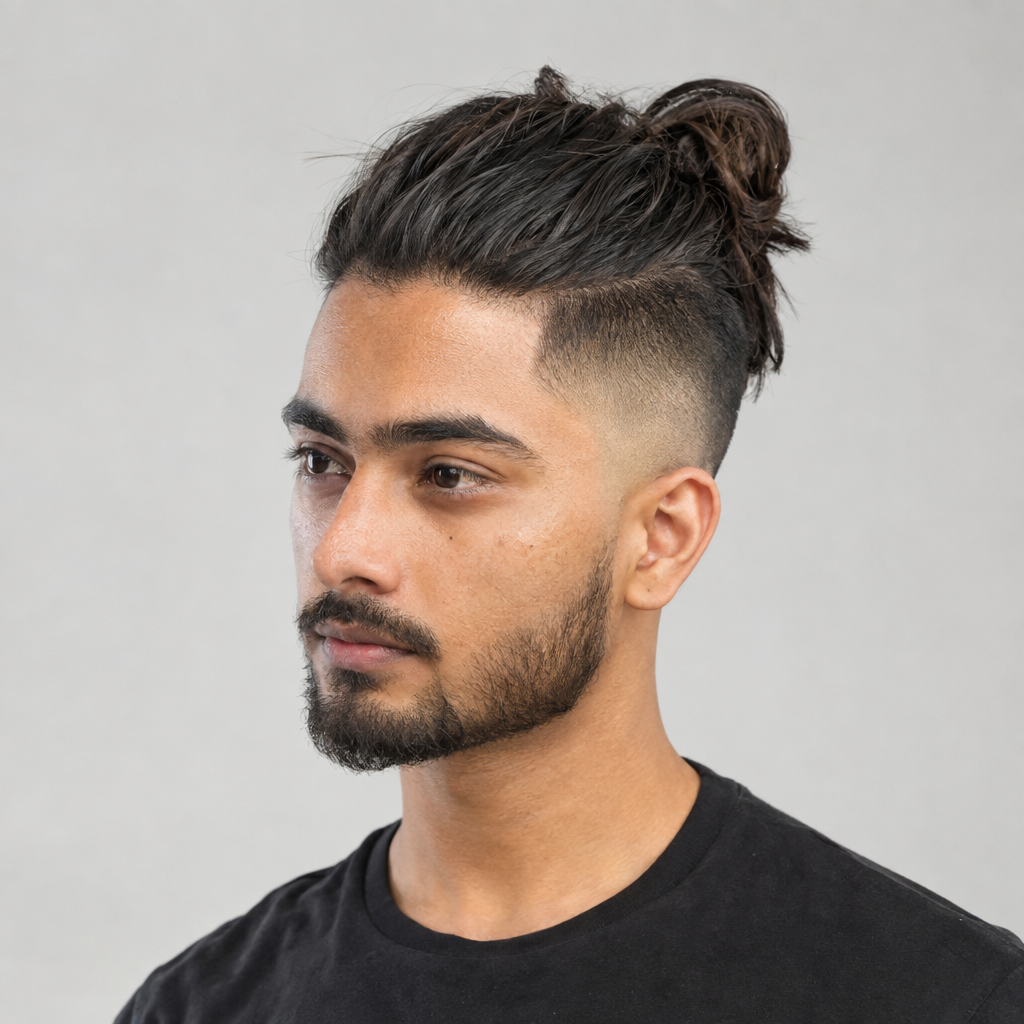
Long Top with Fade
- Best if your hair looks like: a substantial long top paired with a preference for very clean, graduated sides.
- Face/lifestyle fit: high-contrast and barbered, best for triangle faces who don't mind frequent appointments.
- Upkeep: high.
- Tell your barber: “Leave the top long enough for a ponytail or bun, add a low fade around the sides and back, and keep the transition balanced with my head shape.”
Why it works: the fade sharpens the outline while the long top stays versatile, but it loses definition within two to three weeks and needs considerably more barber visits than a natural flow.
How to Choose a Long Hairstyle That Will Suit You
Run every style on your shortlist through four filters, in this order: how your hair actually falls when clean and dry, whether the shape balances your face, what your week genuinely looks like, and how much daily effort you'll honestly put in.
Default recommendation: keep enough length and weight to tie back, and add long internal layers only where real bulk or flatness needs it. Most Indian men with long hair get more out of a long layered cut, a low ponytail, or a low bun than out of a heavily thinned or heavily barbered style, simply because these hold up through heat, sweat, and long commutes without constant restyling. The exceptions are men with very thick, curly, or coily hair who need shape more than raw length, and men who want a stronger style statement and are genuinely willing to visit the barber more often for a wolf cut, undercut, or fade.
Match any reference photo to your own natural texture and density, not just to the model's jawline — a wavy shag on fine straight hair and the same cut on thick curly hair will barely look related once it's actually on your head.
Now pick three styles from the gallery above: one loose, one that ties back, and one bolder option you're curious about. Once you have that shortlist, try all three on your own photo before you book anything — it's a faster way to rule out the wrong one than reading another description.
Best Long Hairstyles for Men by Face Shape
Look at a straight-on photo of your face and find its widest point — forehead, cheekbones, or jaw — and how long it looks top to bottom. If you're not confident placing yourself in a category, a proper guide to identifying your face shape from a mirror or photo is worth ten minutes before you commit to a cut. Keep in mind that a fuller beard adds visible width to the jaw and can make a diamond or heart face read rounder than it is — check a beard styles guide too if you're planning to change both at once.
- Oval — goal: preserve natural balance without hiding the face. Go-to styles: Shoulder-Length Flow, Long Layered Cut, Sleek One-Length Hair, Low Man Bun, Slicked-Back Long Hair.
- Round — goal: add vertical lift and control width at the sides. Go-to styles: Long Layered Cut, Deep Side-Part Long Hair, Loose Waves with Crown Lift, High Man Bun, Long Undercut.
- Square — goal: soften the jaw with movement and rounded texture. Go-to styles: Face-Framing Long Layers, Long Wavy Surfer Hair, Long Curly Shag, Low Ponytail, Long Wolf Cut.
- Heart — goal: add fullness near the jaw while softening forehead width. Go-to styles: Centre-Part Curtains, Loose Waves with Crown Lift, Long Curly Shag, Half-Up Half-Down Hair, Blunt Shoulder-Length Cut.
- Diamond — goal: soften cheekbone width and add balanced forehead or jaw framing. Go-to styles: Shoulder-Length Flow, Deep Side-Part Long Hair, Long Curly Layers, Half-Up Half-Down Hair, Face-Framing Long Layers.
- Rectangle — goal: reduce apparent length and add controlled side width. Go-to styles: Deep Side-Part Long Hair, Long Curly Shag, Braided Ponytail, Blunt Shoulder-Length Cut, Modern Long Mullet.
- Oblong — goal: avoid excess crown height and build width around the sides. Go-to styles: Centre-Part Curtains, Long Wavy Surfer Hair, Shaped Long Afro, Low Ponytail, Long Mop-Top.
- Triangle — goal: add visual width around the temples and upper head. Go-to styles: Bro Flow, Loose Waves with Crown Lift, High Man Bun, Long Undercut, Long Top with Fade.
As a general texture note across all shapes: straighter hair holds sleek, blunt, and side-parted shapes cleanly; loose waves add natural width to fuller silhouettes with very little effort; springy curls and coils suit shaped afros, twists, and rounded shags that work with the curl's natural spring instead of fighting it flat.
Since a description on a page can only get you so close, see your shortlisted face-shape matches on your own photo before you decide which one to book.
Best Long Haircuts for Straight, Wavy, Curly and Coily Hair
Forget classification systems — look at how your hair dries on its own, no product, no brushing.
If it falls flat and smooth with barely any bend, treat it as straight: Sleek One-Length Hair, Slicked-Back Long Hair, and a Low Man Bun all show off that smoothness rather than fighting it.
If it dries into loose S-shaped bends that only show up once fully dry, treat it as wavy: Long Wavy Surfer Hair, Loose Waves with Crown Lift, and Centre-Part Curtains work with that movement instead of blow-drying it out.
If it dries into distinct springy ringlets that noticeably shorten when you stretch a strand and let go, treat it as curly: Long Curly Shag, Long Curly Layers, and the Long Wolf Cut are cut with that shrinkage built in, not against it.
If it grows in tight, dense coils that pack close to the scalp, treat it as coily: Shaped Long Afro, Long Twists, and Long Braids protect the ends and work with the coil pattern rather than trying to loosen it.
One practical warning across all four: wet hair almost always looks longer and less voluminous than it will once dry. Ask your barber to check the cut on dry hair before you leave, and for pronounced curls or coils, insist on a dry, curl-by-curl assessment of the fringe and perimeter rather than a wet cut alone.
Long Hairstyles for Thick, Fine or Thinning Hair
Thick hair does best with long layers or a controlled undercut that removes weight from underneath — avoid heavy thinning shears across the surface, which create frizz and flyaways instead of solving the bulk.
Fine hair looks fuller with a denser, less-layered baseline; a Blunt Shoulder-Length Cut or a barely layered Shoulder-Length Flow holds more visual thickness than a heavily separated style that exposes the scalp between strands.
If you're noticing early thinning at the temples or crown, a side part placed away from the thinning area, a little crown volume from Loose Waves with Crown Lift, and a looser, lower tie all help — very tight ponytails or buns add tension exactly where the hairline is already under strain. If hair loss feels sudden, patchy, or unusually heavy, see a dermatologist or trichologist rather than relying on styling alone; a haircut can disguise thinning but it can't treat it.
Professional Long Hairstyles for Indian Offices and College
For conservative workplaces and interviews, default to a Low Man Bun or Low Ponytail — both read as deliberate and tidy rather than casual, and neither requires touching your hair through the day. Half-Up Half-Down Hair and a controlled Bro Flow work for creative offices and most college settings where a fully tied style feels unnecessary.
For weddings and festive events, Slicked-Back Long Hair or a Braided Ponytail photograph well and hold up through a long function better than fully loose hair does.
For the commute itself, a low braid or low ponytail sits better under a helmet than a bun does, since a bun creates an uncomfortable pressure point. On arrival, loosen the tie, lift the roots with your fingers, smooth a little leave-in conditioner through with damp hands, and re-tie — thirty seconds, and it looks freshly done rather than helmet-flattened.
Use fabric-covered, snag-free ties rather than tight rubber bands for any daily tied style; rubber bands catch and break strands, and Indian humidity already puts enough stress on hair without added friction.
What to Tell Your Barber or Stylist
Every style card above has an exact phrase to use, but four extra specifics make any long-hair appointment go smoother: state the finished length you want when the hair is fully dry, name the shortest layer you're willing to accept anywhere on your head, confirm whether every section needs to reach a ponytail or bun, and agree on how many weeks you plan before the next visit.
Be specific about bulk versus length. Removing bulk internally means the barber thins hair invisibly underneath the top layer, keeping the visible length and edge intact. Thinning the visible ends means cutting into the perimeter itself — this is what makes hair look wispy or uneven, and it's usually not what you want on a long style. Say “remove bulk from underneath, not from the visible ends” if you're not sure the point is landing.
Bring front, side, and back reference photos of hair with a similar texture and density to yours, not just a face you like the look of — a barber can only match what's genuinely achievable on your hair type.
How to Grow Long Hair Without an Awkward, Shapeless Phase
There's no shortcut past the mid-length stage where hair is too long for short styles and too short to tie back comfortably, but you can make it less obvious. Book a small clean-up around the neckline and ears every six to eight weeks while leaving the overall length alone — this keeps the outline tidy without setting your growth back.
Trim split or weathered ends when they start catching or fraying, not on a fixed schedule; trimming removes damage, it does not make the roots grow any faster. During the roughest stretch, lean on Half-Up Half-Down Hair, a soft headband, or a simple low tie to keep hair out of your face while it catches up to the length you actually want.
How to Style Men's Long Hair in Indian Heat and Humidity
Straight hair: apply a lightweight leave-in conditioner to damp lengths, skip heavy oils near the roots, and let it air-dry or finish with a low-heat blast pointed downward to avoid frizz.
Wavy hair: scrunch a small amount of mousse or curl cream into damp hair, then let it air-dry undisturbed — touching it while drying is what causes frizz, not the humidity itself.
Curly hair: work a curl cream through soaking-wet hair section by section, then apply a light gel over it for hold without stiffness; avoid brushing dry curls, which breaks up the pattern into frizz.
Coily hair: seal in moisture with a leave-in conditioner followed by a small amount of finishing oil, focusing on the ends where dryness shows first; detangle only when wet or heavily conditioned.
Across all four, use a heat protectant before any blow-dryer or straightener, and keep an anti-humidity cream in your bag for the commute home — a small amount smoothed over the surface, not through the roots, stops hair swelling up in Mumbai or Chennai-level humidity. For a quick helmet reset, dampen your palms, smooth the hair back into shape, and run a wide-tooth comb through from the ends up before re-tying.
How to Wash, Dry and Detangle Long Hair
Wash based on how your scalp actually behaves, not a fixed schedule — oily scalps and heavy sweating usually need every two to three days, drier or coilier hair can stretch to five or six. Shampoo the scalp directly and let the lather run down the lengths rather than scrubbing the ends themselves, then condition from mid-length down, since that's where the oldest, driest hair is.
Detangle from the ends upward with a wide-tooth comb or your fingers before you shampoo, not after — wet hair is at its weakest, and dragging a comb through from the roots down snaps strands. Pat lengths with a microfibre towel instead of rubbing with a regular one, which roughs up the cuticle and encourages frizz.
Hard water leaves a dulling mineral film over time; a clarifying shampoo once every few weeks lifts that buildup, but using one every wash strips too much natural oil and leaves hair dry and prone to breakage. In monsoon weather, make sure your scalp is fully dry before you tie hair up or sleep — trapped moisture against the scalp is what tends to trigger dandruff and odour, not the length of your hair itself.
How Often Should Men Trim Long Hair?
Trim by condition, not by the calendar. Book a visit when ends split, tangle repeatedly, or the shape has visibly lost its line — usually every ten to fourteen weeks for a one-length flow, but sooner if you're using heat regularly or swimming often.
A perimeter trim removes damaged length only. Reshaping layers resets the internal structure and takes longer in the chair. Fringe maintenance on a mop-top or curtains needs checking every four to six weeks to stop it drooping into your eyes. Tapers, fades, and undercuts are a different commitment entirely — expect to be back every two to four weeks to keep the sides from growing out shaggy, versus a natural long flow that can comfortably stretch to three months between visits.
Mistakes That Make Long Hair Look Untidy or Damaged
- Over-thinning the visible perimeter, which leaves long hair looking wispy and uneven instead of full.
- Copying a reference photo shot on a completely different texture than your own.
- Tying hair too tightly, too often, in the same spot — this stresses the hairline and can cause thinning at the temples over time.
- Using high heat daily without a protectant, which dries out the ends faster than any climate factor will.
- Ignoring split or weathered ends for months, which lets damage travel further up the strand.
- Layering heavy oil over unwashed hair with product buildup, which just traps grease and dulls the finish rather than adding shine.
- Choosing shaved or undercut sides without planning for the regrowth stage, which looks patchy for weeks before it blends again.
- Assuming a low-maintenance haircut means low daily care — a one-length flow needs fewer barber visits, not less washing, conditioning, or detangling.
Frequently asked questions
Which hairstyle is best for men with long hair?
A long layered cut is the safest all-round choice because it preserves tying length while adding movement and controlling bulk. Fine or sparse hair may look fuller with a blunter baseline, while pronounced curls usually benefit from rounded or curl-aware layers.
Does long hair suit every male face shape?
Long hair can suit every face shape, but its silhouette matters. Round faces generally benefit from height and controlled sides, oblong faces from side volume and less crown height, and square faces from movement that softens the jaw.
Can men keep long hair in a professional Indian workplace?
Yes, provided the hair is clean, controlled, and compatible with the workplace dress code. A low bun, low ponytail, half-up style, tucked-back flow, or restrained slick-back usually reads more formal than loose hair falling over the face.
How often should men with long hair get a trim?
Trim according to condition rather than a rigid calendar. Book a trim when the ends split, tangle repeatedly, lose their intended line, or make the layers sit poorly; fades, tapers, and fringes need more frequent maintenance than one-length long cuts.
How can men stop long hair becoming frizzy in humidity?
Apply a lightweight leave-in product to damp lengths, layer a small amount of anti-humidity cream or curl gel over it, and avoid rough towel drying. Use less product near the roots, and make sure the hair and scalp dry fully before tying it up.
Is a man bun damaging to long hair?
A bun is not inherently damaging, but repeated tight placement can cause breakage and hairline tension. Use fabric-covered, snag-free ties, vary the bun position, avoid tying soaking-wet hair, and keep the hold secure rather than painfully tight.
Which long hairstyle makes thin hair look thicker?
A blunt shoulder-length cut or minimally layered side-part style usually preserves the strongest-looking perimeter. Avoid excessive thinning, very separated layers, and slick wet finishes if they make the scalp more visible.
What should I tell my barber when growing my hair long?
State that retaining length is the priority, show the shortest point you will accept, and explain whether all the hair must still reach a ponytail. Ask for damaged ends to be removed without aggressive thinning, then specify the desired part, layers, and neckline.
How do men manage long hair under a helmet?
Use a low braid or low ponytail that does not create a pressure point beneath the helmet. After commuting, loosen the hair, lift the roots with your fingers, and reset the lengths with damp hands or a tiny amount of leave-in conditioner.
Does trimming long hair make it grow faster?
No. Trimming does not change growth at the root, but removing splitting or severely weathered ends can reduce breakage and help the retained length look healthier and more even.
Shortlist Your Long-Hair Look Before the Cut
Save three styles from this page: one loose look you'd wear on a lazy Sunday, one tied style that survives your commute and your office, and one bolder option — a wolf cut, an undercut, a fade — that you're genuinely curious about but not sure you'd pull off. That's a realistic shortlist, not an overwhelming one.
Before you book layers, a fringe, colour, or a fade you can't easily undo, put your three shortlisted looks on a photo of your own face and hair and see which one actually earns the chair time.