28 Trending Hairstyles for Men: Find Your Best Cut
A photo-first shortlist of 2026's sharpest men's haircuts, matched to your length preference, face shape and how much styling time you're actually willing to give it.
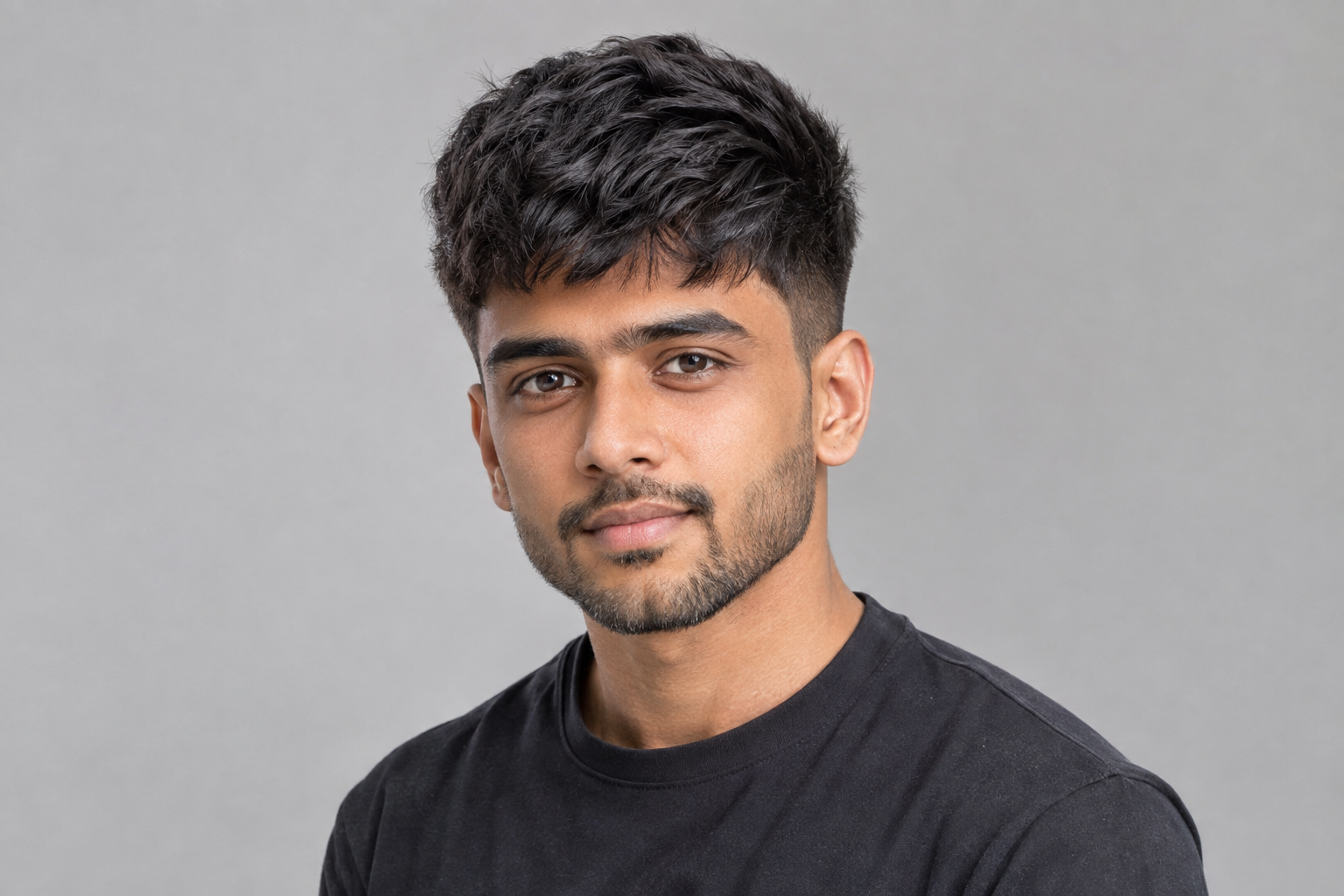
Bengaluru traffic, Mumbai humidity, Delhi winters, back-to-back wedding season and a helmet you cannot skip on the commute — your hairstyle has to hold up against all of that, not just look sharp in one photo. This guide rounds up 28 trending haircuts for Indian men in 2026, grouped by length so you can shortlist fast, then matched to face shape, hair texture, density and how much time you actually want to spend styling every morning.
Use the sections below in whatever order helps you decide: the full style gallery, a plain-language way to choose based on what you see in the mirror, face-shape matching, density and hairline notes, a breakdown of taper and fade finishes, exact barber scripts, and Indian climate-specific styling and maintenance advice.
Which of These 28 Trending Hairstyles Looks Most Like Your Goal?
Skip the technical hair-typing charts for a moment and just look at length: short, medium or long is the fastest way to narrow 28 options down to five or six worth trying. Scan the table below for each cut's length, strongest face-shape matches and upkeep level, then open the full gallery underneath it. Shortlist two or three, and as you look at each photo, picture it on your own forehead and jawline rather than the model's — that mental swap is the real test of whether a haircut will work for you, not just whether you like the picture.
| Hairstyle | Best length | Best face shapes | Maintenance |
|---|---|---|---|
| Textured Crop | Short | Oval, Square, Triangle | Low |
| French Crop | Short | Heart, Rectangle, Oblong | Low |
| Crew Cut with Low Fade | Short | Round, Square, Triangle | Low |
| Buzz Cut with Taper | Short | Square | Low |
| Caesar Cut | Short | Round, Square, Rectangle, Oblong | Low |
| Ivy League | Short | Oval, Round, Rectangle | Medium |
| Curly Crop with Temple Fade | Short | Heart, Diamond | Medium |
| Short Quiff | Short | Round, Triangle | Medium |
| Side Part with Low Taper | Medium | Oval, Square, Rectangle, Oblong | Medium |
| Messy Fringe | Medium | Heart, Diamond, Rectangle, Oblong | Low |
| Curtain Haircut | Medium | Oval, Heart, Diamond, Rectangle, Oblong | Medium |
| Textured Quiff | Medium | Round, Triangle | High |
| Brush Back | Medium | Oval, Square | Medium |
| Modern Mullet | Medium | Oval, Heart, Diamond | Medium |
| Curly Top with Low Taper | Medium | Round, Triangle | Medium |
| Burst Fade Mohawk | Medium | Triangle | High |
| Slick Back with Taper | Medium | Oval, Square | Medium |
| Mod Cut | Medium | Heart, Rectangle, Oblong | Medium |
| Two-Block Cut | Medium | Heart, Rectangle, Oblong | Medium |
| Faux Hawk Fade | Medium | Round, Triangle | Medium |
| Warrior Cut | Medium | Round, Square, Triangle | High |
| Bro Flow | Long | Oval, Diamond | Medium |
| Wolf Cut | Long | Diamond | Medium |
| Layered Shag | Long | Heart, Diamond, Oblong | Medium |
| Modern Pompadour | Long | Round, Triangle | High |
| Man Bun with Taper | Long | Oval | Medium |
| Shoulder-Length Layers | Long | Square, Diamond, Rectangle | Medium |
| Wavy Surfer Layers | Long | Heart, Diamond, Oblong | Medium |
Trending Short Hairstyles for Men
Short cuts are the easiest match for heat, sweat, helmets and daily grooming — most need only a comb-through and a small amount of product to look finished.
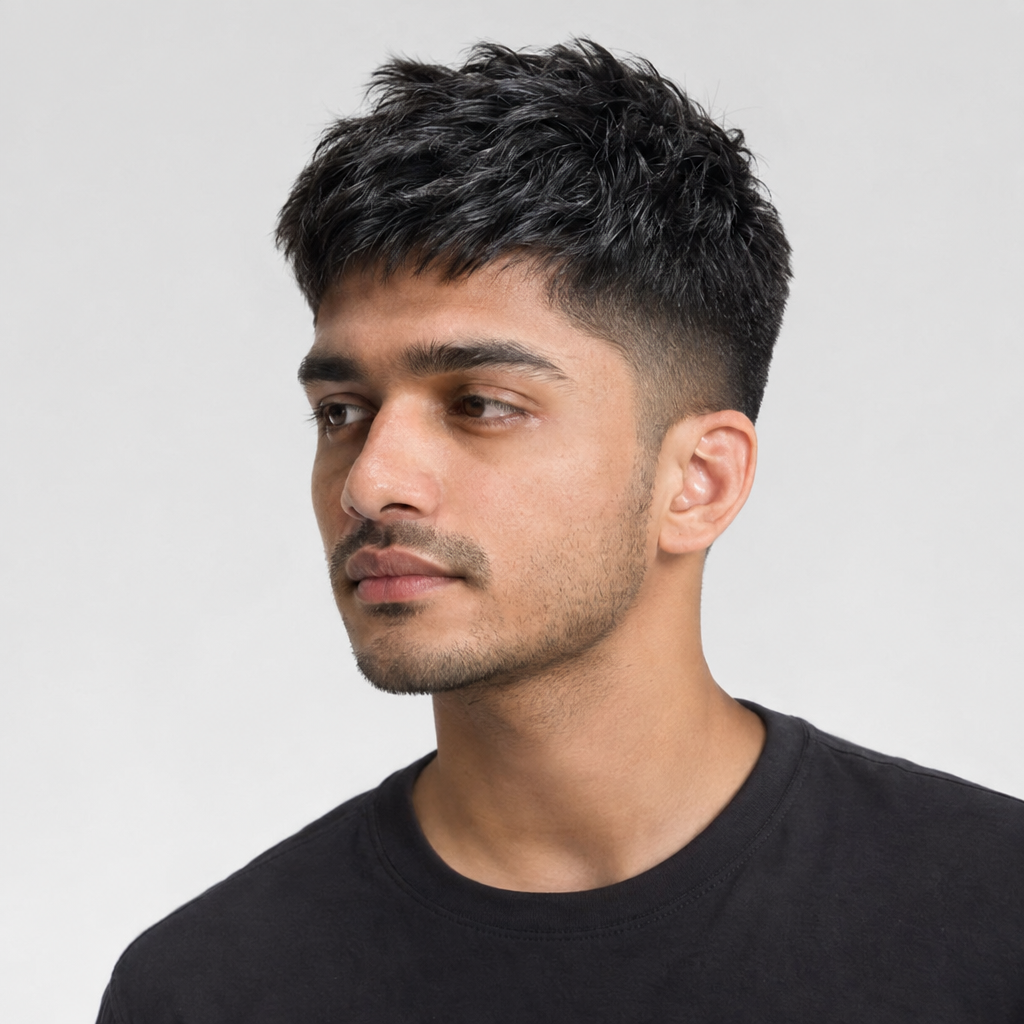
Textured Crop
- Best if your hair looks like: short straight or gently wavy hair that separates into choppy pieces.
- Face/lifestyle fit: versatile for college, office and helmet-heavy commutes.
- Upkeep: low.
Tell your barber: “Give me a short textured crop with point-cut layers on top, a soft forward fringe and a low taper — not a high skin fade.”
Why it works: the broken-up top adds shape without needing a polished finish, so minor humidity or helmet flattening is less obvious. It resets quickly with damp fingers and matte paste, which suits a busy Indian commute.
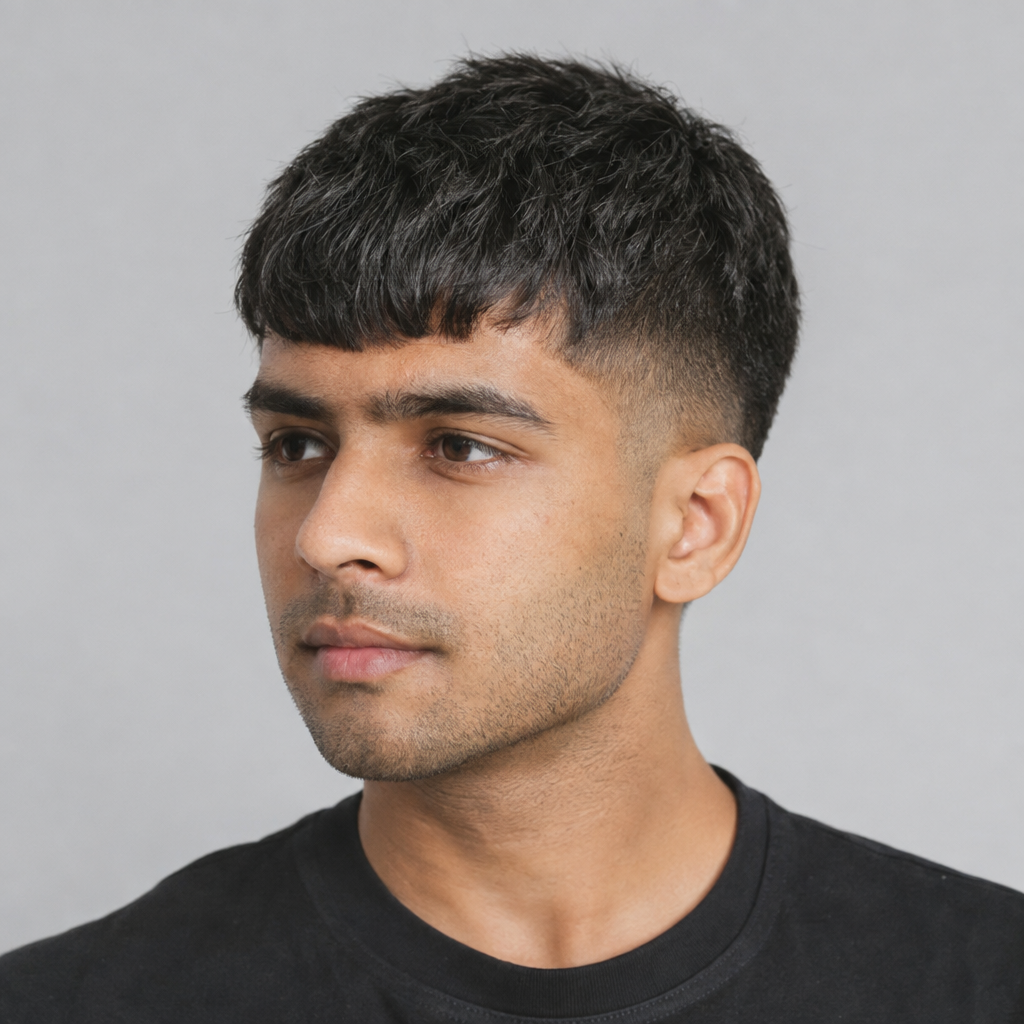
French Crop
- Best if your hair looks like: straight or softly wavy hair that naturally falls toward the forehead.
- Face/lifestyle fit: good for covering a higher forehead while keeping the sides tidy.
- Upkeep: low.
Tell your barber: “Keep 4 to 6 centimetres on top, cut a soft forward French-crop fringe and blend the sides into a low taper.”
Why it works: the forward direction creates obvious shape without daily blow-drying, and a lightly textured fringe is more forgiving in humidity than a razor-sharp line.
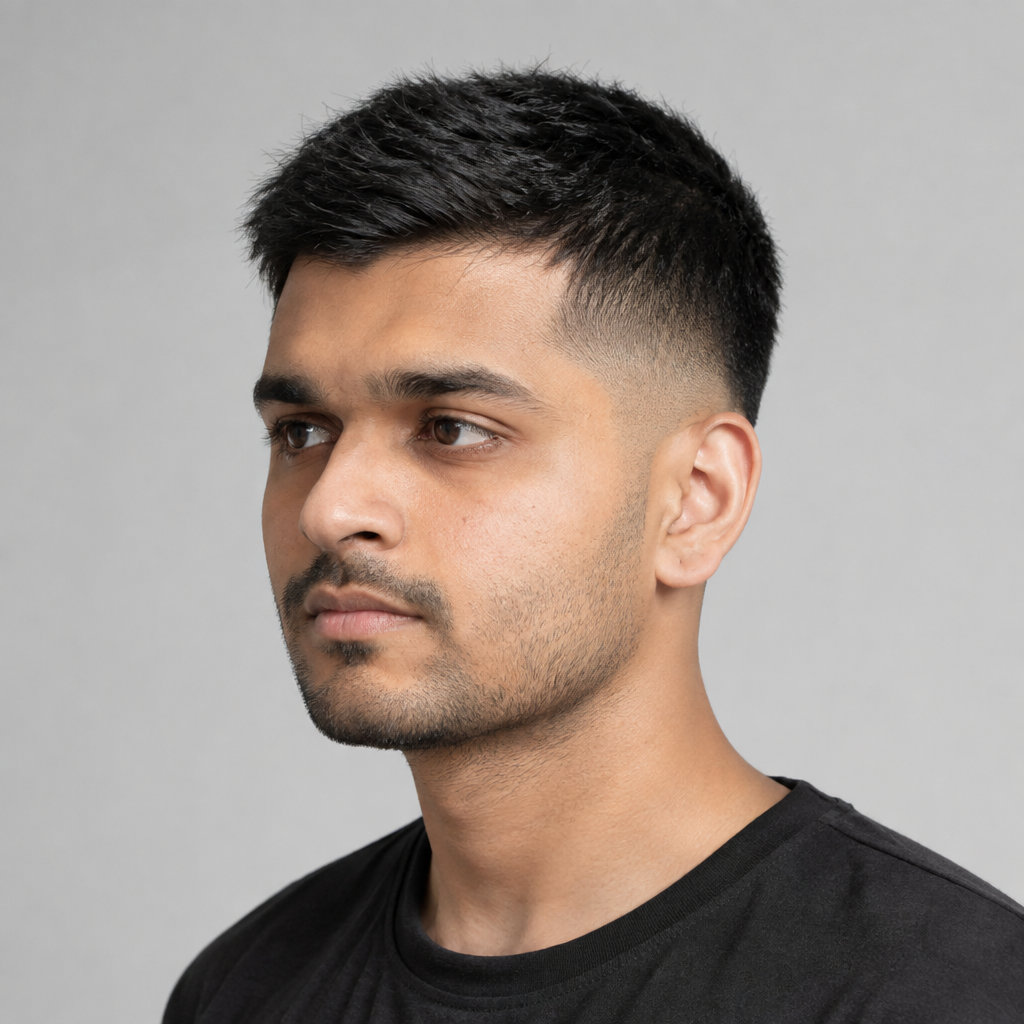
Crew Cut with Low Fade
- Best if your hair looks like: short hair that stands up easily or feels dense enough to hold a compact shape.
- Face/lifestyle fit: ideal for workouts, uniforms and hot weather.
- Upkeep: low.
Tell your barber: “Cut a crew cut with about 3 to 4 centimetres at the front, shorter through the crown, and a low fade around the sides.”
Why it works: the slightly longer front adds useful height while the compact sides handle sweat and helmets well, without looking too severe for an office.
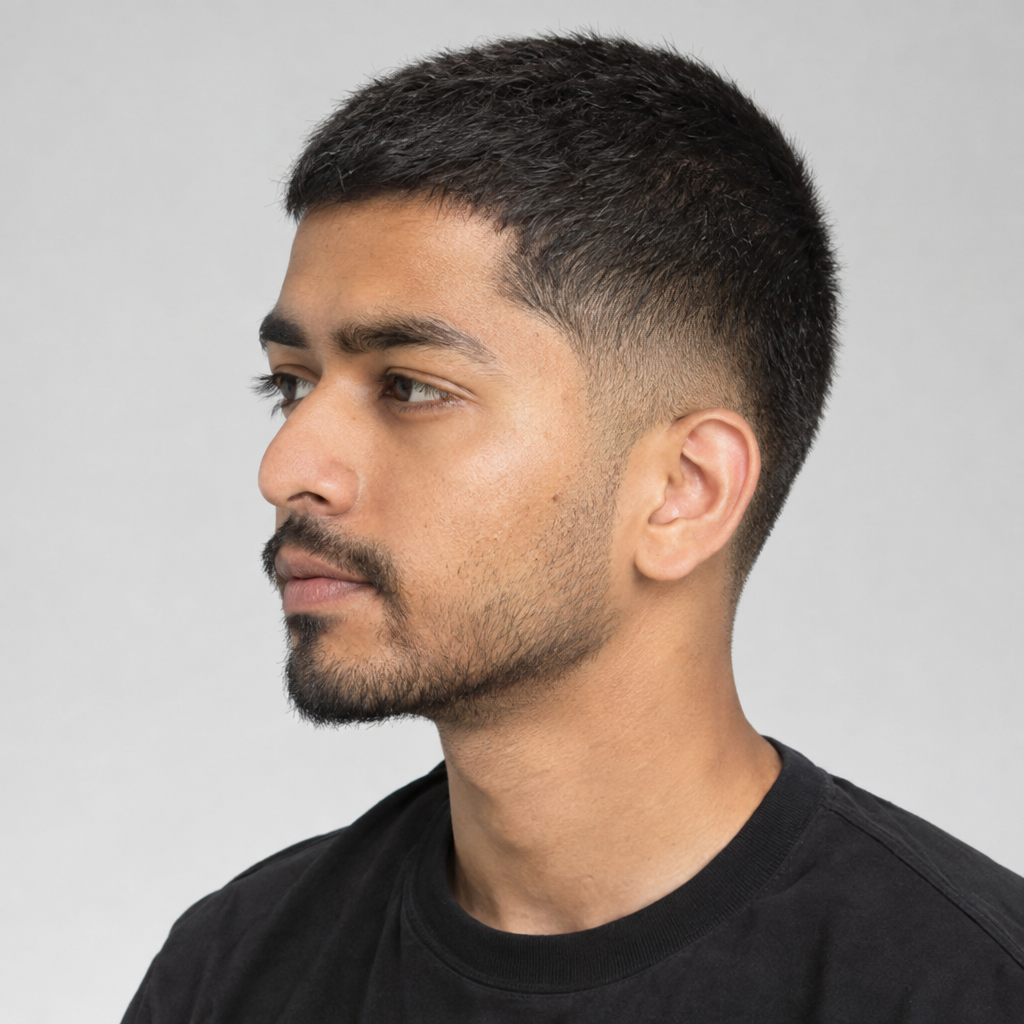
Buzz Cut with Taper
- Best if your hair looks like: even, dense short growth with a hairline you're comfortable showing.
- Face/lifestyle fit: best if you want speed, heat comfort and almost zero styling.
- Upkeep: low.
Tell your barber: “Use a number 4 or 5 on top, keep the sides slightly shorter and taper only the temples and neckline with a clean natural line-up.”
Why it works: leaving a bit more length than a military buzz keeps natural texture visible and avoids over-exposing the scalp, while still staying easy in humid weather.
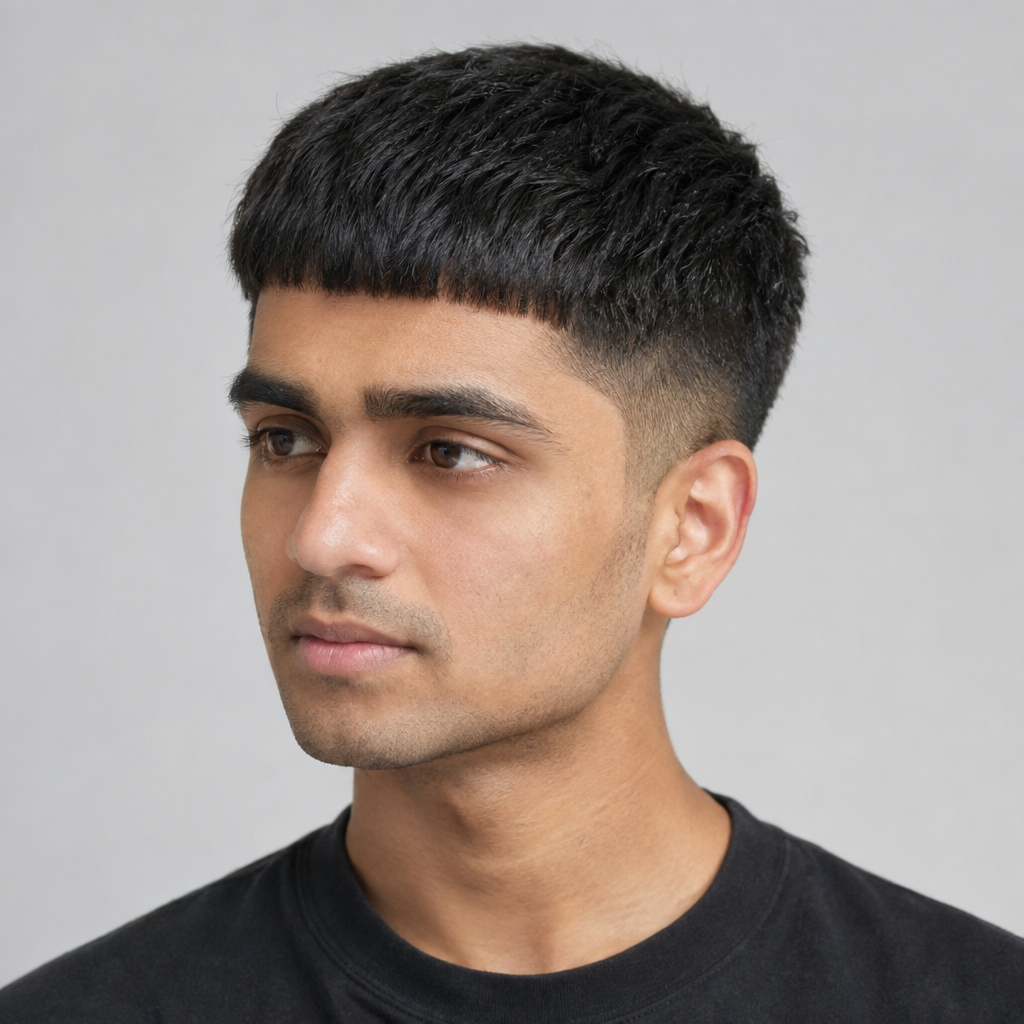
Caesar Cut
- Best if your hair looks like: thick or coarse short hair that gets bulky at one uniform length.
- Face/lifestyle fit: compact and structured for men who prefer a covered forehead.
- Upkeep: low.
Tell your barber: “Keep the top an even 3 to 5 centimetres, add internal texture, cut a short horizontal fringe and finish with a low taper.”
Why it works: the short fringe visually shortens a taller forehead while internal texturing stops dense hair from sitting like a helmet — and it finger-styles easily after a commute.
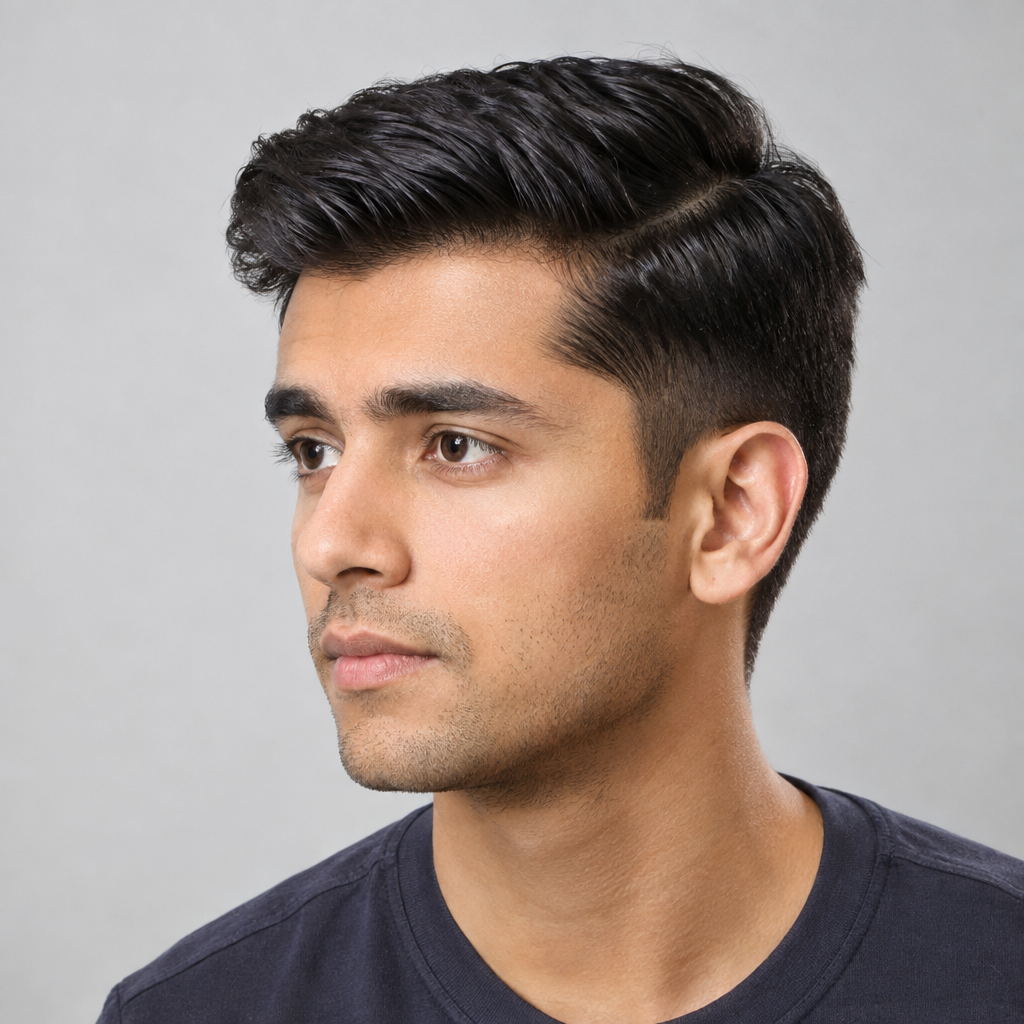
Ivy League
- Best if your hair looks like: straight or slightly wavy hair with enough front length to sweep to a side.
- Face/lifestyle fit: a safe, polished pick for offices, interviews and formal functions.
- Upkeep: medium.
Tell your barber: “Give me an Ivy League cut with 5 to 7 centimetres at the front, a natural side sweep and a scissor taper that stays office-appropriate.”
Why it works: it offers more shape than a crew cut while staying conservative for formal settings, and it can be loosened with matte paste for evenings.
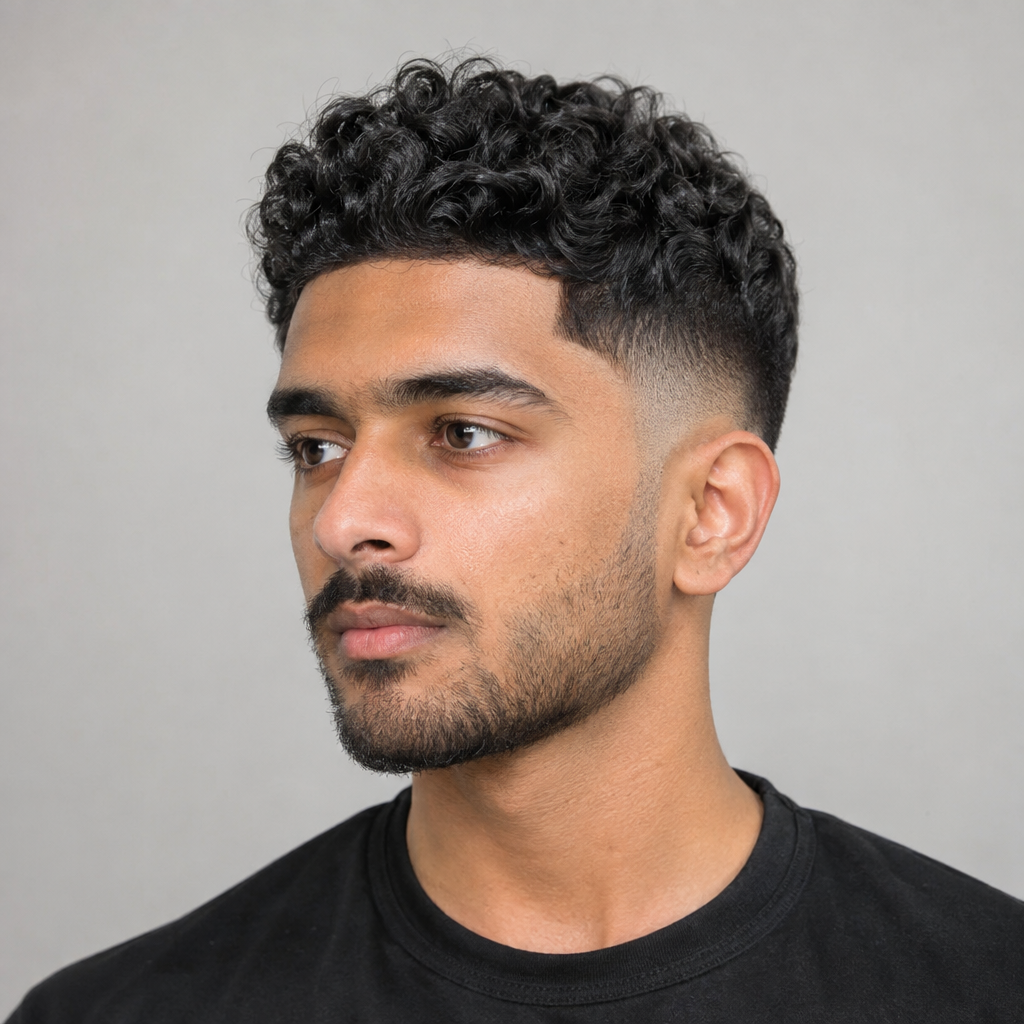
Curly Crop with Temple Fade
- Best if your hair looks like: visible curls or compact coils that show definition even short.
- Face/lifestyle fit: keeps your natural curl character while only cleaning the areas that get untidy fastest.
- Upkeep: medium.
Tell your barber: “Keep my curls long enough to form on top, remove bulk without thinning them out, and add a subtle temple and neckline fade.”
Why it works: fading just the temples preserves useful side fullness while sharpening the outline, and a leave-in cream defines curls without the dry, frizzy look humidity can cause.
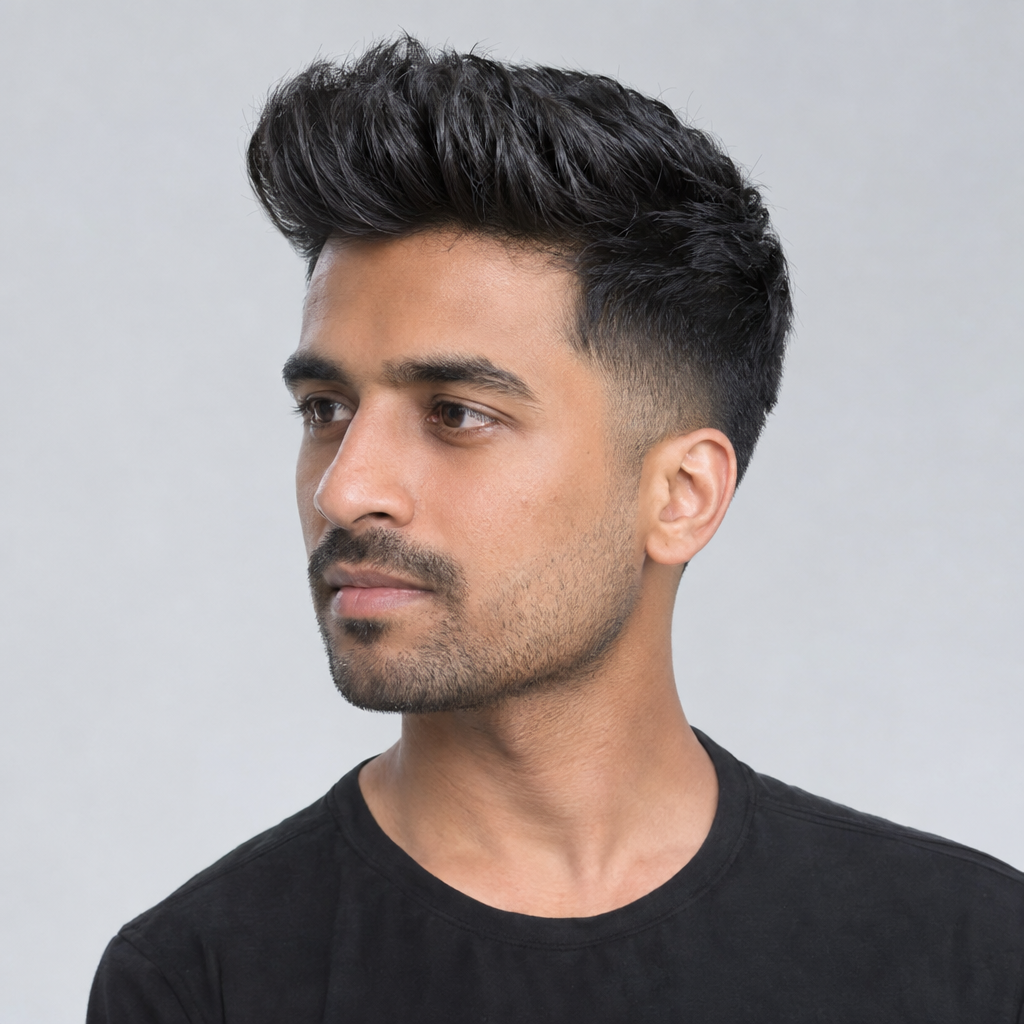
Short Quiff
- Best if your hair looks like: short straight or wavy hair that lifts at the front without much product.
- Face/lifestyle fit: adds height while staying practical for office and college.
- Upkeep: medium.
Tell your barber: “Leave 5 to 7 centimetres at the front for a short quiff, reduce length toward the crown, and taper the sides without taking them too high.”
Why it works: a controlled front lift lengthens a wider face and gives the cut a defined silhouette, while the short length keeps blow-drying brief and rebuild-after-helmet easy.
Trending Medium-Length Hairstyles for Men
Medium length gives you more to work with — fringe coverage, side volume and movement — but a few of these need a proper reset after a helmet ride rather than a quick finger-comb.
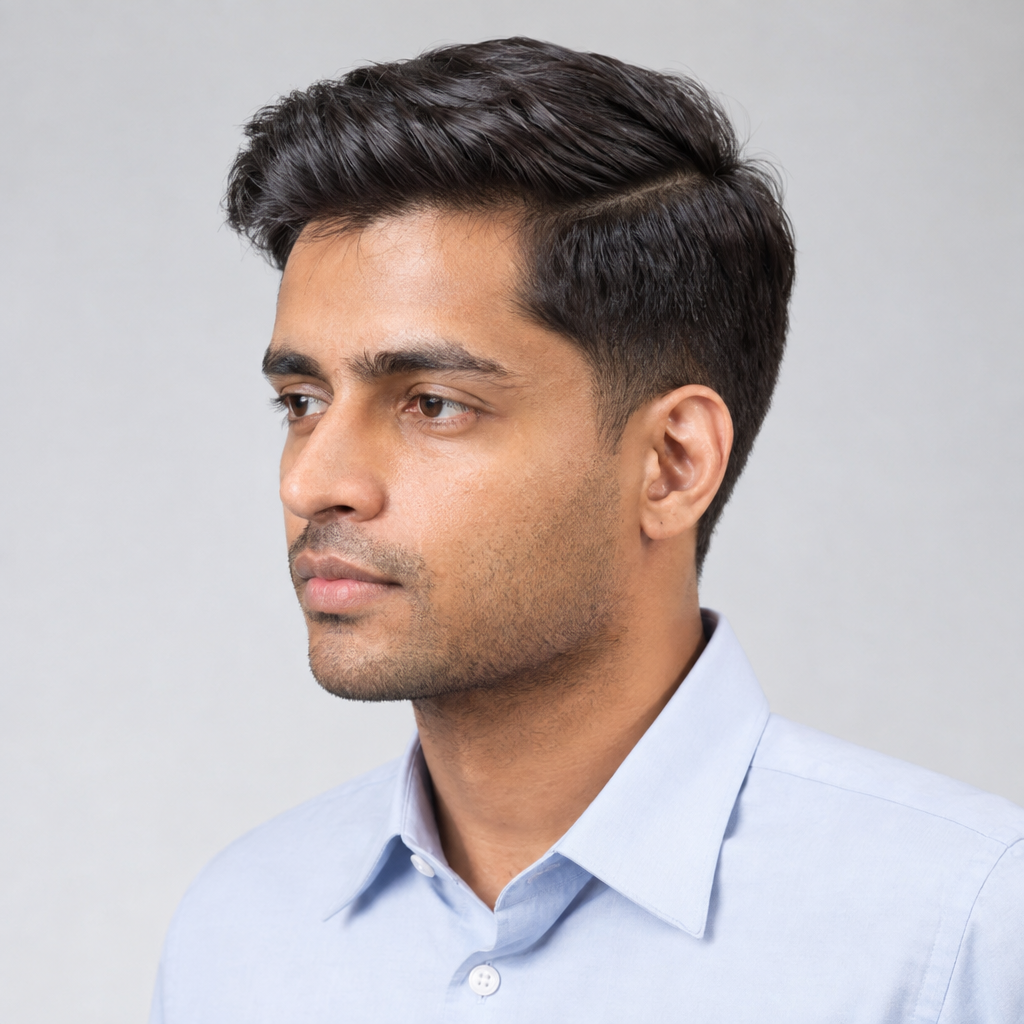
Side Part with Low Taper
- Best if your hair looks like: straight or lightly wavy hair with a visible natural part.
- Face/lifestyle fit: strong for professional settings and traditional functions.
- Upkeep: medium.
Tell your barber: “Keep enough top length for my natural side part, use scissors for a soft blend, and add a low taper around the ears and neckline.”
Why it works: the natural part gives structure without a harsh shaved line, and the low taper grows out cleanly between visits — light cream for office, a touch more volume for a wedding.
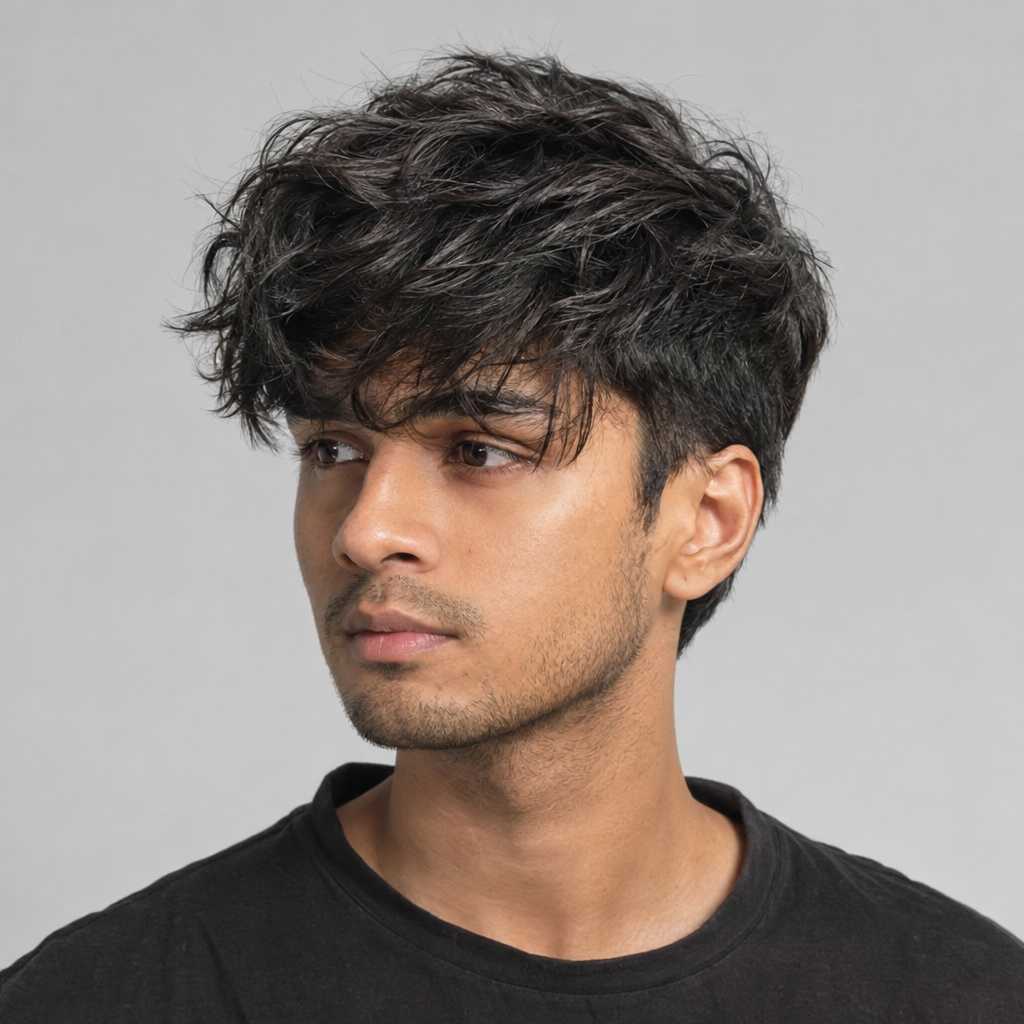
Messy Fringe
- Best if your hair looks like: medium straight or wavy hair that falls forward in uneven sections.
- Face/lifestyle fit: relaxed, college-friendly, softens the forehead and cheekbones.
- Upkeep: low.
Tell your barber: “Give me a layered medium top that falls forward into a soft messy fringe, with tapered sides and no blunt straight line.”
Why it works: the irregular fringe makes movement and minor frizz part of the look, giving adaptable forehead coverage without a rigid combed shape.
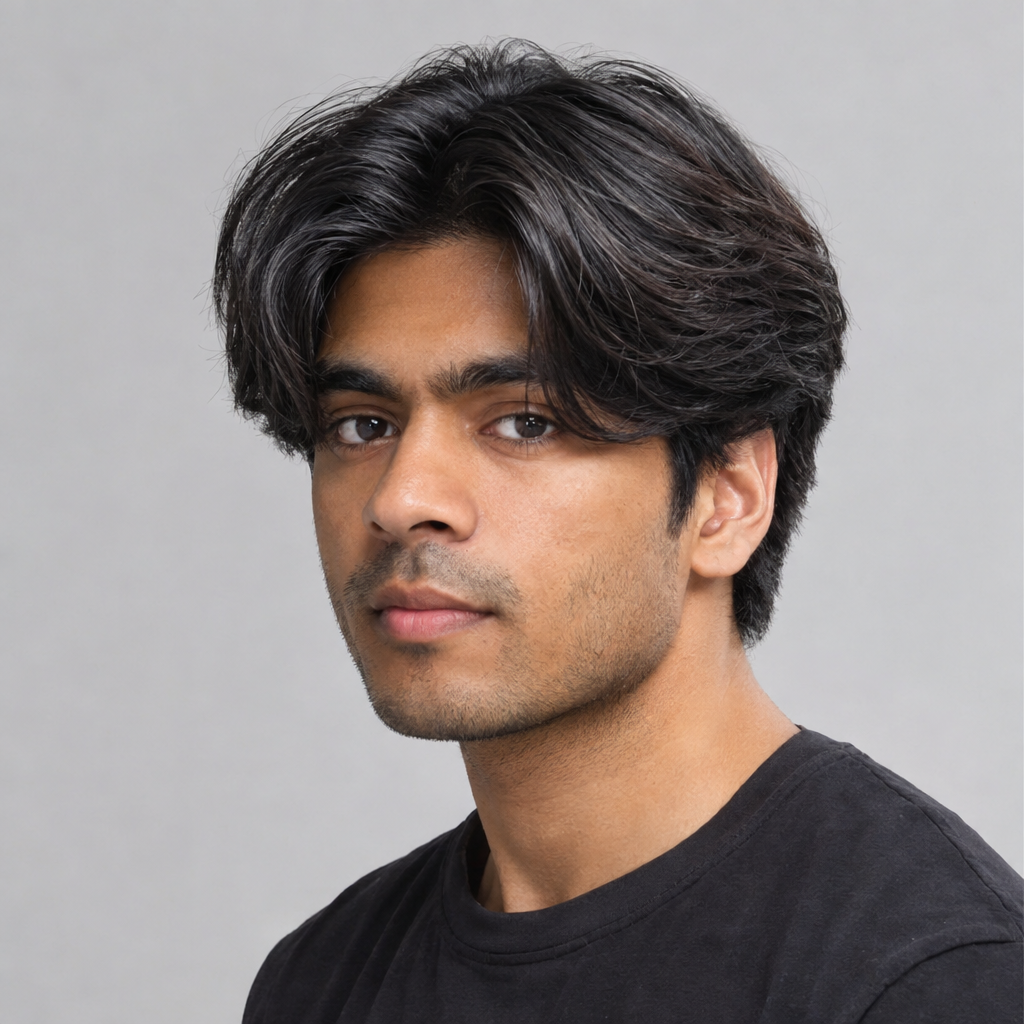
Curtain Haircut
- Best if your hair looks like: straight or wavy hair long enough to split and curve away from the forehead.
- Face/lifestyle fit: fashion-forward, adds width beside a longer or narrower face.
- Upkeep: medium.
Tell your barber: “Keep a cheekbone-length curtain fringe, add light face-framing layers, and taper the sideburns without disconnecting the top.”
Why it works: the parted fringe frames the face and softens a wide forehead, and training the part while blow-drying holds better in humidity than heavy wax.
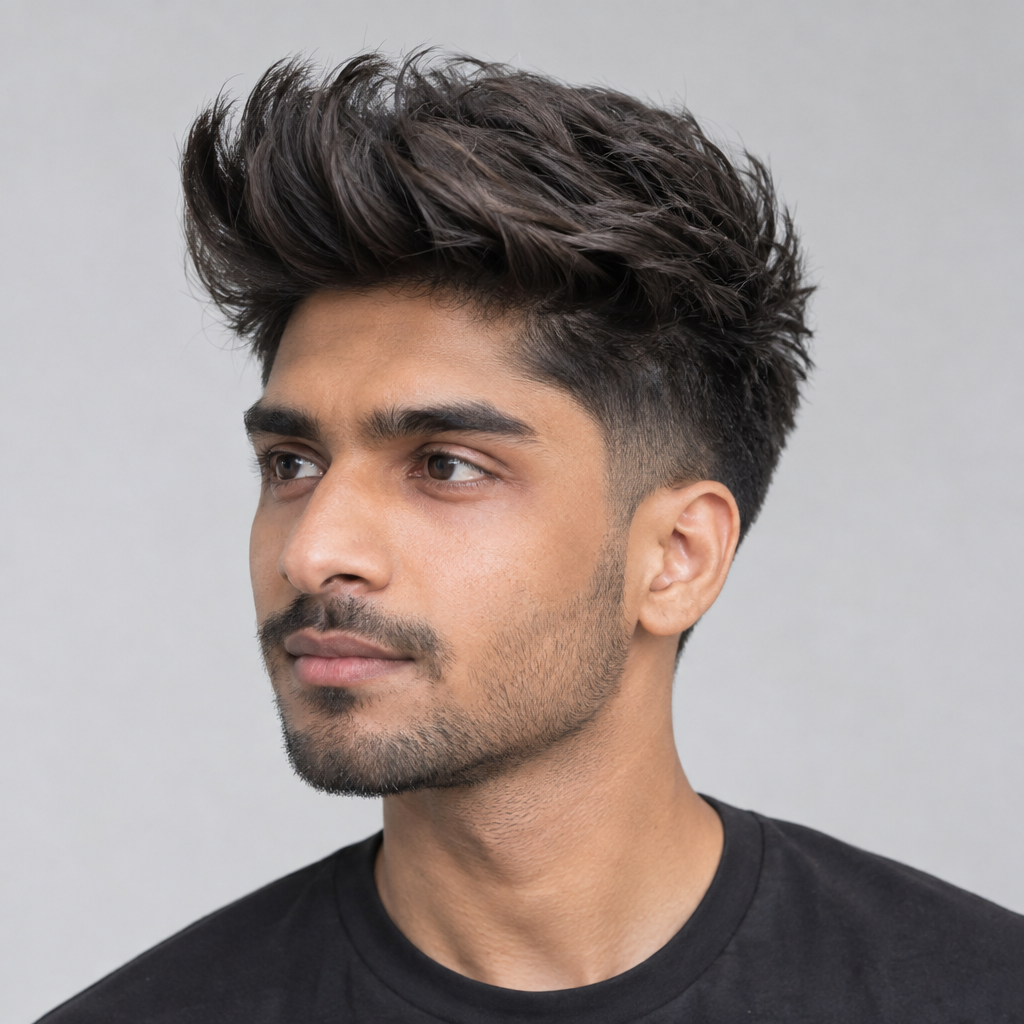
Textured Quiff
- Best if your hair looks like: medium hair with enough density for airy, separated front volume.
- Face/lifestyle fit: for men who want visible height and don't mind blow-drying.
- Upkeep: high.
Tell your barber: “Leave 8 to 10 centimetres in front for a textured quiff, layer the top for separation, and keep the sides tight with a low or mid taper.”
Why it works: the lifted, separated front avoids looking like one solid block, but it needs fully dried roots and light matte product to survive humidity.
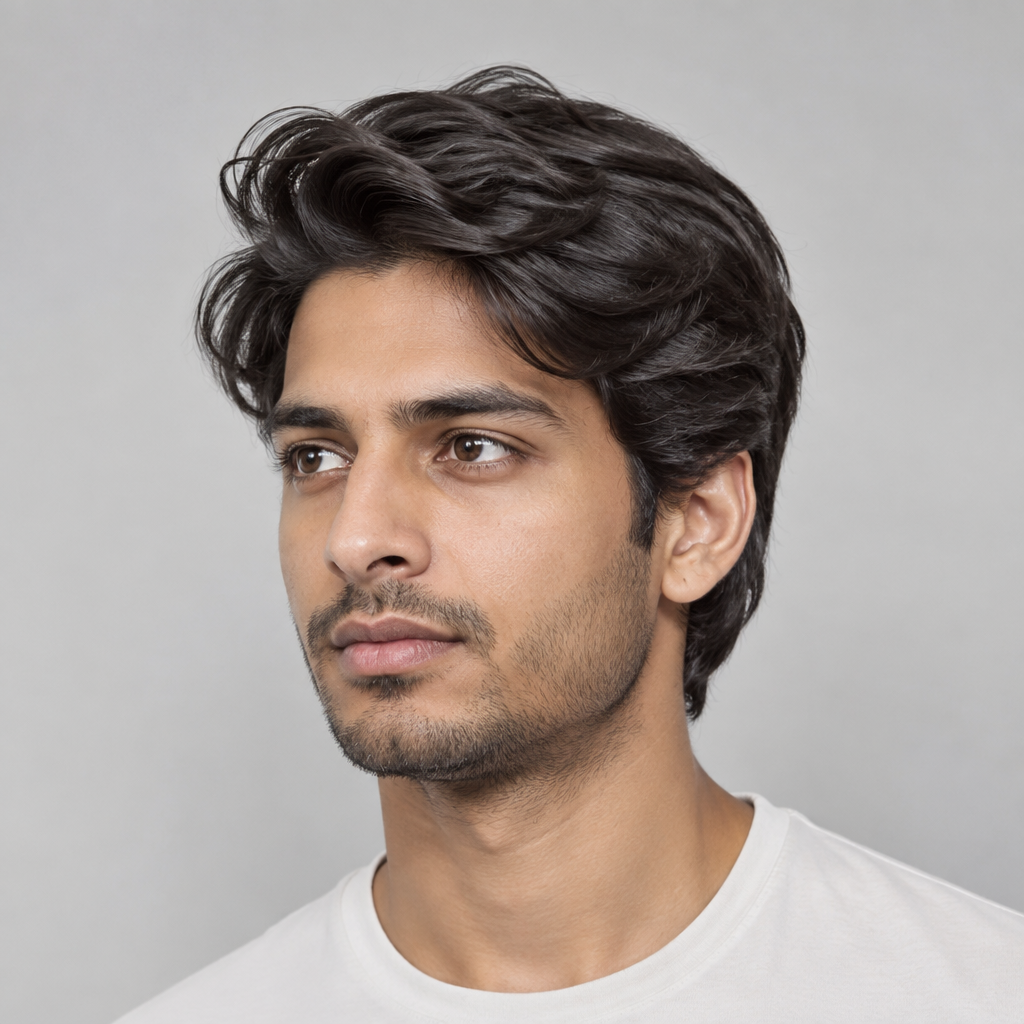
Brush Back
- Best if your hair looks like: medium, fairly dense hair that naturally moves away from the forehead.
- Face/lifestyle fit: balances smart and relaxed settings without a hard part.
- Upkeep: medium.
Tell your barber: “Keep medium length through the top so it brushes back naturally, use scissor-cut sides, and remove bulk without flattening the shape.”
Why it works: the open forehead highlights a strong jaw, and a flexible cream lets you reset the shape by hand after travel instead of freezing it stiff.
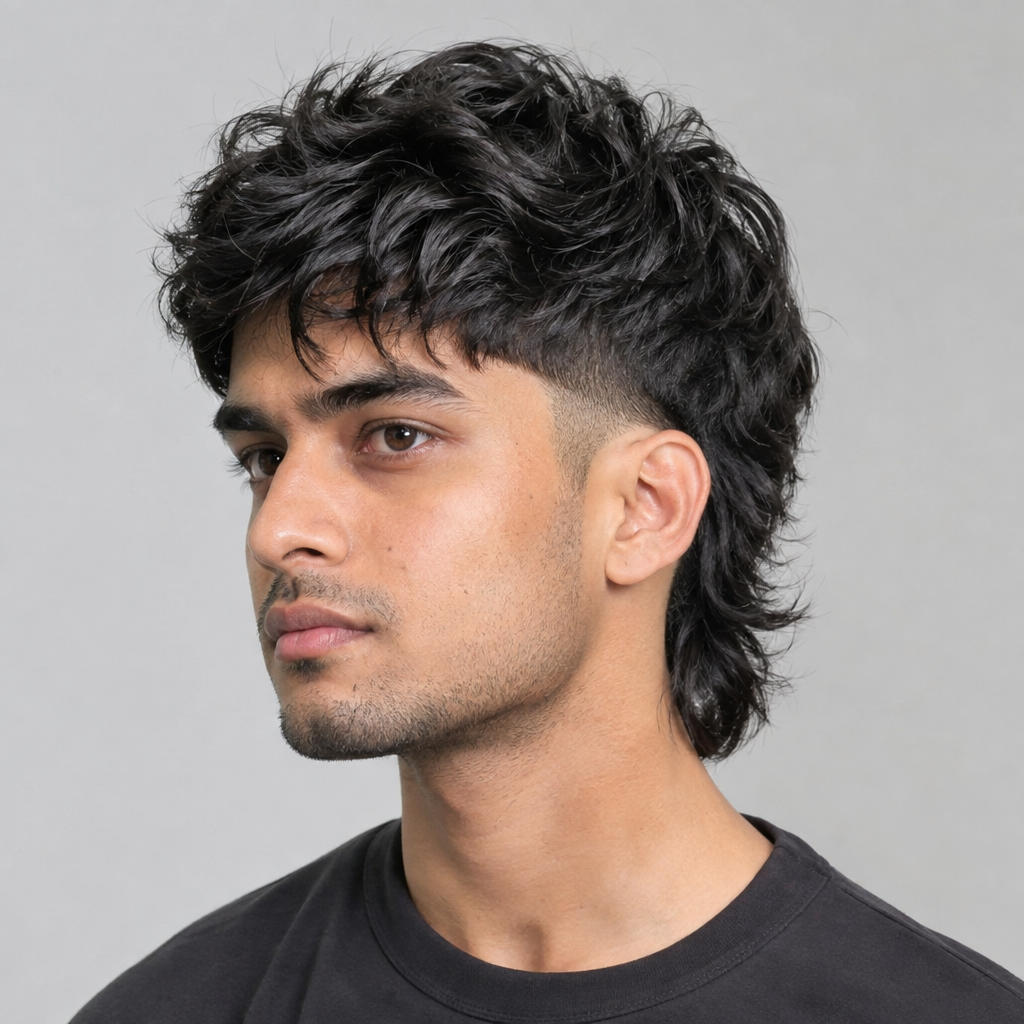
Modern Mullet
- Best if your hair looks like: wavy, curly or textured hair with visible movement through layered lengths.
- Face/lifestyle fit: for expressive dressers who can carry a less conventional look at college or a creative workplace.
- Upkeep: medium.
Tell your barber: “Create a modern mullet with choppy texture on top, a soft taper around the ears, and controlled length at the back — keep the transitions blended.”
Why it works: softer, blended transitions make this version far more wearable than a sharply disconnected retro mullet, with natural waves supplying the movement.
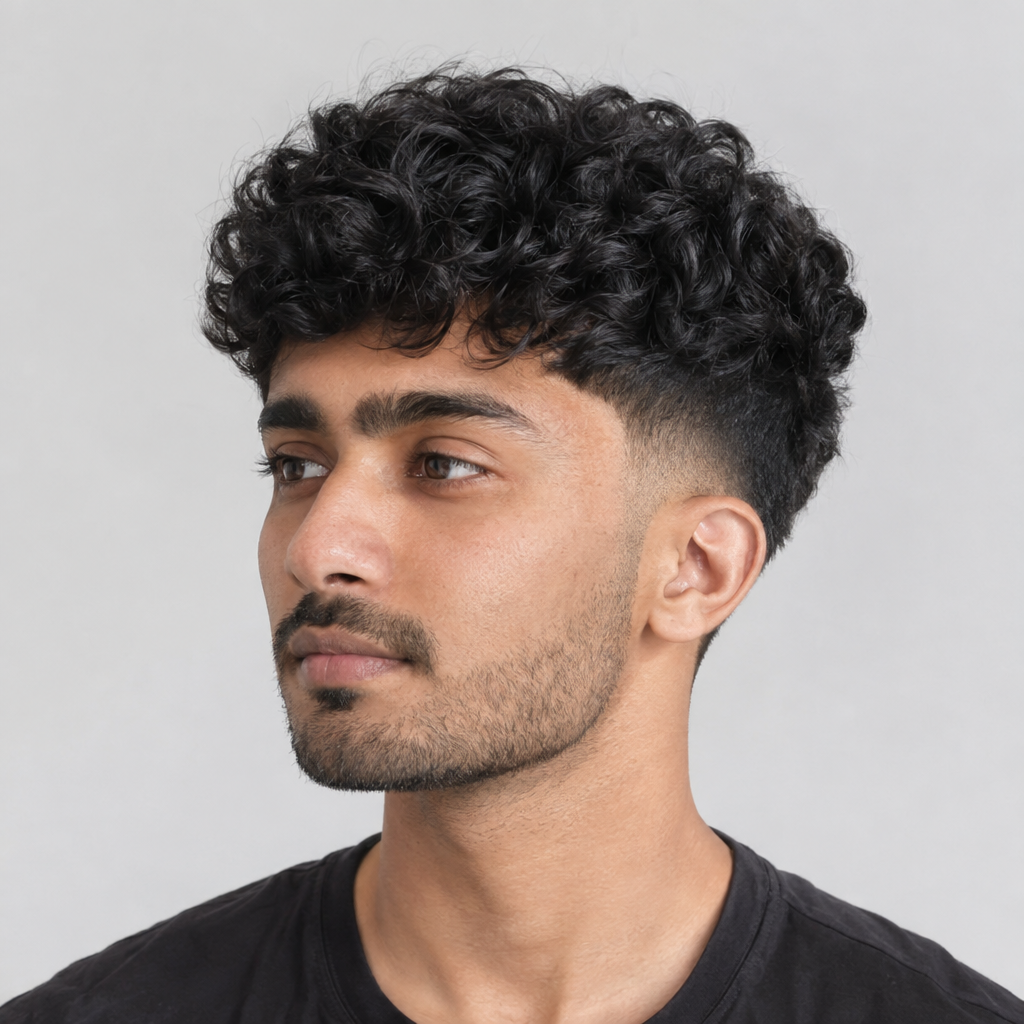
Curly Top with Low Taper
- Best if your hair looks like: springy curls or coils that form a rounded top at medium length.
- Face/lifestyle fit: adds useful upper volume while keeping the perimeter neat for work or college.
- Upkeep: medium.
Tell your barber: “Preserve enough length for my curls to form, shape the top rather than thinning it heavily, and add a low taper around the ears and neck.”
Why it works: the natural height lengthens a wider face while the low taper keeps things tidy, and curl cream holds definition through heat better than dry clay.
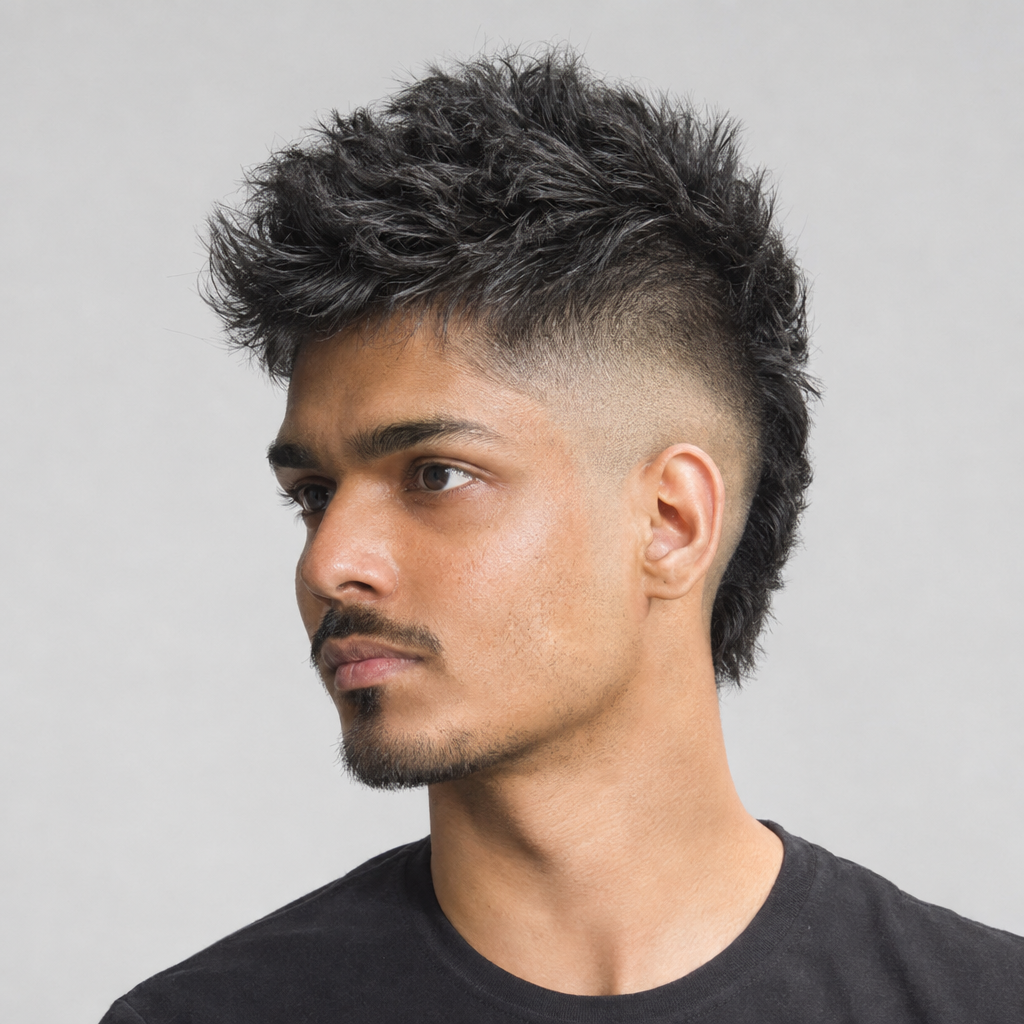
Burst Fade Mohawk
- Best if your hair looks like: dense straight, wavy or curly hair that can hold a defined central strip.
- Face/lifestyle fit: bold, for creative lifestyles, festivals and statement dressing.
- Upkeep: high.
Tell your barber: “Keep textured length from the forehead through the back, add a burst fade curving around each ear, and avoid taking the central section too narrow.”
Why it works: the curved fade pulls attention upward while keeping some back length, but crisp contrast needs frequent touch-ups, so it suits someone happy to visit often.
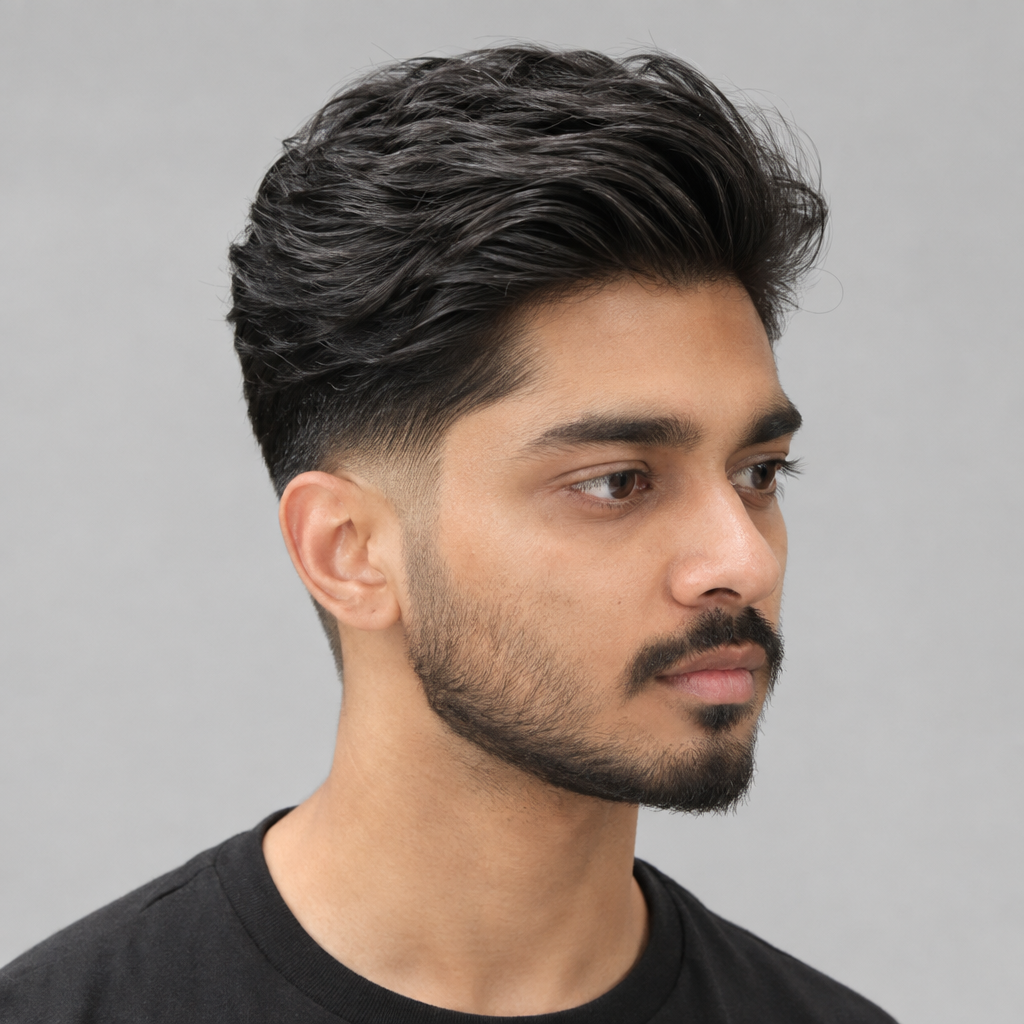
Slick Back with Taper
- Best if your hair looks like: medium to thick hair that can be directed backward without exposing gaps.
- Face/lifestyle fit: evening events, weddings and confident professional styling.
- Upkeep: medium.
Tell your barber: “Leave 10 to 12 centimetres on top for a textured slick back, blend the sides with a taper, and keep the finish soft rather than undercut.”
Why it works: a tapered connection makes the pushed-back top look balanced rather than abrupt, and a lightweight cream avoids the greasy, rigid finish that Indian heat can make uncomfortable.
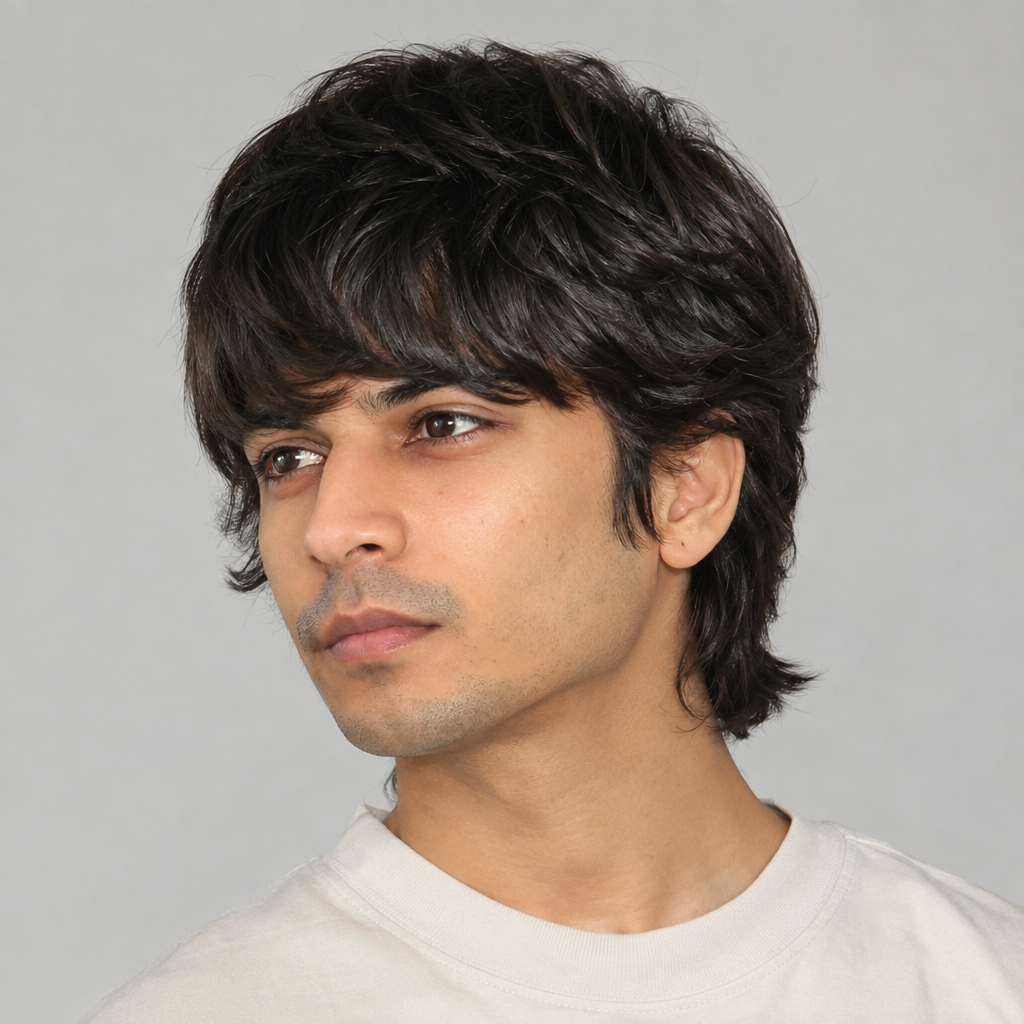
Mod Cut
- Best if your hair looks like: straight or wavy medium hair that falls into soft layers around the forehead and ears.
- Face/lifestyle fit: fashion-led, avoids exposed, tightly faded sides.
- Upkeep: medium.
Tell your barber: “Cut a layered mod shape with a soft eyebrow-length fringe, movement around the ears, and a subtle taper at the sideburns and neck.”
Why it works: the fringe and side layers visually shorten a longer face, and because the shape depends on a skilled layered cut, it air-dries well with minimal anti-frizz cream.
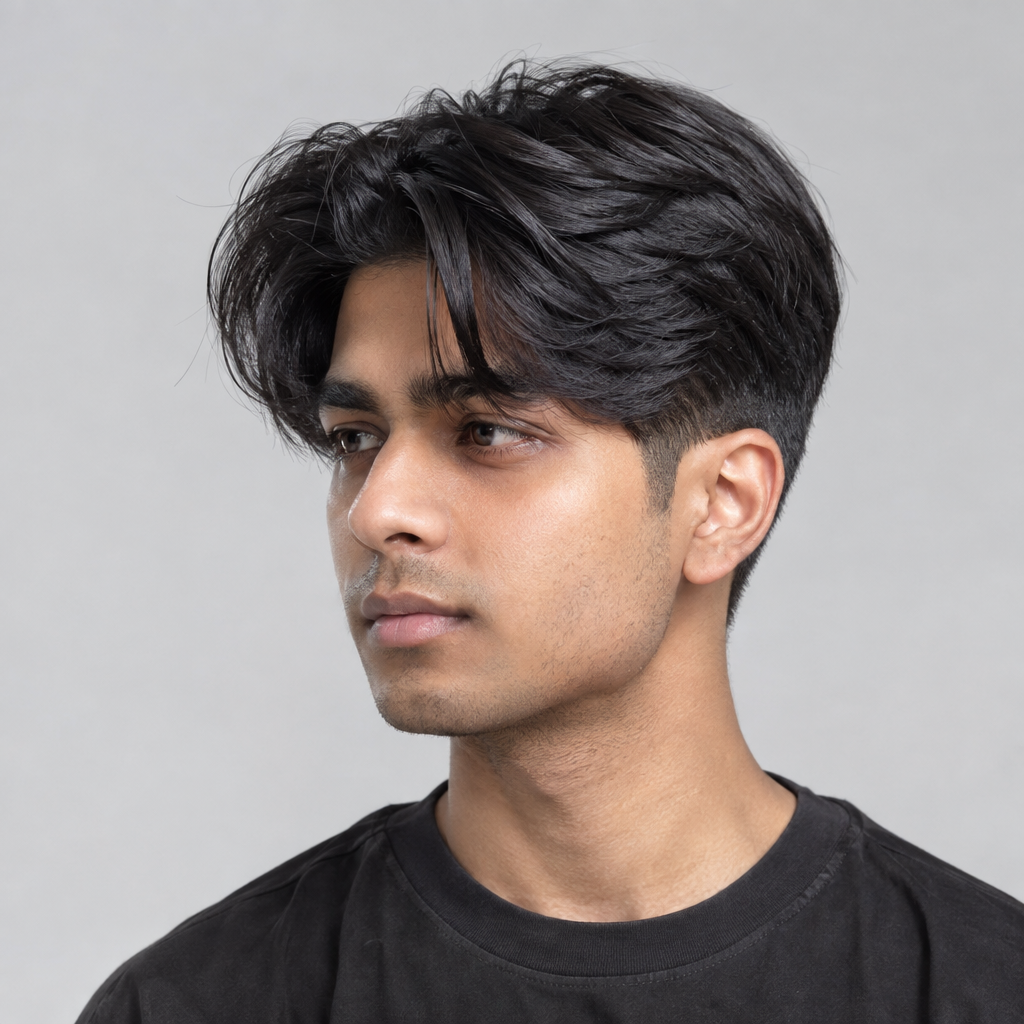
Two-Block Cut
- Best if your hair looks like: straight or softly wavy hair with enough top length for curtains or a side-swept fringe.
- Face/lifestyle fit: youthful, switches easily between neat and relaxed styling.
- Upkeep: medium.
Tell your barber: “Keep the top and fringe long enough to part, cut the underlayer around the sides and back shorter, and blend the transition softly rather than making a harsh undercut.”
Why it works: the longer top gives forehead coverage and styling options while the shorter underlayer controls bulk, and it looks better than most undercuts as it grows out.
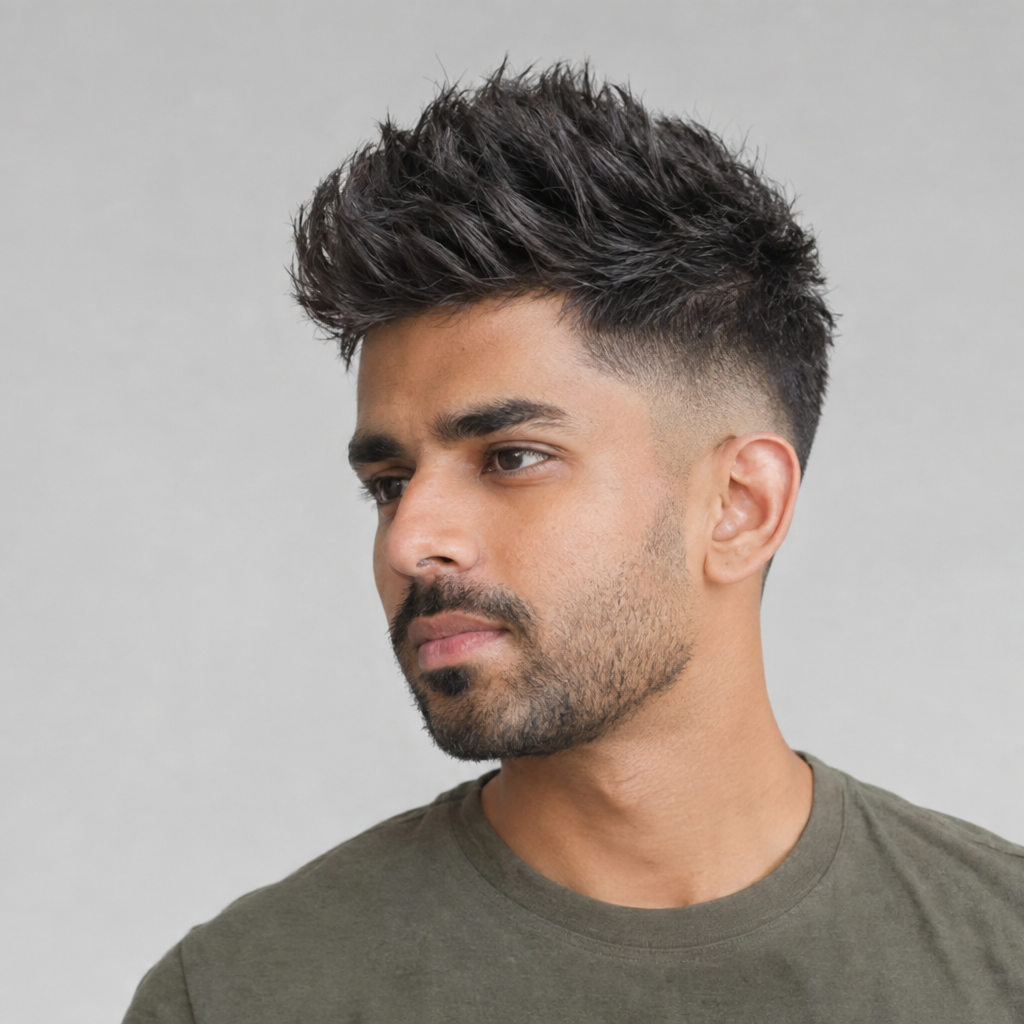
Faux Hawk Fade
- Best if your hair looks like: short-to-medium dense hair that can be pushed toward the centre without forming a rigid spike.
- Face/lifestyle fit: energetic silhouette without committing to a full mohawk.
- Upkeep: medium.
Tell your barber: “Keep textured length through the centre for a wearable faux hawk, use a low-to-mid fade, and leave enough width so the top doesn't look like a narrow strip.”
Why it works: the central height adds length to wider faces, and a broad textured top wears easier day-to-day than a sharp mohawk — matte paste holds better than gel in heat.
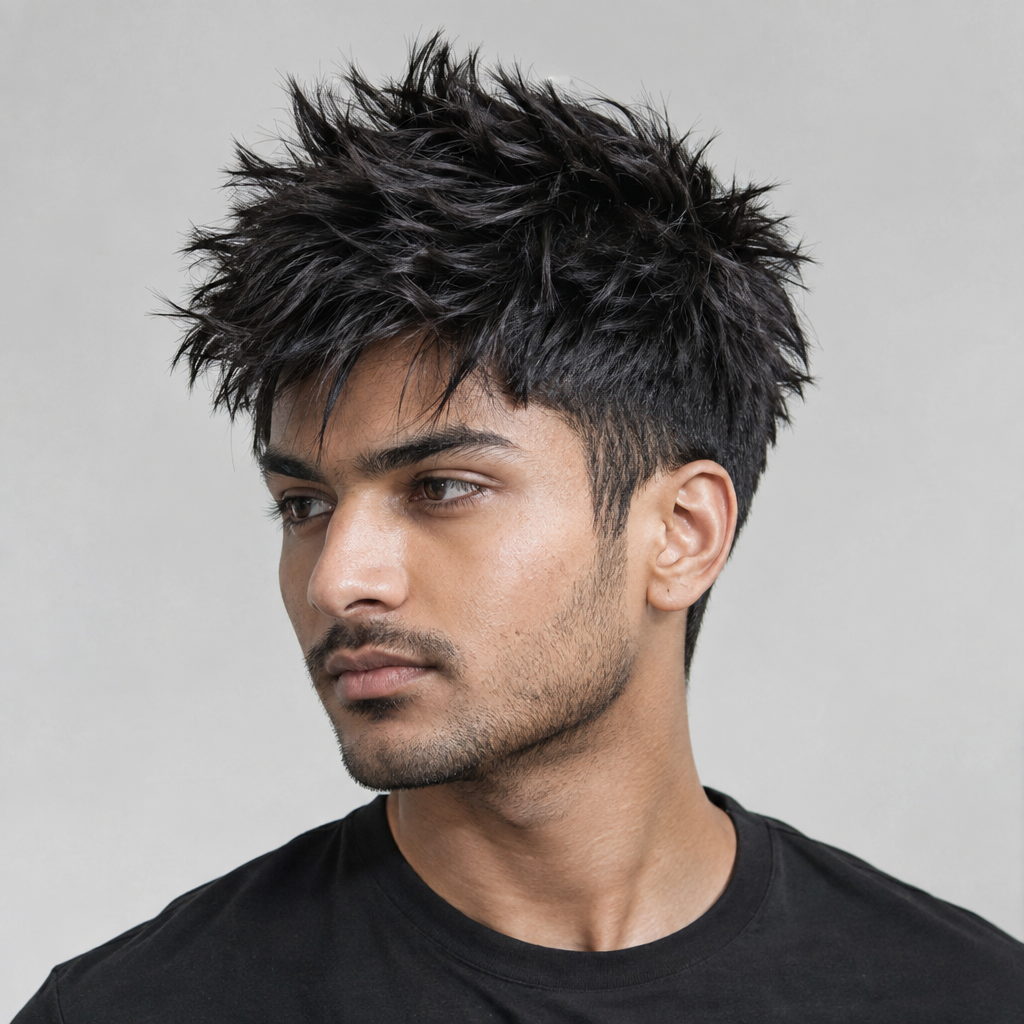
Warrior Cut
- Best if your hair looks like: medium straight or wavy hair with enough density for choppy, lifted pieces.
- Face/lifestyle fit: for men who enjoy deliberate texture and can spend a few minutes styling.
- Upkeep: high.
Tell your barber: “Create choppy point-cut layers through the top, keep softer short sides, and leave enough length to lift pieces up and out with a matte finish.”
Why it works: uneven lifted sections build a strong upper silhouette without a pompadour's formality, but it needs proper internal thinning and a blow-dry to survive a helmet commute.
Trending Long Hairstyles for Men
Long styles reward good layering and conditioning more than any specific product. The modern pompadour is grouped here because it needs longer top length than a short or medium cut to build its signature lift.
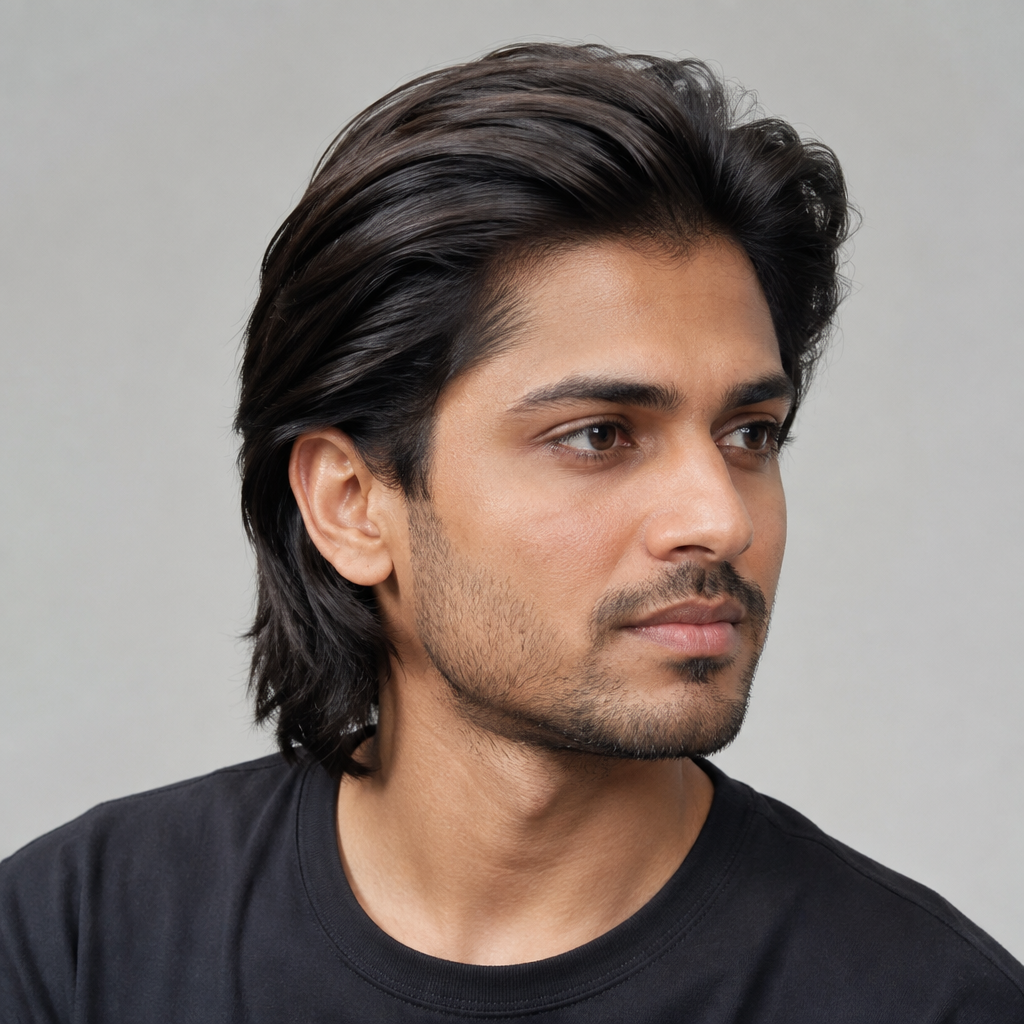
Bro Flow
- Best if your hair looks like: medium-long hair with natural bends that sweep back or tuck behind the ears.
- Face/lifestyle fit: for men who want longer hair without tying it up daily.
- Upkeep: medium.
Tell your barber: “Keep the length around my ears and collar, add long layers for backward movement, and clean the neckline without shortening the overall flow.”
Why it works: long layers remove enough weight for natural movement while keeping a masculine outline; conditioning matters more than hold when sun and hard water dry out longer ends.
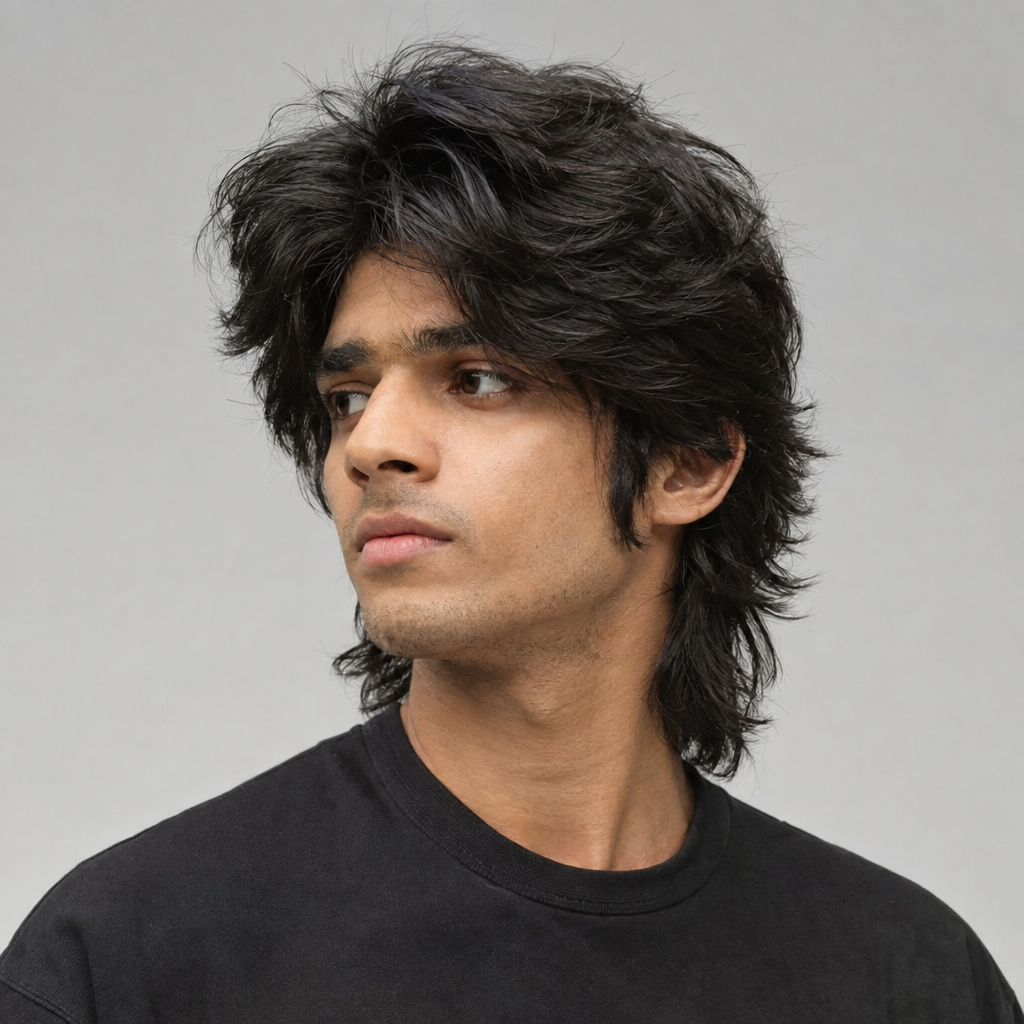
Wolf Cut
- Best if your hair looks like: wavy or curly hair with enough density for shaggy crown layers and longer ends.
- Face/lifestyle fit: for men wanting a high-character layered look worn naturally.
- Upkeep: medium.
Tell your barber: “Give me a men's wolf cut with short textured crown layers, face-framing pieces and longer length through the back, but keep the perimeter controlled.”
Why it works: crown layers stop long dense hair from hanging flat, letting natural waves create movement; a controlled perimeter keeps monsoon frizz reading as texture, not shapelessness.
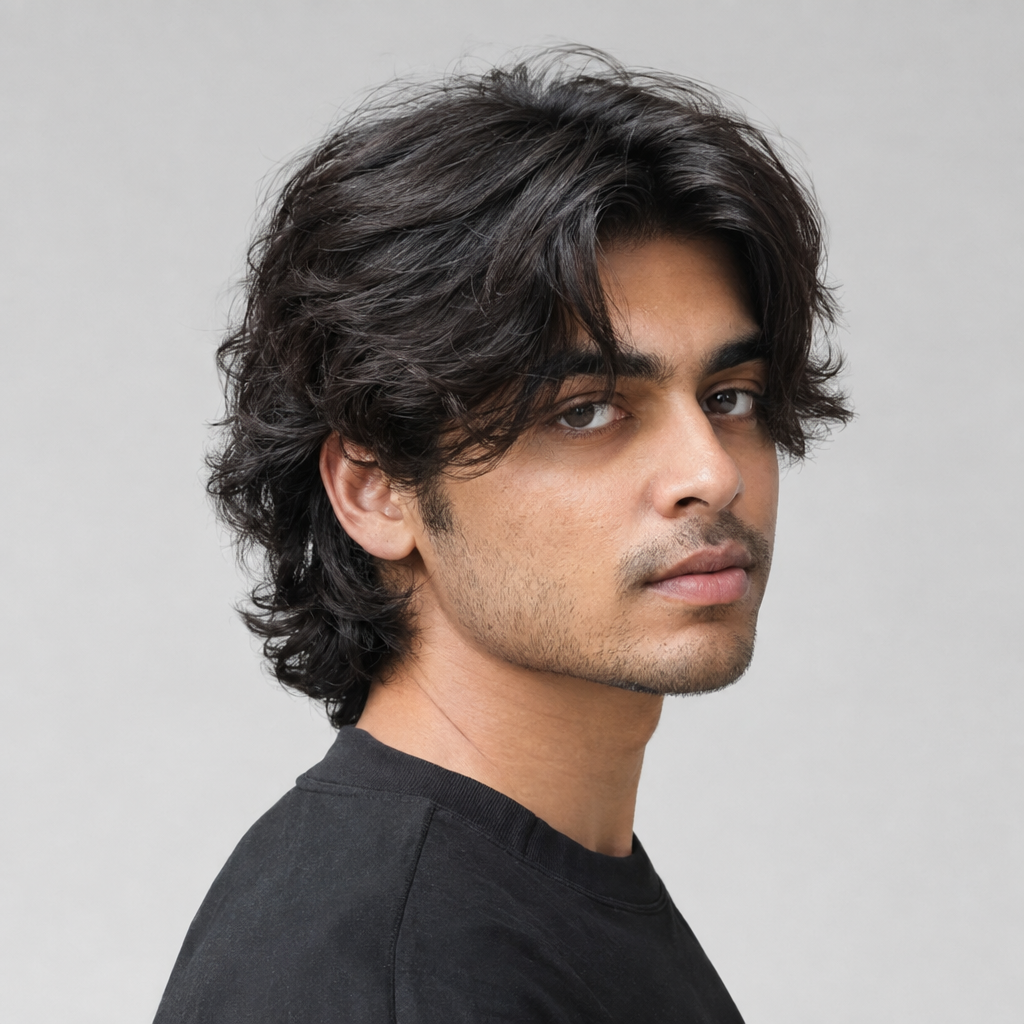
Layered Shag
- Best if your hair looks like: medium-long wavy or curly hair with movement throughout, not just at the ends.
- Face/lifestyle fit: a softer alternative to the wolf cut for casual and creative settings.
- Upkeep: medium.
Tell your barber: “Add connected shag layers throughout, keep soft face-framing pieces, and remove internal bulk without making the ends thin or wispy.”
Why it works: evenly connected layers distribute volume better than a top-heavy wolf cut, softening angular cheekbones, and the cut supplies its own movement for easy air-drying.
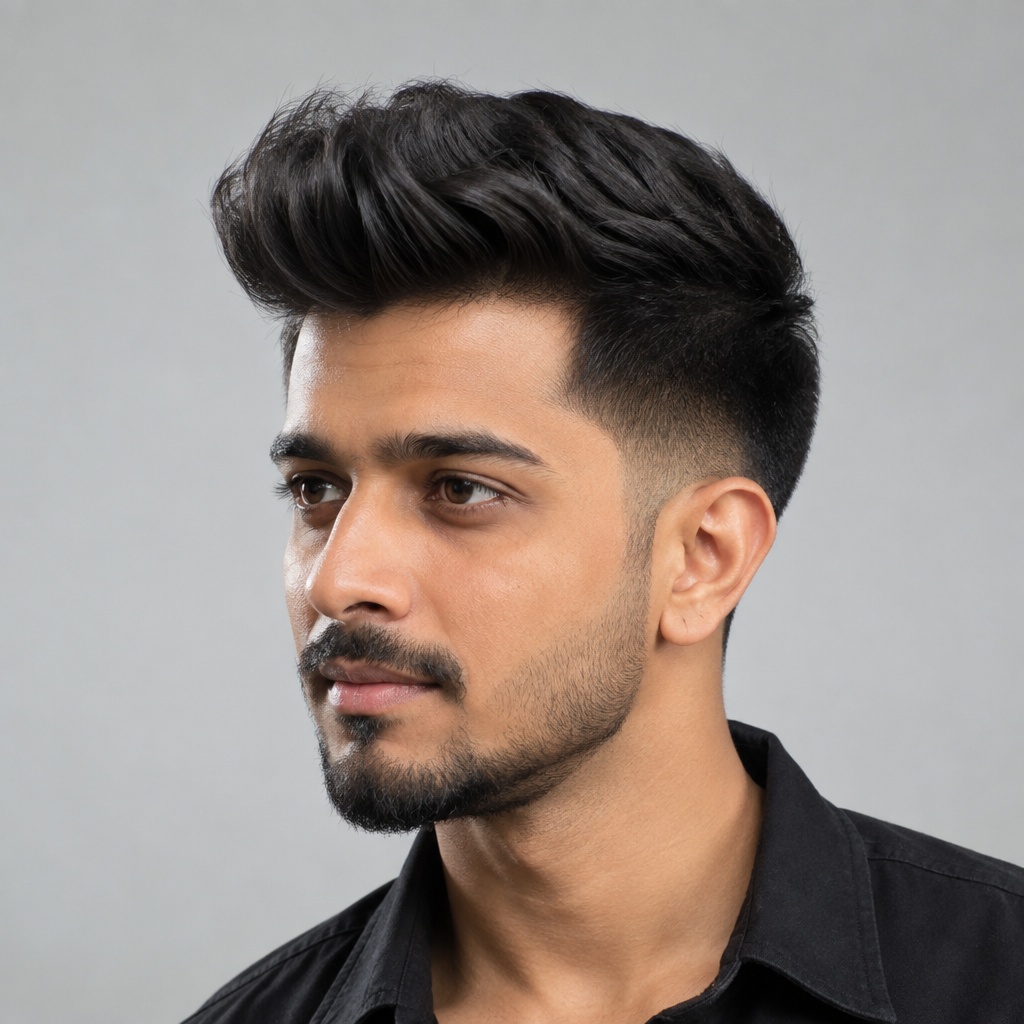
Modern Pompadour
- Best if your hair looks like: medium-long top hair that blow-dries up and back with strong root lift.
- Face/lifestyle fit: a polished statement for weddings, evenings and image-conscious workplaces.
- Upkeep: high.
Tell your barber: “Leave 10 to 13 centimetres at the front for a modern pompadour, graduate it toward the crown, and keep the sides tapered with enough weight for balance.”
Why it works: the high front sharpens a rounder face and balances a wider jaw, but it needs heat protectant, fully dried roots and restrained product — heavy pomade collapses fast in humidity.
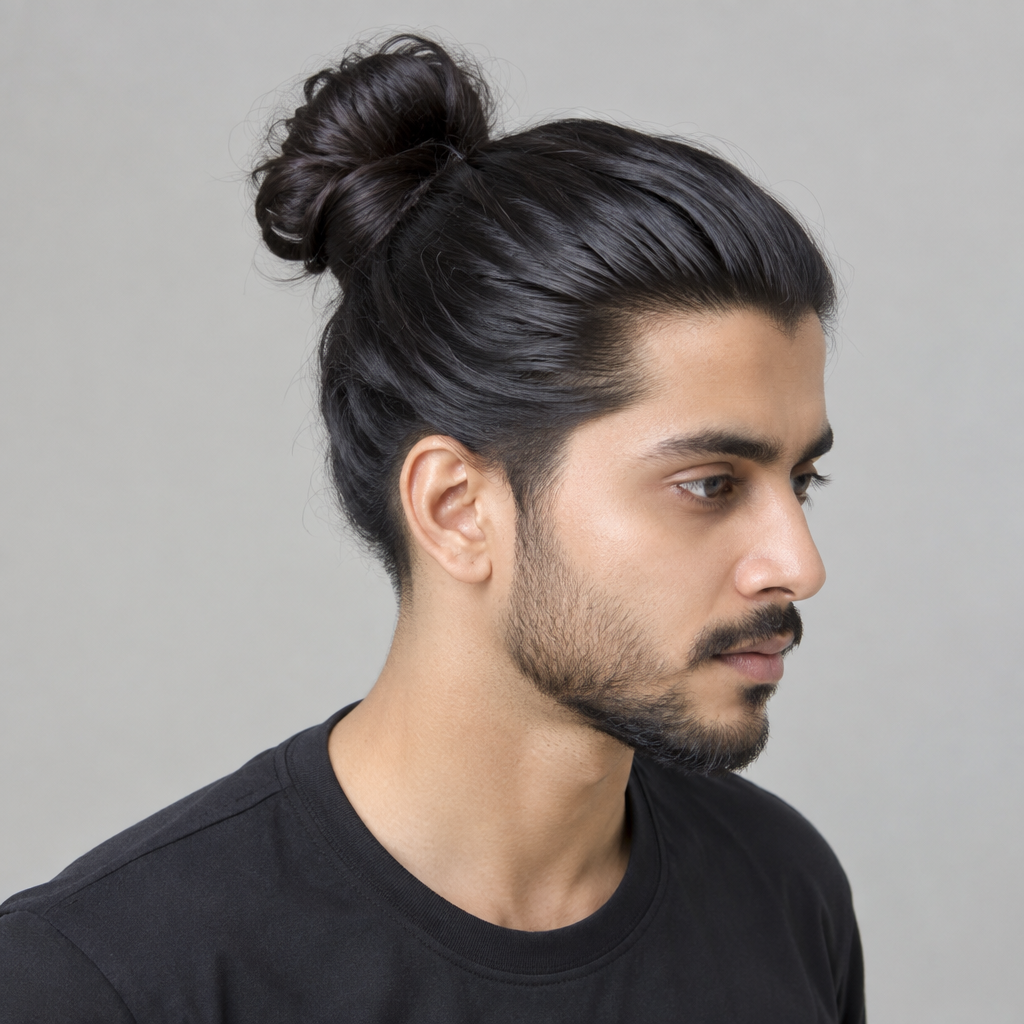
Man Bun with Taper
- Best if your hair looks like: hair long enough to gather comfortably without pulling short sections at the hairline.
- Face/lifestyle fit: keeps long hair controlled for commuting, workouts and both traditional and western outfits.
- Upkeep: medium.
Tell your barber: “Keep all the length needed for a comfortable man bun, add only a subtle temple and neckline taper, and don't disconnect or undercut the sides.”
Why it works: a small taper tidies fast-growing edges while keeping the option to wear it loose; a relaxed tie position avoids constant temple tension through a long workday.
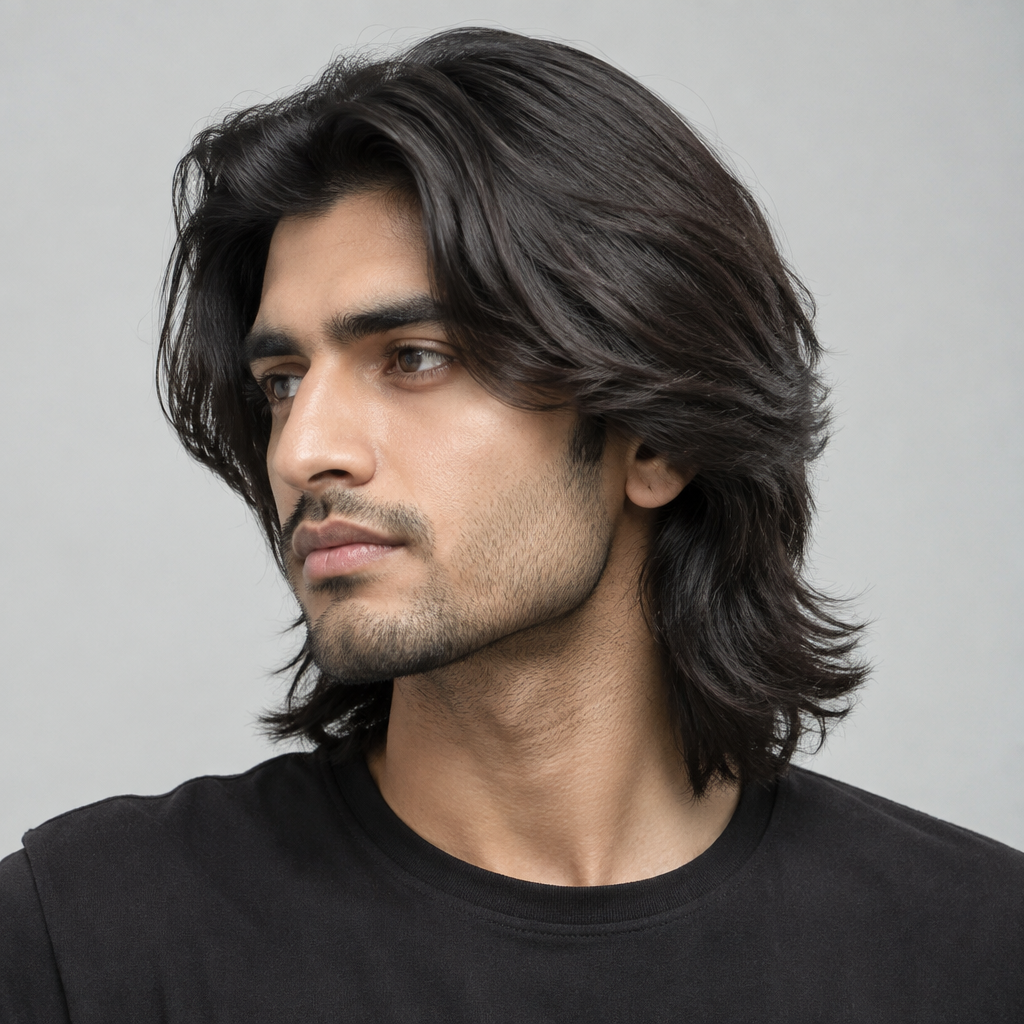
Shoulder-Length Layers
- Best if your hair looks like: dense straight, wavy or curly hair that gets bulky at one uniform length.
- Face/lifestyle fit: versatile long style worn loose, tucked back or tied.
- Upkeep: medium.
Tell your barber: “Keep the perimeter around shoulder length, add long layers to control bulk, and frame the face without creating short crown layers.”
Why it works: long layers prevent a heavy triangular outline and make thick hair easier to dry and tie back; occasional clarifying shampoo helps where hard water leaves ends rough.
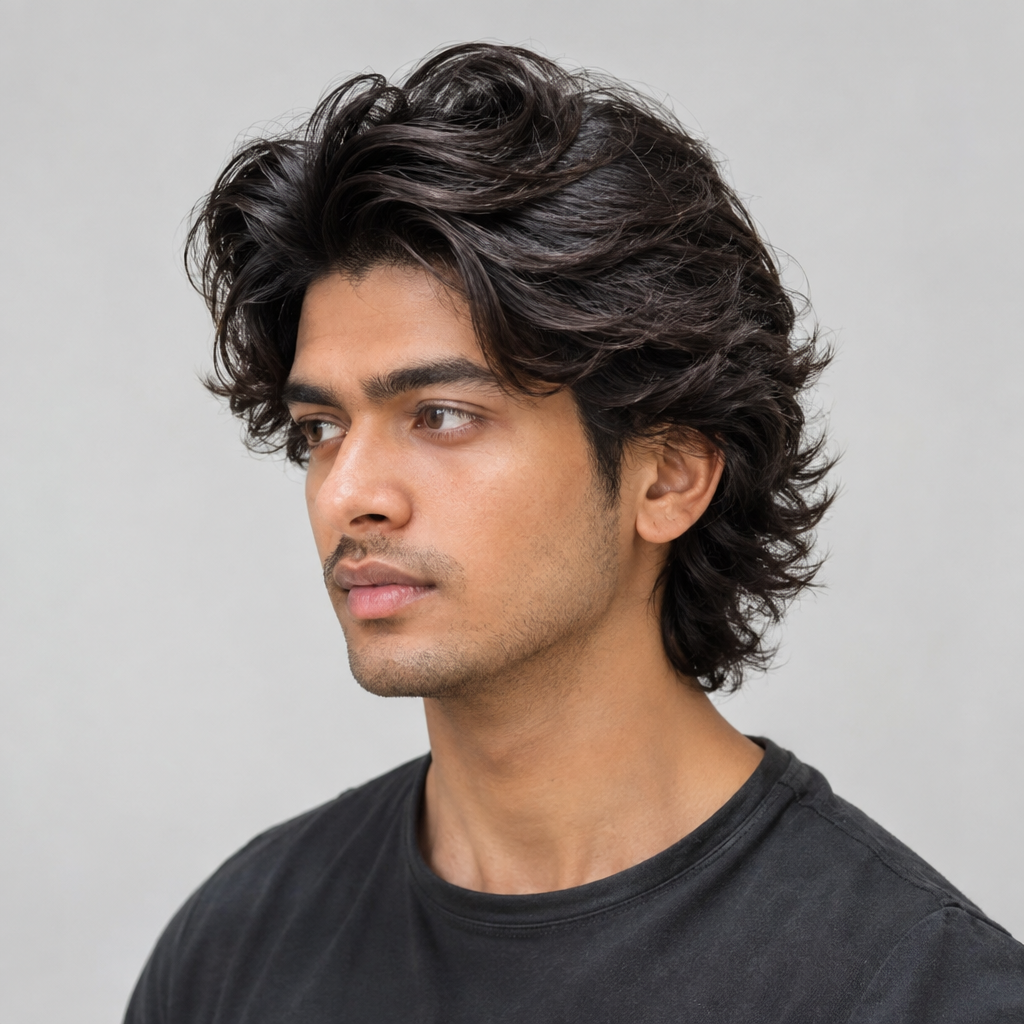
Wavy Surfer Layers
- Best if your hair looks like: medium-long hair with broad bends or loose waves that show more as it grows.
- Face/lifestyle fit: relaxed long style for men who prefer natural movement over precise placement.
- Upkeep: medium.
Tell your barber: “Keep the length below my ears, add long flowing layers for wave movement, and shape the front to sweep away from my face.”
Why it works: long layers encourage waves to form instead of collecting into a heavy block; lightweight leave-in conditioner and air-drying handle Indian humidity better than repeated heat styling.
Got two or three of these on your shortlist already? Preview them on your own face using the AI hairstyle try-on tool before you decide which one is worth a barber's chair.
How to Choose a Men's Hairstyle That Will Actually Suit You
Start with what you already see in the mirror, not with a haircut name you saw online. Is your hair flat and needing help to hold shape, or does it already carry volume? Does it fall straight, show a soft bend, or spring into loose curls or tight coils? Is your hairline dense and even, or thinner at the temples? These four observations matter more than any trend list.
Then run your shortlist through four practical filters: how long you want it, how much forehead you're comfortable showing, how much upkeep you'll realistically do between appointments, and how often you can actually get to a barber. A cut that photographs beautifully but needs a blow-dry and three products every morning will not survive a real Monday.
Default recommendation: pick a length and shape that works with your hair's natural fall and texture, then use the fade, fringe or layering to fine-tune the silhouette for your face. Forcing straight-hair styling onto tight curls, or expecting a razor-sharp part from very fine hair, is the most common reason a good haircut stops looking good by day three. If you're not sure which face shape you're working with, our guide to identifying your face shape walks through it in under a minute.
Best Trending Hairstyles for Your Face Shape
Face shape doesn't decide your haircut on its own, but it does tell you where a style should add height, width or coverage to look balanced. The list below gives the general goal for each face shape and the styles from the gallery above that tend to work hardest for it — a shortlist starting point, not a rule.
- Oval: keep proportions balanced without piling on extra height or width. Strong options: Textured Crop, Ivy League, Side Part with Low Taper, Curtain Haircut, Brush Back.
- Round: add height through the crown and keep the sides controlled so the face reads longer. Strong options: Crew Cut with Low Fade, Short Quiff, Textured Quiff, Modern Pompadour, Faux Hawk Fade.
- Square: let the jaw show while softening the top with texture rather than a flat shape. Strong options: Textured Crop, Buzz Cut with Taper, Side Part with Low Taper, Brush Back, Warrior Cut.
- Heart: soften a broader forehead and keep some fullness lower down near the jaw. Strong options: French Crop, Curly Crop with Temple Fade, Messy Fringe, Modern Mullet, Two-Block Cut.
- Diamond: soften prominent cheekbones with movement and add width near the forehead or jaw. Strong options: Curly Crop with Temple Fade, Curtain Haircut, Wolf Cut, Layered Shag, Shoulder-Length Layers.
- Rectangle: avoid extreme height and bring in a fringe or side width instead. Strong options: French Crop, Ivy League, Side Part with Low Taper, Mod Cut, Two-Block Cut.
- Oblong: shorten the apparent length with a fringe, layers or width beside the face. Strong options: Caesar Cut, Messy Fringe, Curtain Haircut, Mod Cut, Wavy Surfer Layers.
- Triangle: build volume through the top and temples to balance a wider jawline. Strong options: Short Quiff, Textured Quiff, Curly Top with Low Taper, Burst Fade Mohawk, Faux Hawk Fade.
One general texture note across all of these: straighter hair takes a crisp fringe or side part more easily, while wavy and curly hair naturally supplies the movement that shag, mullet and curtain styles rely on — so a curlier version of a familiar cut often needs less daily effort, not more, once a barber has removed the right amount of bulk.
Found your face shape above? Hold two or three of its recommended cuts up against your own photo with the virtual try-on tool — it's a faster gut-check than staring at reference pictures of other people.
How Hair Density, Hairline and Natural Texture Change the Result
Two men can ask for the same haircut name and walk out looking completely different, because density and texture change how a shape sits. Fine or thin hair generally looks best shorter, with matte low-volume products and cuts like the textured crop, Caesar or Ivy League that don't rely on visible bulk to hold shape. Piling length onto fine hair usually just looks flat by afternoon.
Dense or coarse hair often has the opposite problem — too much weight, not too little. A good barber will thin from underneath and remove internal bulk rather than simply shortening the sides, which is why the warrior cut, textured quiff or wolf cut can look lighter on thick Indian hair once properly cut instead of just clipped shorter.
If your hairline is higher than you'd like or the temples have started thinning, a soft forward fringe (French crop, Caesar, messy fringe, curtain) reads as a style choice rather than a cover-up, as long as it's kept light rather than combed thick to hide the contrast. Ask your barber to leave the edges slightly imperfect — a too-neat fringe over a receding hairline draws more attention, not less.
Curly and coily hair shrinks noticeably once it dries and springs up, sometimes by several centimetres compared with how it looked stretched or wet in the chair. Agree on the finished, dry length with your barber before cutting starts, and ask for a dry cut or a dry check-and-adjust at the end if your curls are tight — cutting only on wet, stretched hair is the most common reason curly cuts come out shorter than expected.
Not sure whether a fringe-forward look or more forehead exposure suits you better? Try both directions on your own photo with the try-on tool before you commit to either one at the salon.
Low Taper, Mid Fade or Skin Fade: Which Finish Should You Pick?
A taper or fade is a finishing structure, not a hairstyle by itself — it's how the sides and back blend into the top, and almost any cut in this guide can be built on top of one. The differences come down to how much contrast you want and how often you're willing to get it cleaned up.
- Low taper: sides gradually shorten close to the ear and neckline with minimal contrast. Easiest grow-out, most office-friendly, works with almost every style above.
- Temple fade: fading concentrated around the temples, useful for cleaning up curly or thick tops without touching the rest of the side length.
- Mid fade: fade line starts around the middle of the side of the head — more visible shape than a low taper, still wearable for most workplaces.
- Drop fade: the fade line curves down behind the ear, which can add width around the temple area — useful for narrower faces, less ideal if you're already trying to reduce side bulk.
- Burst fade: a curved fade that wraps around the ear rather than running straight, often paired with faux hawks and mohawks for a rounder, more dimensional shape.
- Skin fade: fades all the way down to bare skin at its lowest point. Sharpest contrast, but grows out fastest and needs the most frequent barber visits.
Default recommendation for conservative offices and easier maintenance: a low taper. It grows out softly enough that you won't look unkempt at the three-week mark, unlike a skin fade, which can start looking patchy within ten to fourteen days. One face-shape note worth flagging: a very high or aggressive fade can make an already long oblong face look longer, and can shave away useful side width on a triangle face — in both cases, a lower fade with more preserved side length usually looks more balanced.
What to Tell Your Barber for These Trending Haircuts
Every style card above includes an exact request you can read out or show to your barber — use it word for word rather than just naming the haircut, since names like “crop” or “mullet” get interpreted differently from salon to salon. Bring front, side and back reference photos where possible, ideally of someone with hair texture and density close to yours, not just a celebrity you like the look of.
Before the scissors come out, confirm four things out loud: the exact top length you want to keep, where the fade or taper should start, how the neckline should be finished (natural, blocked or rounded), and whether the fringe should fall forward or be swept to a side. If you want visible texture rather than a smooth blunt top, specify whether you'd like it created with scissors (softer, more natural) or a razor (choppier, more textured).
A simple line that works well in most Indian salons: “Upar se itna rakhiye ki style ho sake, sides clean chahiye par skin tak nahi” — keep enough on top to style, and keep the sides clean but not shaved to the skin. It's a fast way to avoid the classic miscommunication where “short sides” turns into an accidental skin fade.
How to Style Men's Hair in Indian Heat and Humidity
Start every style with hair that's been fully dried, not just towel-dried and left to finish under a fan — damp roots are the main reason volume collapses by lunchtime in humid cities. A light pre-styling cream or heat protectant on medium and long hair keeps blow-drying from adding frizz.
For finishing, matte clay or a light paste gives short and medium cuts hold without the greasy shine that heat and an oily scalp can exaggerate. Longer, wavy or curly hair generally does better with a small amount of anti-frizz serum or leave-in conditioner than with pomade, which can feel heavy once the day gets hot. If you're comparing clay, paste, pomade and cream to work out which suits your hair and climate, our guide to men's styling products breaks down the differences.
Helmet flattening is close to unavoidable on a daily commute, but you don't need to rebuild the style from scratch. A light mist of water or a travel-size comb can lift the roots back up in under a minute; adding another full layer of product on top of what's already there usually just leaves buildup. During monsoon, expect wavy and curly styles to frizz more than usual — a humidity-resistant finishing product helps more than reapplying the same wax repeatedly. Hard water in many Indian cities can leave a dull, slightly stiff residue over time, so an occasional clarifying shampoo — once every couple of weeks rather than daily — keeps texture and shine from building up.
How Often Should You Maintain a Trending Men's Hairstyle?
- Skin fades and other sharply defined fades: every two to three weeks to keep the contrast crisp.
- Tapers, crops and short crew-style cuts: roughly every three to five weeks.
- Layered medium and long cuts (shags, curtains, mullets, wolf cuts): about every six to ten weeks, since growth adds to the layering rather than ruining the shape.
A quick neckline and sideburn trim between full appointments can stretch almost any cut by a couple of weeks without touching the length on top. Also separate two different things when judging how “low maintenance” a style really is: daily styling effort (how long it takes each morning) and barber maintenance (how often you need a professional cleanup) — a textured crop is low effort every morning but still needs a monthly-ish trim to stay sharp, while a man bun needs almost no daily work but only occasional shaping at the edges.
Hairstyle Mistakes to Avoid Before Your Next Cut
- Copying a reference photo of someone with noticeably different hair density or texture without asking your barber to adapt the shape to yours.
- Asking for “a fade” or a fade number without agreeing exactly where it should start and how much scalp exposure you're comfortable with.
- Removing too much width from the sides if you have a long, narrow or triangle-shaped face — it can make the jaw look wider without adding anything above it.
- Judging a curly or coily cut only while it's wet — remember it will shrink and sit differently once fully dry.
- Choosing a high-maintenance style like a textured quiff or modern pompadour if you know you won't blow-dry it or won't get back to the barber every few weeks.
Frequently asked questions
Which hairstyle is trending for men in India in 2026?
Textured crops, low tapers, curtain haircuts, modern mullets, curly tops and layered medium-length cuts are strong current options. The best choice isn't simply the newest one: match the style's height, fringe and side width to your face, natural texture and daily routine.
Which trending men's hairstyle is easiest to maintain?
A textured crop, tapered buzz cut or crew cut is usually easiest for daily styling. A taper grows out more softly than a skin fade, although any sharply faded cut will still need regular barber visits to keep its outline crisp.
Which hairstyle is best for a round face man?
Choose controlled side width with some height on top, such as a short quiff, textured quiff, faux hawk or modern pompadour. Avoid a heavy rounded fringe combined with bulky sides, since that can make the face look wider.
Which men's hairstyle can hide a large forehead or receding hairline?
A French crop, Caesar cut, messy fringe, curtain fringe or textured forward crop can reduce visible forehead space. Keep the fringe light and intentional; stretching sparse hair into a very thick fringe can expose the contrast instead of disguising it.
What haircut works best for men who wear helmets every day?
Short textured crops, crew cuts, Caesar cuts and low-tapered curly crops recover most easily after a helmet commute. If you prefer medium hair, use a flexible product and carry a small comb or water mist so the style can be reset without adding another heavy layer of wax.
Should I ask for a taper or a fade?
Ask for a taper if you want subtle cleanup, easier grow-out and a finish that fits most offices. Choose a fade for stronger contrast. Also specify where it should begin — low, mid or high — because placement affects your face proportions more than the fade label alone.
How often should men get a haircut to maintain a trendy style?
Skin fades commonly need attention every two to three weeks, while low tapers and short crops can often go three to five weeks. Medium and long layered cuts usually hold their shape for six to ten weeks, depending on growth, neckline and fringe length.
What should I show my barber besides a hairstyle photo?
Bring front, side and back references, preferably on hair with texture and density similar to yours. Tell the barber how much time you'll spend styling, whether you wear a helmet, how much scalp exposure you accept and how you normally part your hair.
How can men control frizz during the Indian monsoon?
Apply a small amount of leave-in conditioner or anti-frizz cream to damp mid-lengths, dry the hair fully, and finish with a flexible humidity-resistant product. Avoid repeatedly layering wax over sweaty or damp hair, which can cause buildup and make the shape collapse.
Can I preview a haircut before asking my barber for it?
Yes. A virtual hairstyle try-on can place different lengths, fringes and silhouettes over your own photo. Use it to narrow the gallery to two or three options, then ask your barber which version is realistic for your natural density and growth pattern.
Shortlist Your Best Look Before Visiting the Barber
From whatever group matched your hair and face shape, pick three: one safe option you know will work in every setting, one more expressive cut you're curious about, and one genuinely low-maintenance backup for weeks when you don't have time to style. That's a realistic shortlist, not an overwhelming one.
Before you sit in the chair, run that final shortlist side by side on your own photo with the AI hairstyle try-on tool — it's the closest you'll get to seeing the result without committing scissors to it. Save whichever version looks most like you, and show that to your barber alongside the exact phrase from its style card above.